A Chapel That Is Not a Vineyard
Paul Jaboulet Aîné Hermitage La Chapelle 2012
- Producer
- Paul Jaboulet Aîné
- Appellation
- Hermitage
- Grapes
- Syrah
- Tasted
- 10 October 2020
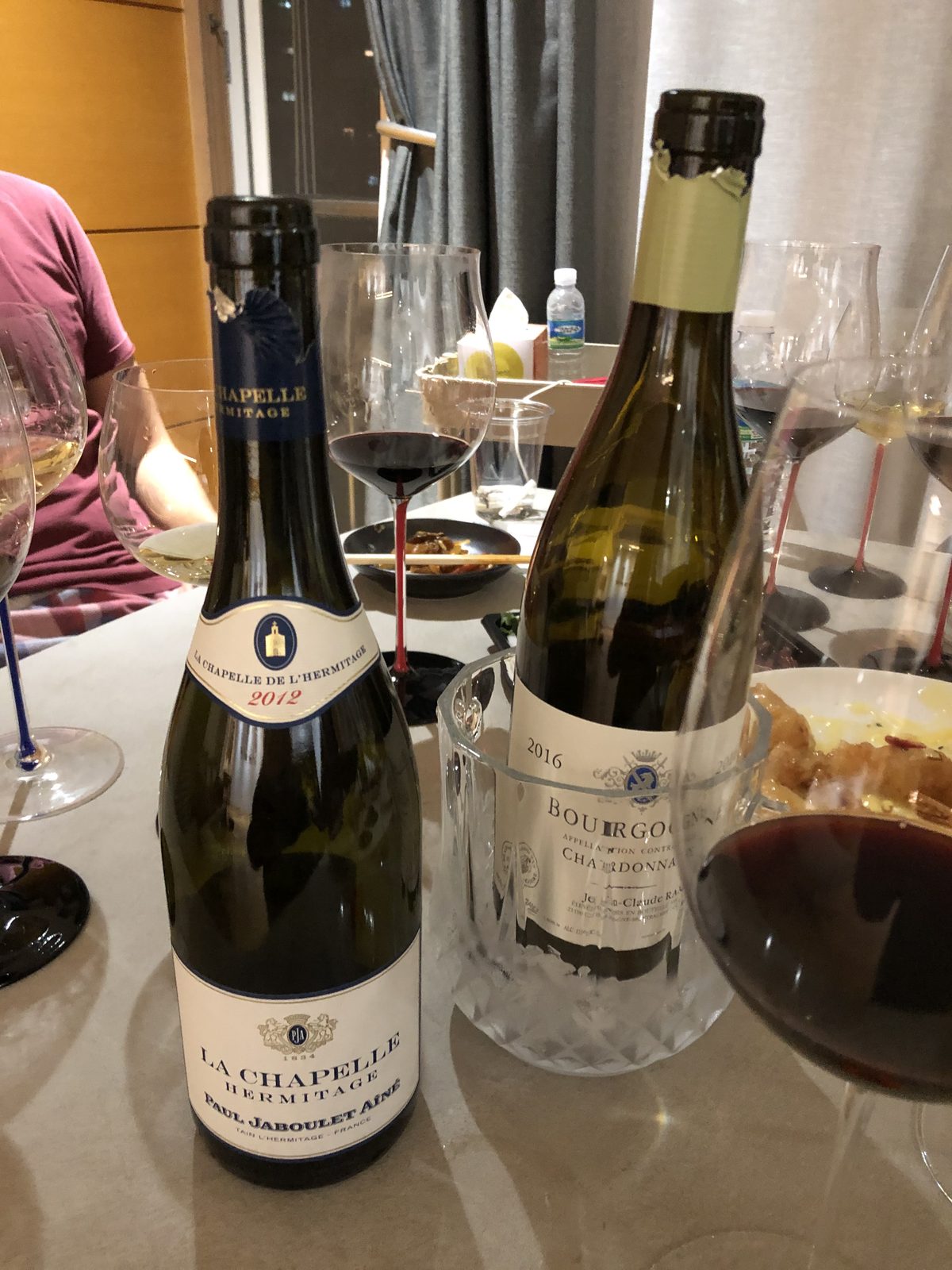
Almost every great wine name on a French label points at a piece of ground. La Chapelle does not. It points at a small stone chapel on the crown of the hill of Hermitage, dedicated to Saint Christopher, which the Jaboulet family acquired in 1919 and then borrowed the name of. The wine itself is a blend drawn from the house’s parcels across the hill — Les Bessards, Le Méal, Les Greffieux, Les Rocoules — assembled each year rather than delimited once and for all.
The hill’s own founding story is older and better. A knight, Henri-Gaspard de Stérimberg, is said to have come back from the Albigensian Crusade around 1224, withdrawn to the slope above Tain to live as a hermit, and planted vines there to give wine to pilgrims. The appellation kept his manner of living as its name. The chapel that stands there now was rebuilt in the nineteenth century, sitting on a terrace in the middle of the vines — a building small enough to walk past, attached to one of the most valuable names in the Rhône.
The Long Repair
For a stretch of the twentieth century La Chapelle was among the most admired Syrahs in the world, and then, from the 1990s, it was not — a run of vintages that regular buyers found thin and hurried, and a reputation that slipped further each year it failed to recover. In 2006 the estate was bought by the Frey family, and Caroline Frey, already making wine at Château La Lagune in the Médoc, took over the running of it.
What followed was unglamorous and slow: the vineyard team was doubled, the cellar rebuilt, yields cut hard, a second wine introduced to take the fruit that no longer belonged in the grand vin, and the viticulture pushed steadily toward organic farming. None of that produces a headline in its first year. It produces one about six years in, which is roughly where 2012 falls — the vintage Frey has pointed to as the one where the change in the vines finally came through into the glass.
2012
The wine is pure Syrah, drawn in this year largely from Le Méal, and raised in a modest proportion of new oak — a restraint that would have been unthinkable in the era when Northern Rhône ambition was measured in barrels. It is a big wine that does not spend its size on padding: dark spiced fruit, black olive, a savoury iron note, and underneath all of it the stony, faintly scorched character that Hermitage granite gives when the vintage is generous.
At eight years old it was, frankly, opened early. This is a wine with two or three decades of useful life in it, and everything about the finish — long, tight, still faintly tannic — said as much. What you get for opening it young is the fruit at its most vivid and the structure at its most legible, which is not a bad trade if you know what you are giving up.
At a Home Table
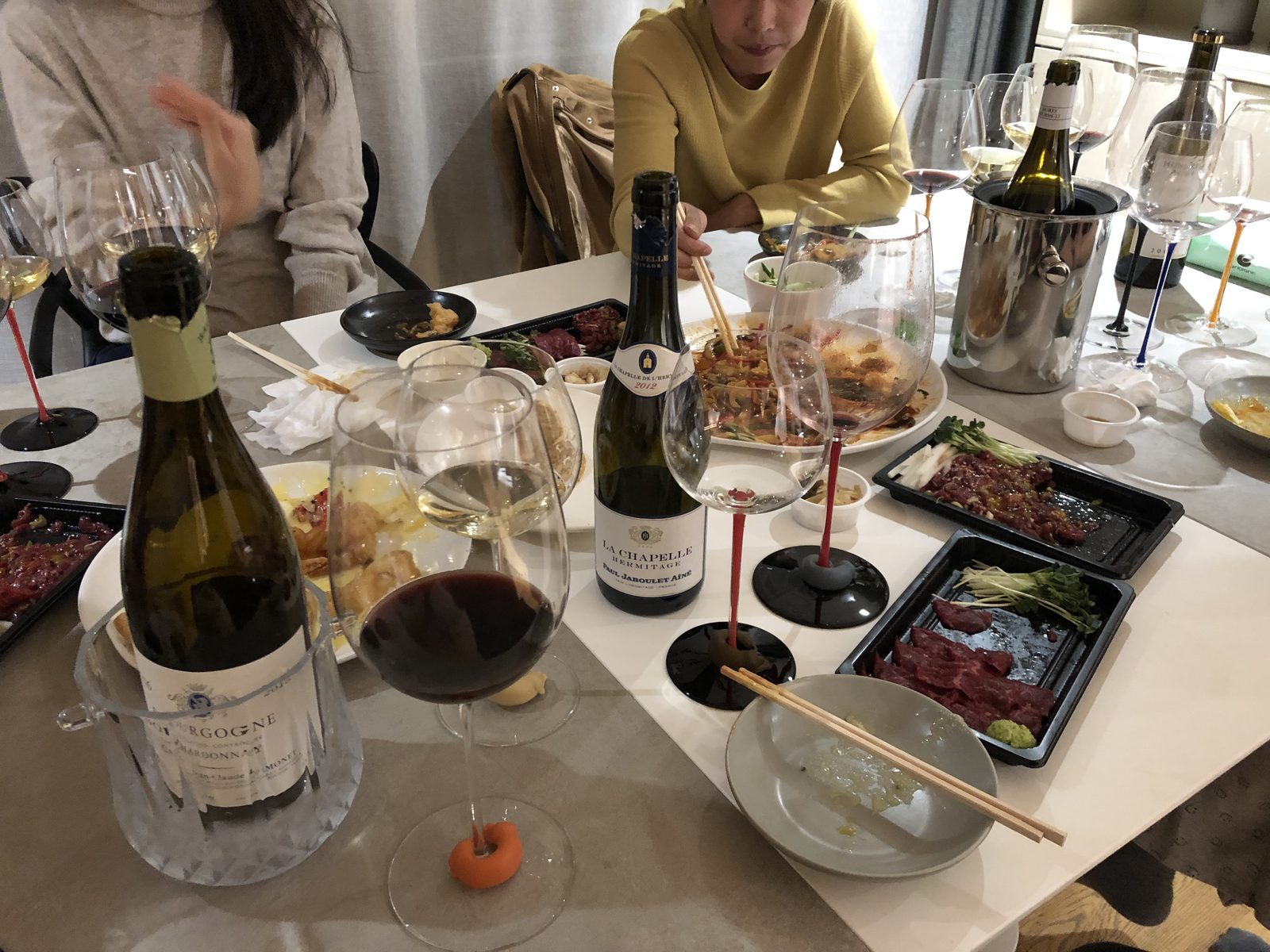
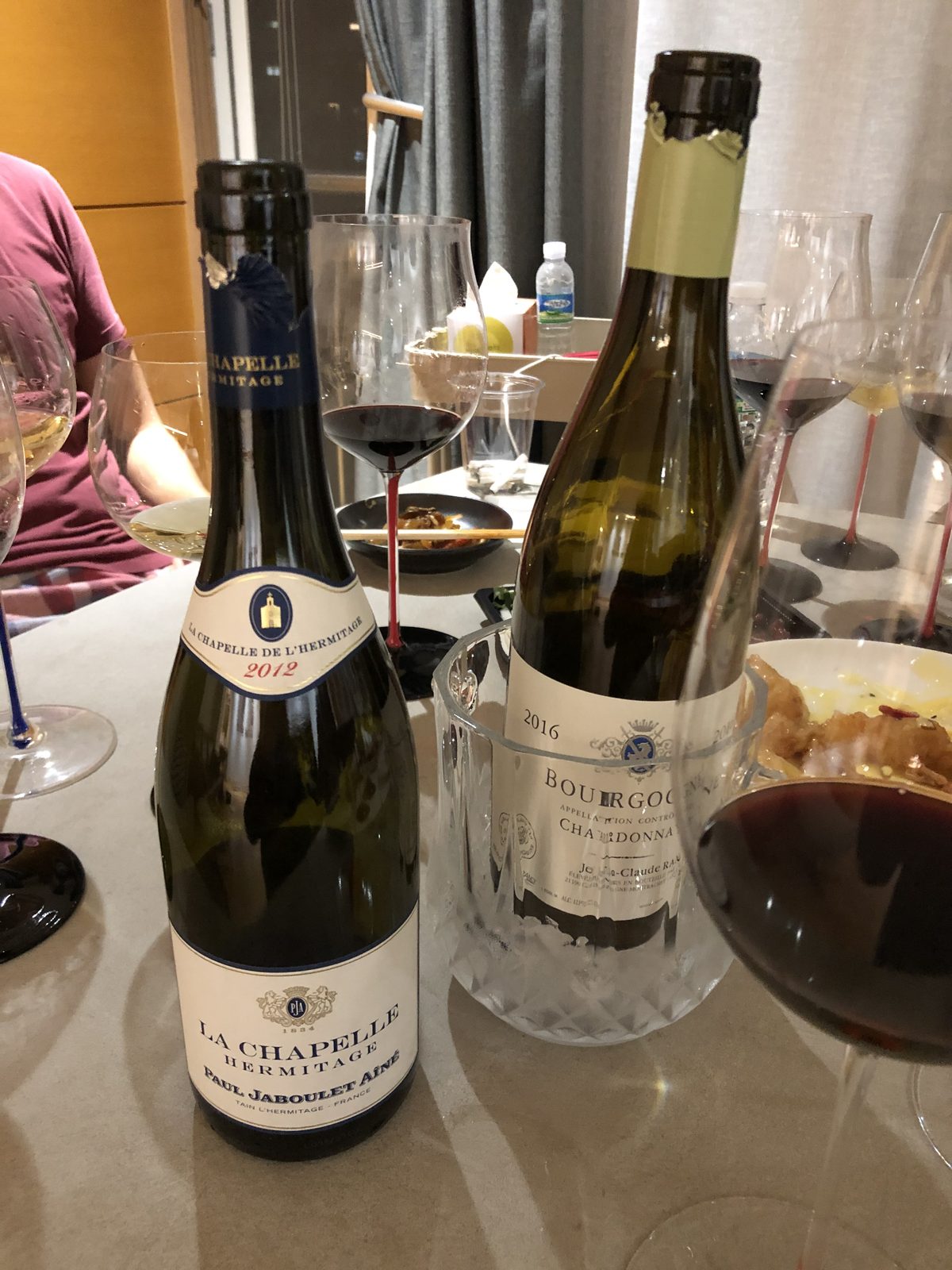
It was drunk at a dining table at home, alongside a Bourgogne Chardonnay from Ramonet and a spread of raw beef and cold dishes — the sort of evening where the food is assembled rather than composed and the wines carry the occasion. Hermitage is usually written about as a cellar wine, something to be brought out for an event. It is worth noting how well it behaves when there is no event: a hill wine, a weeknight table, and nobody making a speech about it.
The chapel on the hill was never a vineyard. But standing where it stands, it has a better claim than most buildings to give its name to what grows around it. The same hill is where Chave draws Cathelin — a reminder that Hermitage is small enough that two very different houses are, in the end, arguing about the same rock.