The Bourgogne from the Frost Year
Domaine Ramonet Bourgogne Chardonnay 2016
- Producer
- Domaine Ramonet
- Appellation
- Bourgogne
- Grapes
- Chardonnay
- Tasted
- 10 October 2020
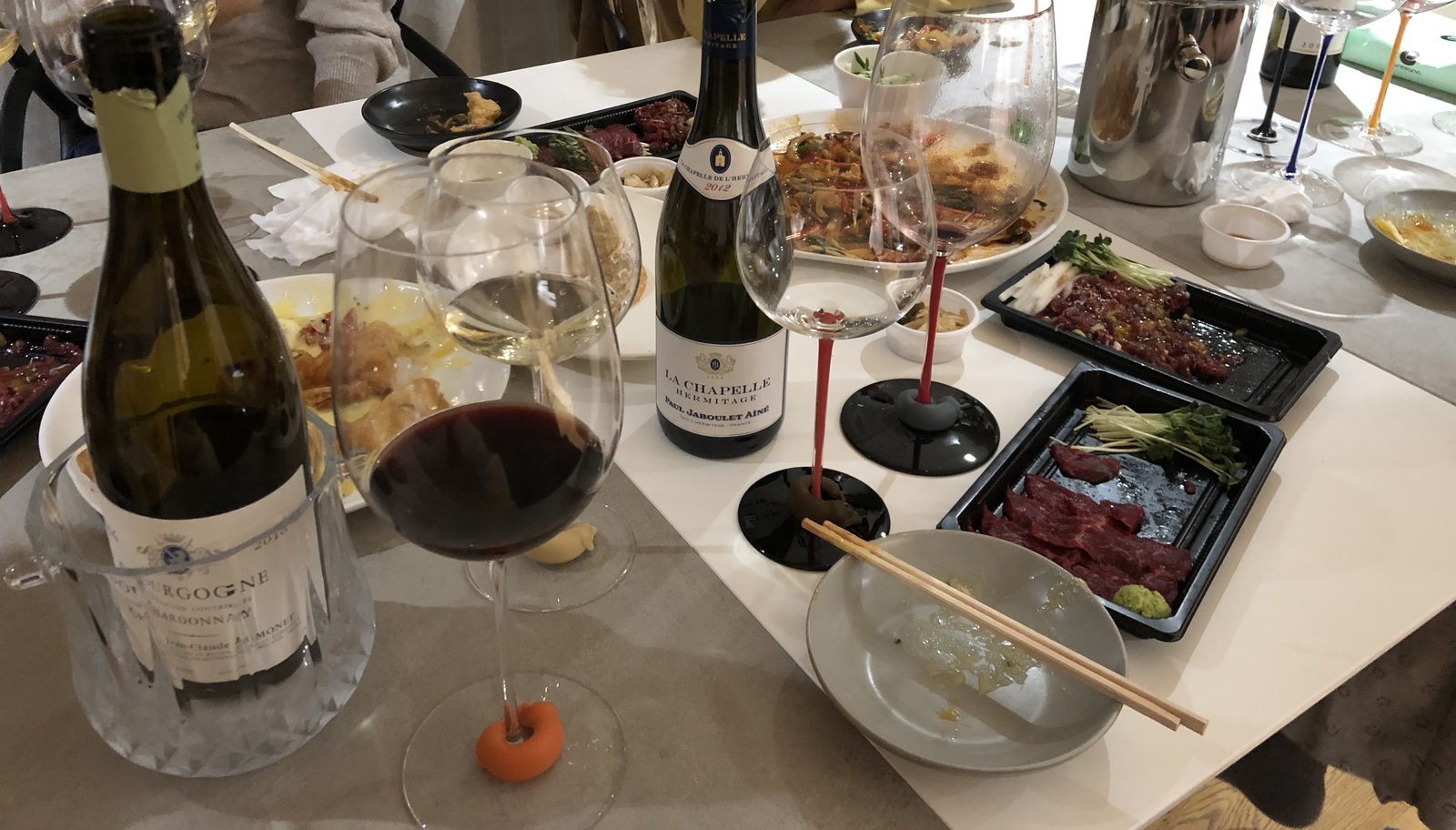
The Ramonet name is usually attached to the top of the ladder. The domaine holds slivers of Montrachet, Bâtard-Montrachet, Bienvenues-Bâtard-Montrachet and Chevalier-Montrachet — parcels measured in fractions of a hectare, bottled in counts that rarely reach four figures. Those are the wines that carry the reputation.
This is not one of them. It is the Bourgogne blanc: the bottom rung, the appellation that covers the whole of the region and promises nothing about where the fruit stood. What makes it worth opening is the address behind it rather than the words on the label.
The House
Pierre Ramonet built the estate in the late 1920s, at a moment when Chassagne-Montrachet was still selling most of its wine to négociants rather than bottling under its own name. Three generations on, the domaine runs to roughly seventeen hectares spread around Chassagne, Puligny-Montrachet, Saint-Aubin, Bouzeron and Pernand-Vergelesses, with Noël and Jean-Claude in charge and the balance tipped heavily toward white — something close to seven bottles in ten.
One Night in April
2016 is remembered in Burgundy for a single night. The frost that came at the end of April was a winter frost rather than a spring one, and it ran right up the hillside across the Côte de Nuits and most of the Côte de Beaune. The region lost something on the order of a third of its crop in a matter of hours.
Chassagne-Montrachet took it badly. Losses across the commune’s whites and reds together ran to roughly a quarter, and individual growers fared far worse — some in the village came out of the year with a third of a normal crop. In the Chassagne end of Montrachet itself the damage was severe enough that several domaines pooled what fruit they had and vinified it together, producing a couple of barrels between them.
What survived ripened in a long, generous summer, and the wines that emerged were better than anyone standing in the vineyard in April had any right to expect. The whites came out uneven across the region but bright and taut at their best. A small crop concentrates what is left, and in a year like that the concentration reaches the humblest bottling in the cellar as surely as the grandest.
In the Glass
At four years the wine was still in its opening register, and it made no attempt to be more than it was. Pale straw, a nose of lemon peel and white orchard fruit with a chalky edge behind it, and then a palate that ran narrow and brisk rather than broad — the acidity of the vintage doing most of the structural work, oak nowhere in evidence as oak, the finish saline and short of grand gestures.
Bourgogne blanc from a serious cellar is a particular pleasure precisely because it is not asked to perform. It sat on the table with the food, was drunk rather than considered, and did the job well.
The Table
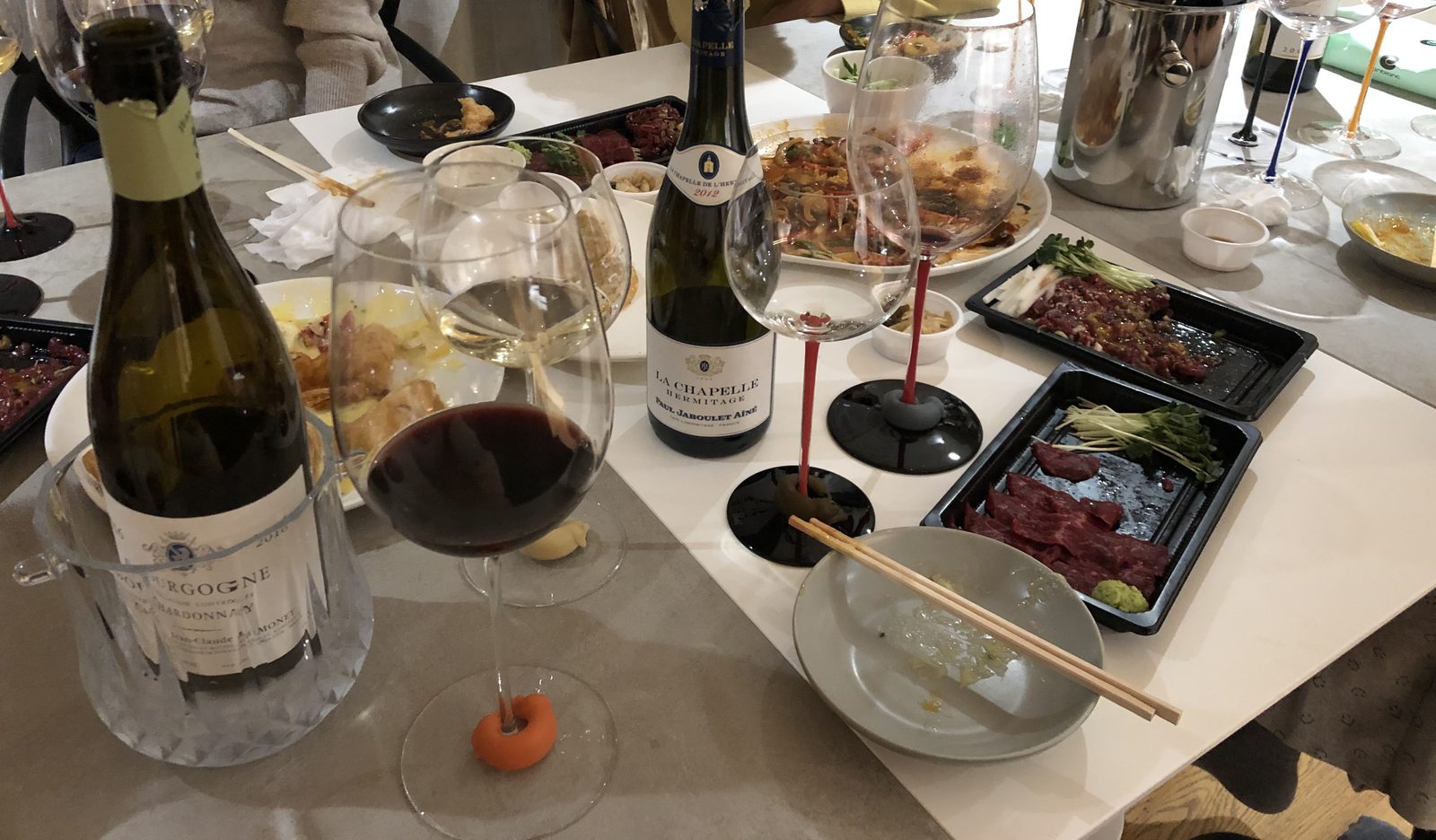
A home dining table, a spread of raw beef and dishes in dark, savoury sauces, and glasses going round faster than a tasting would allow. The Hermitage La Chapelle 2012 was open alongside it. Two wines with nothing in common except the evening — which is generally how the good ones are drunk.