The Clos That Named the Village
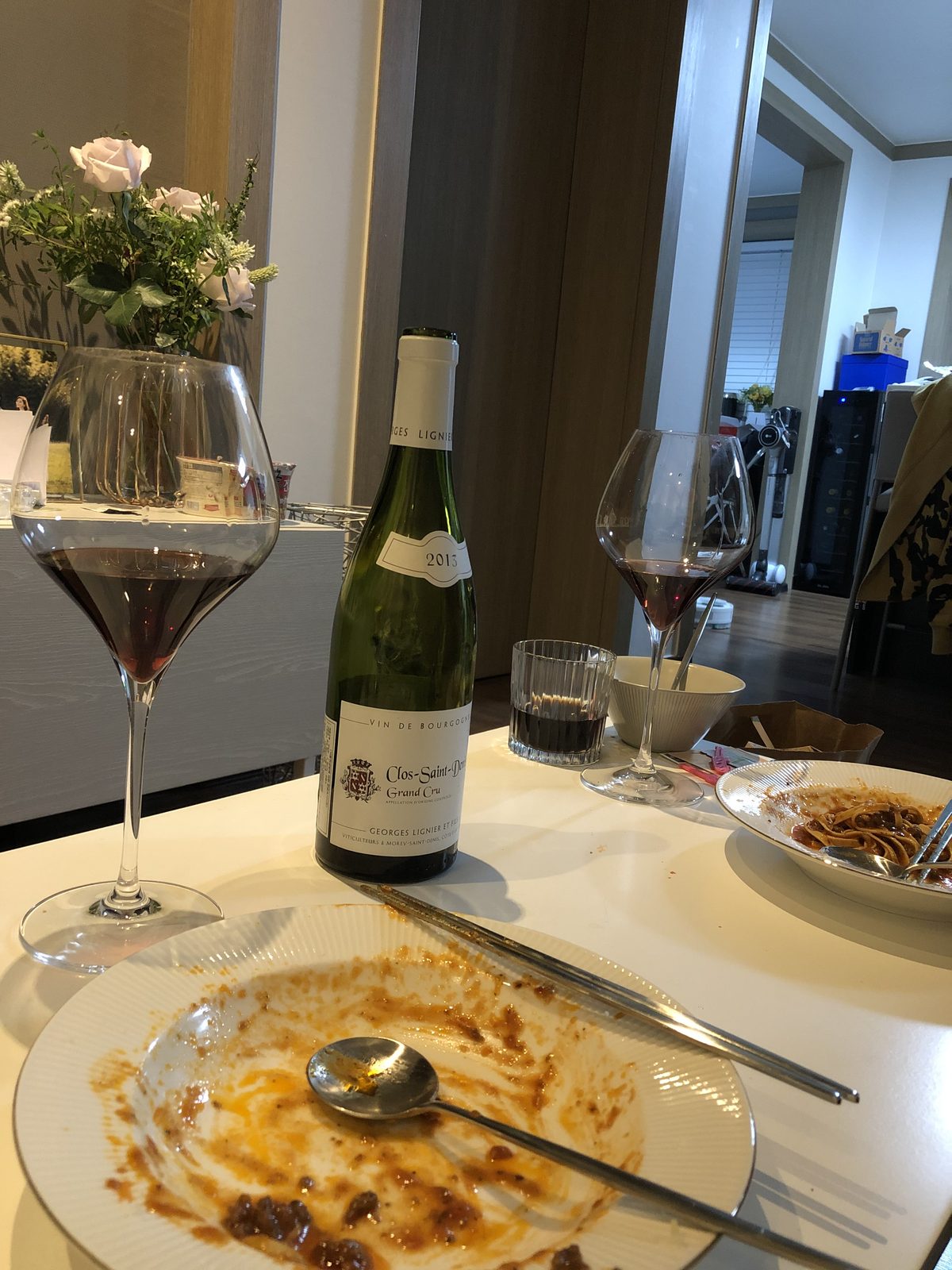
Domaine Georges Lignier et Fils Clos Saint-Denis Grand Cru 2013
- Producer
- Domaine Georges Lignier et Fils
- Appellation
- Clos Saint-Denis Grand Cru
- Grapes
- Pinot Noir
- Tasted
- 18 October 2020
Until 1927 the village was simply Morey. Then, following a fashion that swept the Côte d’Or between the wars, it annexed the name of its most celebrated vineyard and became Morey-Saint-Denis. The choice is worth pausing over: Morey has five grand crus, and Clos de la Roche is both larger and, by most reckonings, greater. The village took the other name.
The vineyard’s own name is older than the argument. It traces to the Collégiale de Saint-Denis de Vergy, a religious community founded in 1023, which established vines on the site at some point over the following two centuries. Six and a half hectares, halfway up the slope, and a name carried down nine hundred years.
The Largest Share
Grand cru holdings in Burgundy are usually measured in fractions, and Clos Saint-Denis is split among a long list of owners. Georges Lignier et Fils has the biggest single piece of it — around 1.49 hectares, better than a fifth of the whole vineyard. For a grand cru of this size that is an unusual concentration, and it makes the domaine’s bottling one of the more available windows onto the site.
The estate itself runs to roughly sixteen hectares, broken into some fifty parcels across seventeen appellations — the ordinary arithmetic of a Burgundian family holding, accumulated by inheritance rather than design. Benoît Stehly, Georges Lignier’s nephew, worked a decade alongside his uncle before taking charge of both vineyard and cellar in 2008.
Not the Neighbour
Clos Saint-Denis and Clos de la Roche sit almost side by side, and they are routinely mistaken for versions of the same idea. They are not. The soils under Clos Saint-Denis are thinner limestone and clay carrying iron oxide, well drained at mid-slope, and they produce the most delicate of Morey’s grand crus — a wine that tends to read as a Chambolle rather than a Morey, built on red fruit and floral lift and a supple, unhurried texture.
Clos de la Roche answers with the opposite: density, darker fruit, a structural intensity that rewards patience and can seem forbidding young. Whether one prefers finesse or force is a matter of temperament. What matters here is that the vineyard commits early to the first, and the vintage happened to agree with it.
A Late, Thin Year
2013 gave Burgundy almost nothing easily. A cold, wet winter carried on into spring and pushed budburst late; flowering was late again and went badly, cutting the crop before summer had properly begun. A violent hailstorm on 23 July tore through the northern Côte de Beaune — Volnay, Pommard, Beaune, Savigny, Pernand — but spared the Côte de Nuits, which was the year’s one piece of luck.
Ripening came right at the end. Three weeks before the harvest did most of the work, and because the picking ran well into October the days doing that work were short and cool. The reds of the Côte de Nuits came in light-framed, high in acid and phenolically ripe — wines for the near and middle term rather than the long haul, and among them a fair number with real depth and a silken texture.
Set that against a vineyard whose whole disposition is toward delicacy and the pairing looks less like a compromise than a match. A muscular year would have argued with Clos Saint-Denis. This one did not.
In the Glass
At seven years the wine was open and unforced. Pale to medium ruby, a nose of red cherry and dried rose over the first hints of forest floor, and a palate that carried its weight lightly — fine-grained tannin, the year’s acidity running clean underneath, and length that came from persistence rather than volume. It did not need decanting and would not have thanked anyone for more cellar time.
The Table
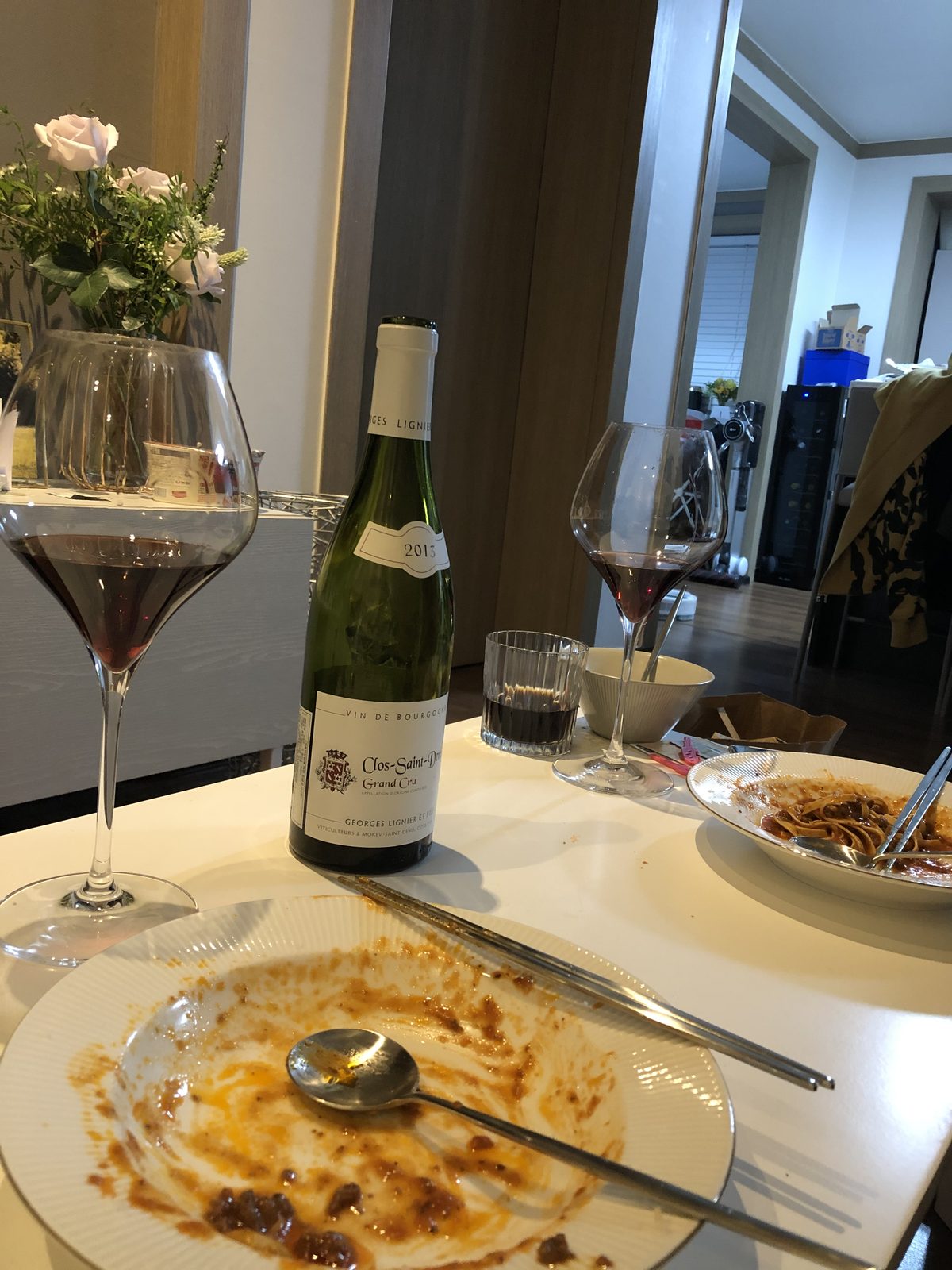
It was drunk very late, at home, with pasta in a dark tomato sauce and white roses on the sideboard, the plates already cleared. The vineyard is a grand cru; the evening was supper. Elsewhere in this archive, a bottle of Clos de la Roche from a different branch of the family makes the case for the other side of Morey.