The Poppies of Knights Valley
Peter Michael Winery 'Les Pavots' 2003
- Producer
- Peter Michael Winery
- Appellation
- Knights Valley
- Grapes
- Cabernet Sauvignon, Cabernet Franc, Merlot, Petit Verdot
- Tasted
- 6 November 2020
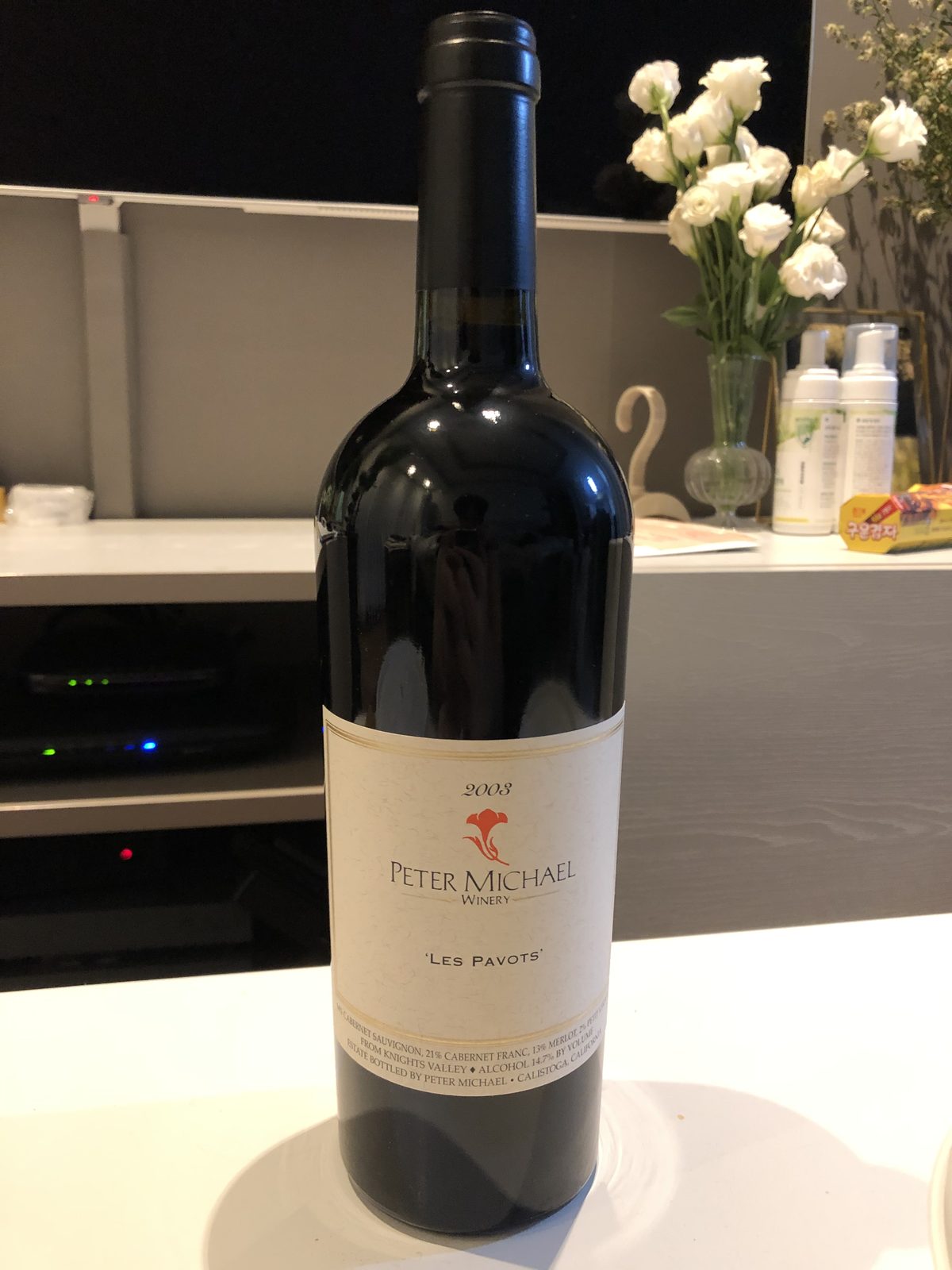
Knights Valley is the appellation people forget. It sits in Sonoma County, tucked between the Mayacamas and the Napa line, warmer than Alexander Valley and higher than most of what surrounds it, and for decades it was the place other people’s grapes came from rather than a name in its own right. Sir Peter Michael first saw the property in 1982 and bought in with a long horizon in mind; the Les Pavots vineyard went into the ground the following year, and the winery followed in 1987.
Les Pavots means the poppies, for what grew on the slope before the vines did. The name has the modesty of an English understatement and the accent of a French ambition, which is a fair description of the whole project: a Croydon-born engineer and broadcaster, knighted in 1989, making an estate Cabernet blend on a Californian mountainside with a run of winemakers — Helen Turley at the very start, then Mark Aubert, Vanessa Wong, Luc Morlet — whose names are now a partial history of modern California in themselves. Morlet was in the cellar for this vintage.
2003, and the Cost of Nerve
2003 tested everybody on the North Coast. Heat spikes in March, then the wettest April on record, which delayed the vines and left berry set uneven; some sites ran nearly a month behind their normal pace, and yields came in anywhere from ordinary to almost nothing. A long, cool summer followed, which was a gift to flavour development but did nothing for anyone’s nerves. Then September turned warm — a stretch of eighty- and ninety-degree days that pulled the harvest forward and finally brought the tannins round.
The result was a vintage that rewarded growers who could wait and punished those who could not. Picked at the right end of that September, the wines came in ripe, supple and structured; picked early or late, they did not. It is not a year one buys blind, which is exactly why a bottle from a serious address seventeen years on is worth opening.
The Blend, and What Seventeen Years Did
The back label reads like a Médoc: 64% Cabernet Sauvignon, 21% Cabernet Franc, 13% Merlot, 2% Petit Verdot, estate-grown in Knights Valley, 14.7% alcohol. That is a lot of Cabernet Franc for California — enough to change the aromatic register rather than simply fill in the corners — and it is the part of the blend that reads most clearly with age.
At seventeen years the wine had passed out of its dark, dense phase and into something more articulate. Cassis and black plum still sat at the centre, but they had been joined by dried herb, tobacco leaf and a graphite edge, with the oak long since folded in and no longer identifiable as oak. The tannins were fully resolved and the alcohol, high on paper, simply did not announce itself. This is what a warm-vintage California Cabernet is supposed to do given enough time, and what a fair number of them never manage.
Friday, With Takeaway
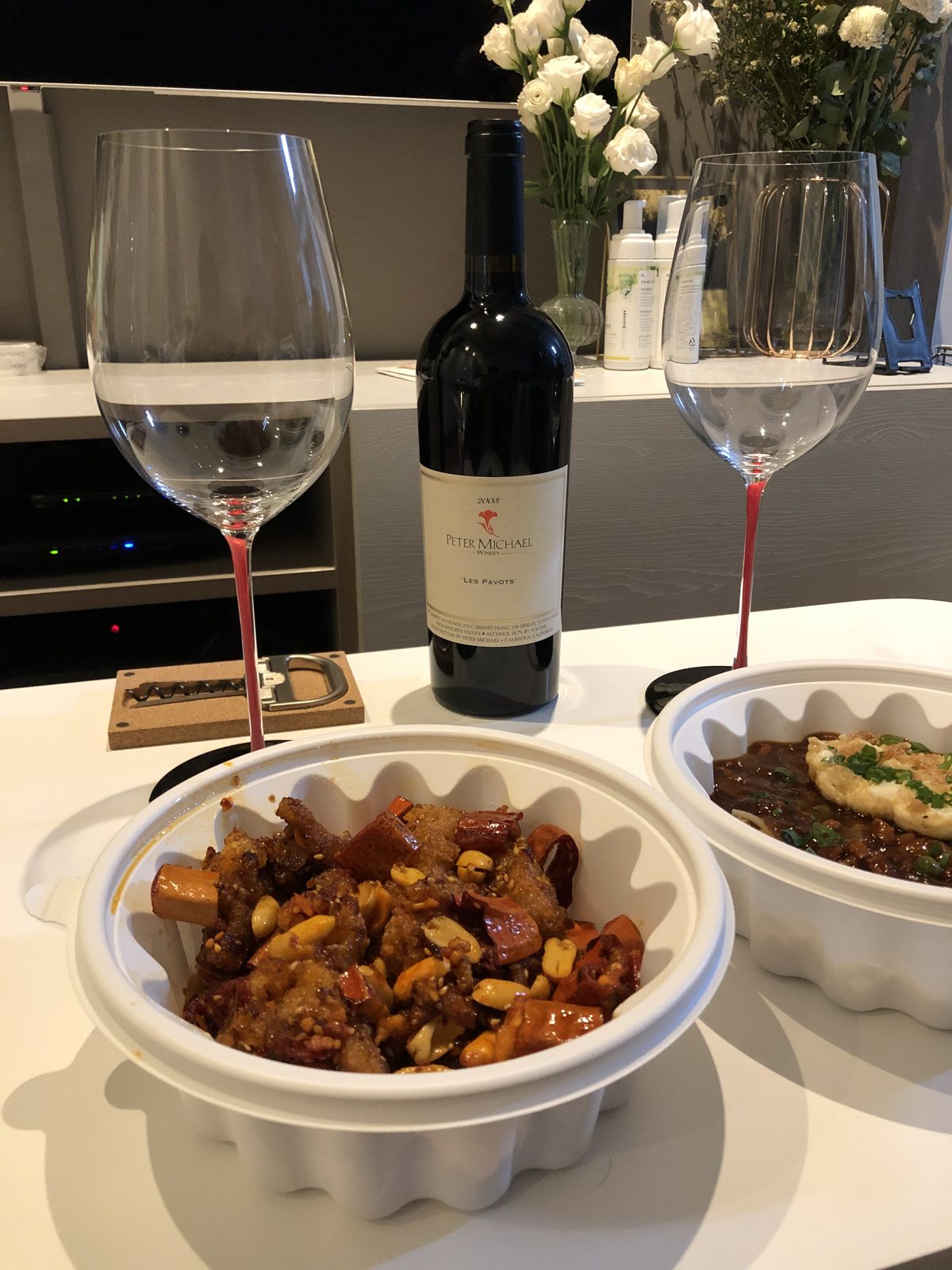
It was drunk at home with two glasses on the table and a couple of takeaway Sichuan dishes — chilli-fried chicken, something braised in dark sauce. On paper this is an error: a seventeen-year-old Cabernet blend has no obvious business with dried chilli and Sichuan pepper.
In practice the pairing worked in the direction nobody plans for. The mature end of the wine — the herbal, savoury, tertiary half — sat perfectly well beside the salt and the spice, and the resolved tannins meant there was no astringency for the chilli to sharpen. What it could not do was compete with the heat for attention, and there is no reason it should have. Some bottles get an occasion. This one got a Friday, which is arguably the higher compliment.