Twelve Hundred Bottles from the Village Line
Domaine du Comte Liger-Belair Nuits-Saint-Georges 1er Cru Aux Cras 2015
- Producer
- Domaine du Comte Liger-Belair
- Appellation
- Nuits-Saint-Georges 1er Cru
- Grapes
- Pinot Noir
- Tasted
- 12 November 2020
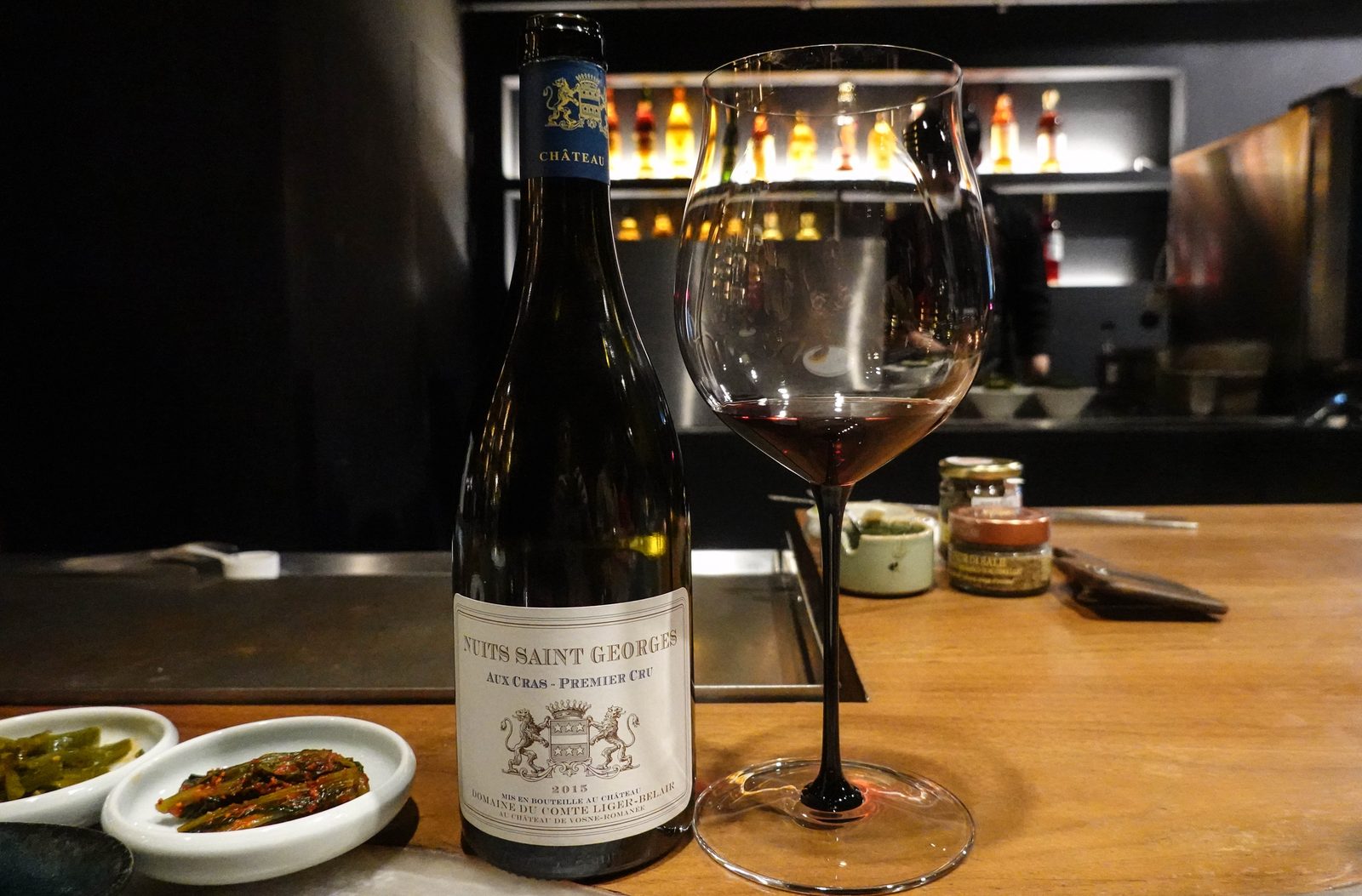
Everything in the domaine’s range comes from Vosne-Romanée except this. The Nuits-Saint-Georges holding is a lease rather than a family inheritance, it is small even by the standards of a house whose largest wine runs to a few thousand bottles, and it sits so close to the commune boundary that almost every description of it reaches for the neighbouring village to explain it.
The parcel is 0.3745 hectares at the southern end of Aux Cras, a premier cru of about three hectares on the northern side of Nuits-Saint-Georges, just below Aux Boudots on the slope and a short walk from Malconsorts on the Vosne side. It was classified 1re Classe in the 1861 ranking, and the cadastre maps drawn in 1827 show boundaries almost identical to the ones in use now — an unusually undisturbed piece of ground in a region where parcels have been divided and recombined for two centuries.
How It Came to Be Here
The land belongs to the Lamadon family. When the brothers François and Pierre Lamadon retired, Louis-Michel Liger-Belair took on the lease, and 2006 was his first vintage from the site — labelled Les Cras that year, and Aux Cras from 2007 onward. The vines were already old when he arrived and are now approaching ninety years; the parcel yields something in the region of twelve hundred bottles.
The Lamadon name connects, through marriage, to the Sirugue family and through them to the Jayers — which is the kind of detail that means very little about how a wine tastes and a great deal about how vineyards in the Côte de Nuits actually change hands. Almost nothing here is bought on the open market. Parcels move when a family runs out of people willing to farm them.
What Nuits Does with a Vosne Address
Nuits-Saint-Georges has a settled reputation: sturdier, more earthbound, more overtly tannic than Vosne, with the perfume traded for grip. Aux Cras is the standing exception, and specifically because of where it lies. Mid-slope, at the far northern end of the commune, it produces wines that Burgundy writers have spent years calling almost Vosne — more transparent, more lifted, less of the iron-and-earth signature that the village is known for.
Whether that is the ground or the hand is not a question anyone can settle from the outside. It is worth noting only that the domaine’s village wine in Vosne itself, grown on heavy clay at the foot of the slope, is the firmer and more reserved of the two sites, while the premier cru in the next commune over is the lifted one. The appellation names and the wines point in opposite directions, which is roughly the normal state of affairs in the Côte de Nuits.
2015, in Nuits
The vintage was hot and dry, the berries were small, the yields were low, and the wines came in concentrated — a description that applies across the Côte de Nuits and has been set out at more length elsewhere in this archive. What is worth adding is what a year like that does to a village with a reputation for tannin. It fills in. The frame that can read as austere in a cool vintage gets upholstered, and the wine becomes generous without becoming soft.
At five years old this was still very young — dark cherry and rose over a fine, tight tannic weave, with the sappy red-fruited lift that the site is credited for, and a finish that closed rather than lingered. It was doing what a great many 2015s were doing at that age: showing all of its material and none of its eventual shape.
At the Counter
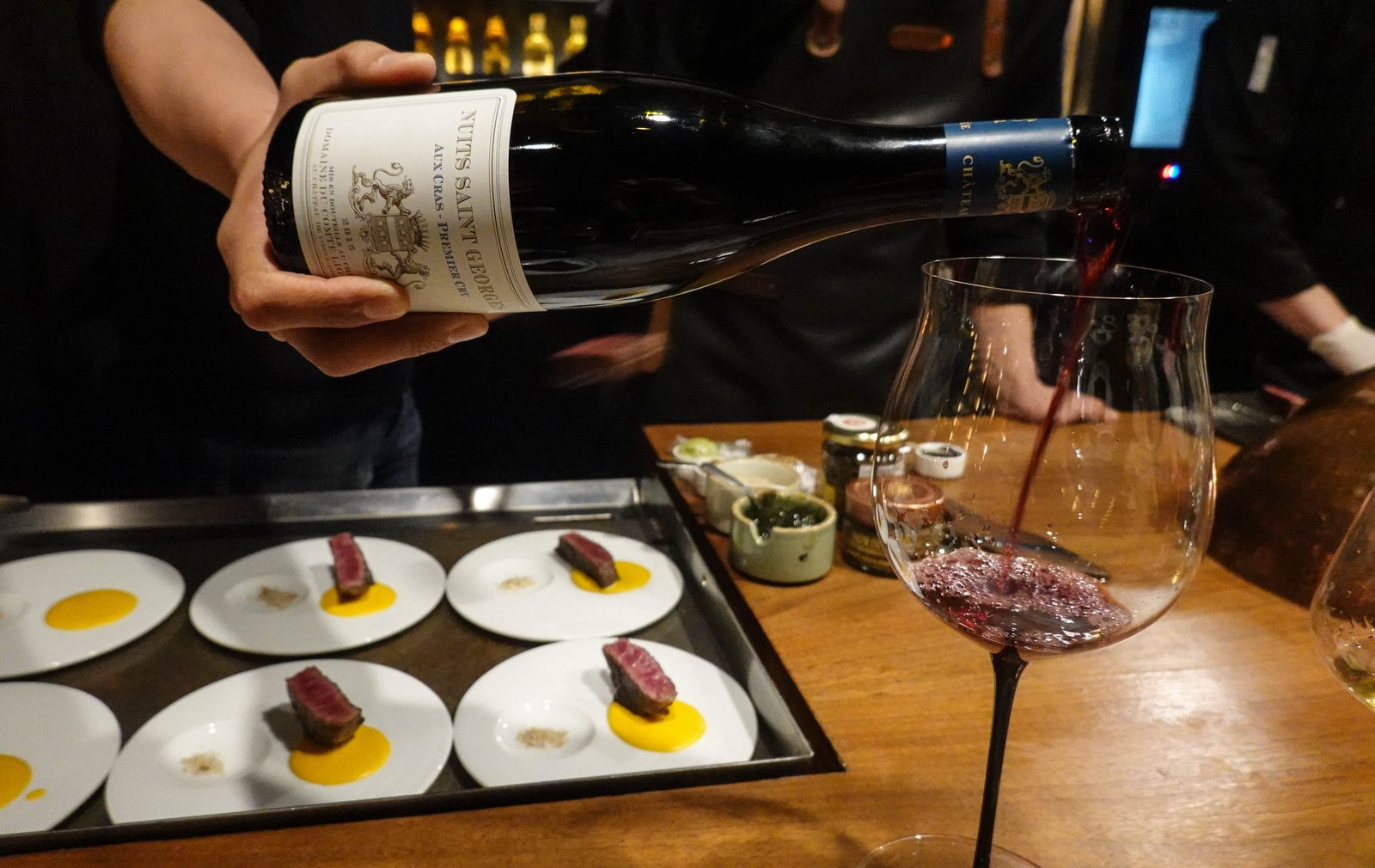
It was poured between a thirty-five-year-old Champagne and a Grands Échézeaux 2014, which is an unkind slot for any premier cru and a particularly unkind one for a wine this young. It was not asked to compete and it did not try to.
There is a specific pleasure in the small bottlings from great addresses — a third of a hectare, twelve hundred bottles, a name most people have never had to learn. The monopole below the château will always be the reason anyone knows the domaine. This is the wine that shows what the same hands do on ground they do not own.