The Vintage Nobody Wanted
Castello Banfi Brunello di Montalcino 2014
- Producer
- Castello Banfi
- Appellation
- Brunello di Montalcino DOCG
- Grapes
- Sangiovese
- Tasted
- 13 November 2020
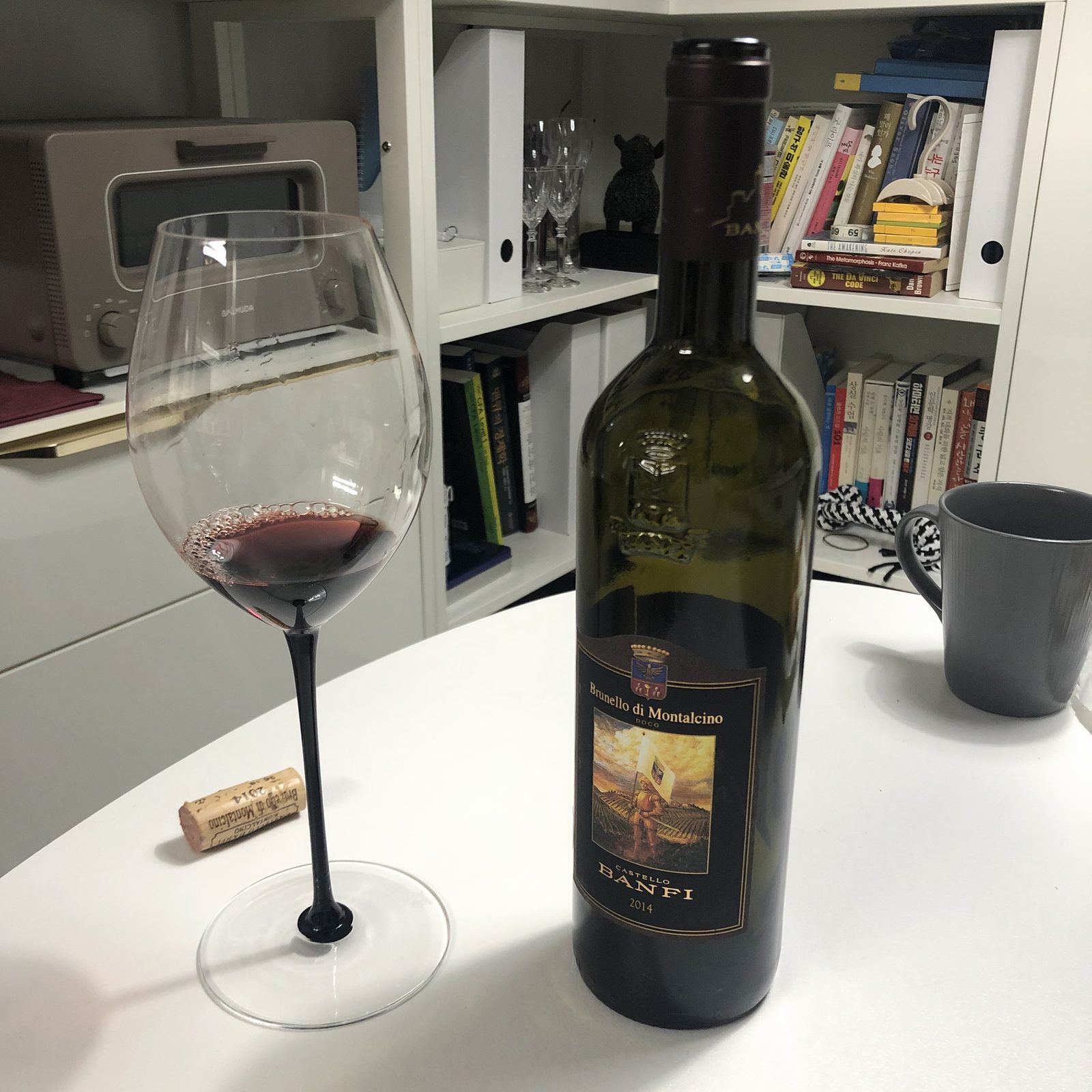
Some vintages are remembered for what was made. 2014 in Montalcino is remembered for what wasn’t. The rain started early and never really stopped: a mild, wet winter running into a grey summer, hail scattered through the hills, and then heavy rain again in September, exactly when Sangiovese needed sun. Several of the appellation’s most respected names — Biondi-Santi, Conti Costanti, Salvioni, Padelletti among them — looked at what came into the cellar and declined to make a Brunello at all. The fruit went into Rosso di Montalcino instead, or into nothing.
Against that backdrop, the fact that a bottle labelled Brunello di Montalcino 2014 exists at all is worth pausing over. It means someone decided the wine cleared the bar.
The Estate That Could Absorb a Bad Year
Castello Banfi is not a small grower’s operation, and in a year like 2014 that mattered. The estate began in 1978, when John and Harry Mariani — New York wine importers, sons of an Italian immigrant, and named after an aunt, Teodolinda Banfi — started buying vineyards in the south of the commune around Sant’Angelo Scalo. By the early 1980s the holding ran to close to three thousand hectares, a scale unlike anything else in Montalcino, with a large fraction of it broken into individually farmed parcels.
That scale bought two things a difficult vintage rewards. The first is selection: with that many separate sites, a cellar can afford to be ruthless about what goes into the top wine and send the rest downstream. The second is knowledge. Banfi ran decades of clonal research on Sangiovese, work that produced several officially registered clones, and developed its own hybrid fermentation vessels — stainless steel for temperature control, wood for the part of the extraction that wood does better. None of this makes a wet year dry. It does give you more levers to pull.
In the Glass
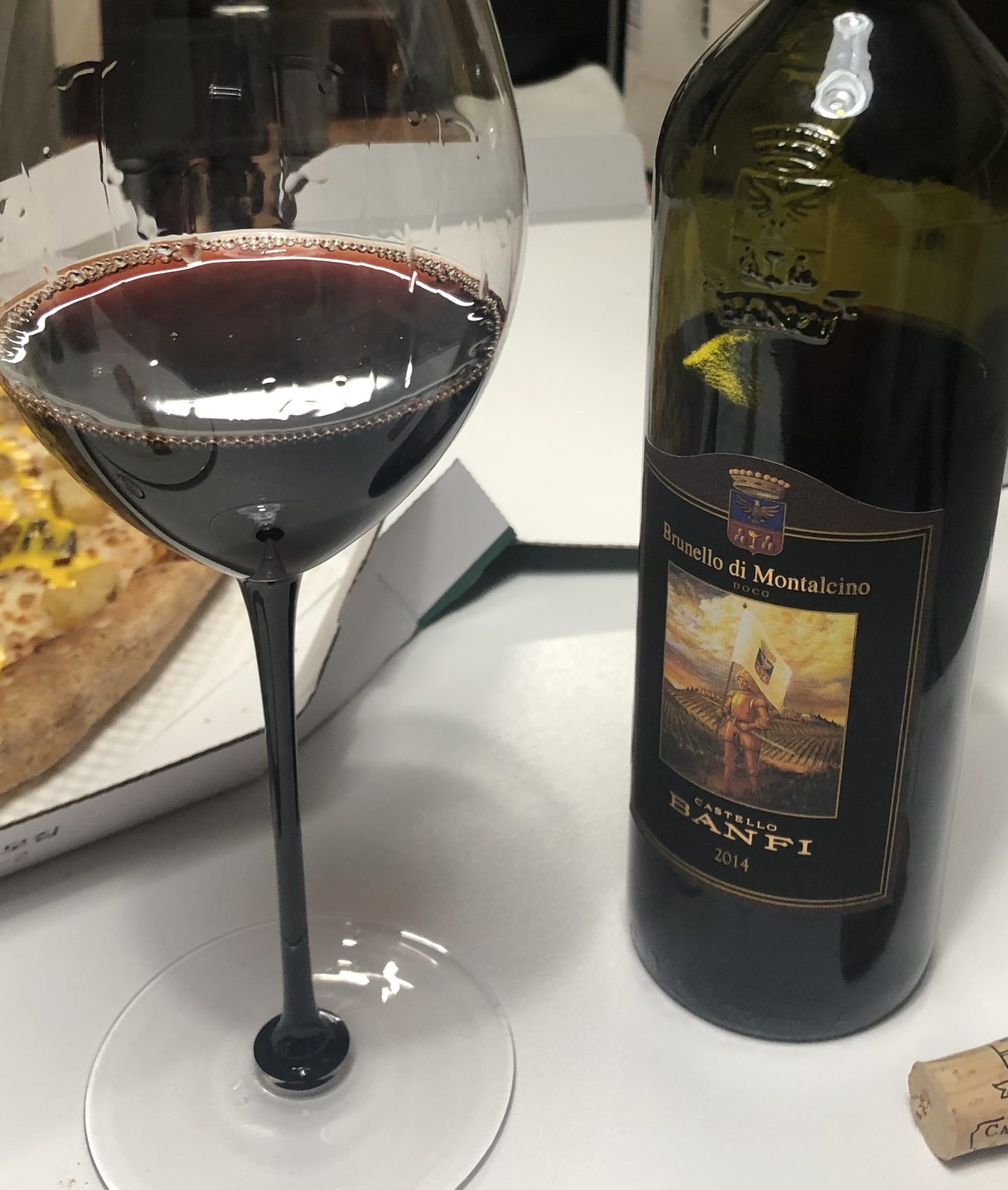
Opened at home, six years after the harvest, with a delivered pizza on the table — not the setting anyone stages for a Brunello, and probably the right one for this particular bottle.
The colour was already showing a little translucency at the rim. The nose was sour cherry and dried herbs, with a wash of forest floor underneath and a faint sweet spice from the oak, none of it loud. What struck me was the absence of the thing 2014 is accused of lacking: there was no hollow in the middle. The wine was lean rather than thin, and the tannin — fine, dry, more textural than gripping — arrived late and held the finish together longer than the weight of the fruit suggested it would.
It is not a Brunello that will be argued about in twenty years. But it did the honest work: it tasted of Sangiovese, and of Montalcino, in a year that made both hard to find. Poured next to a slice of pizza on a weeknight, that turned out to be exactly enough.
There is a version of wine collecting that only ever opens the great years, and by doing so never learns what a place tastes like when the weather refuses to cooperate. The difficult vintages are where the estate’s actual decisions become visible — what got declassified, what got picked, when someone chose to stop. This bottle was a small, useful lesson in that.