Morgeot in a Warm Year
Domaine Ramonet Chassagne-Montrachet 1er Cru Morgeot 2009
- Producer
- Domaine Ramonet
- Appellation
- Chassagne-Montrachet Premier Cru
- Grapes
- Chardonnay
- Tasted
- 18 November 2020
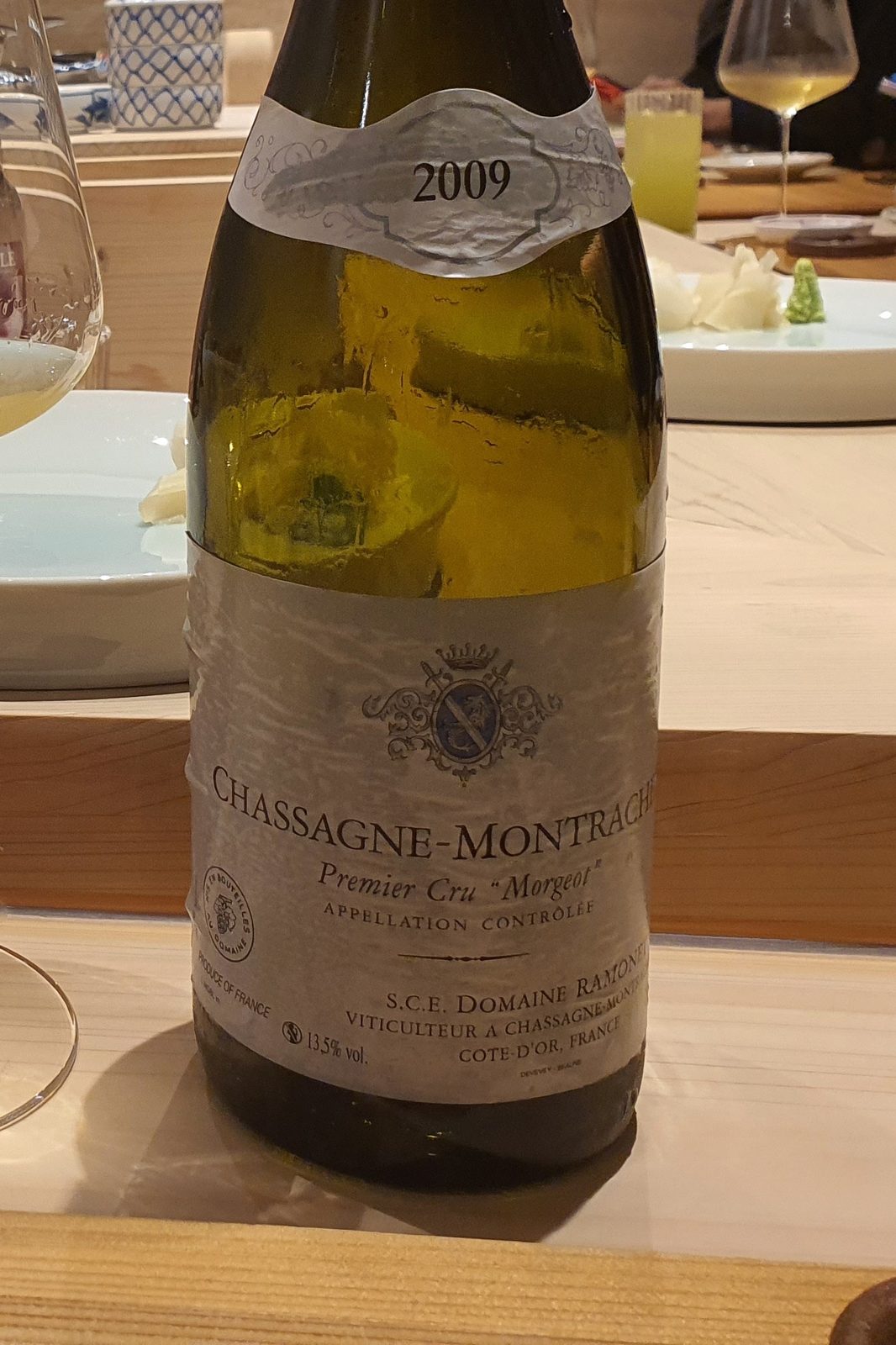
Morgeot is the giant of Chassagne-Montrachet: the largest of the village’s premiers crus by a wide margin, big enough that the name covers a spread of quite different slopes and soils. Its reputation is for breadth — wines with more flesh and more shoulder than the finer, tighter climats further north toward Puligny. In a cool year that is a virtue. In 2009 it was a question.
2009 was a warm growing season across the Côte de Beaune, and it produced whites that were ripe, fleshy and immediately generous, with acidity that in many cellars ran low. Most estates picked by the end of the first week of September. The consensus that formed afterwards was that these were wines to enjoy for their fruit rather than to lay down — a vintage that spoke of the year more than of the individual vineyard. Pairing that warmth with Chassagne’s broadest premier cru sounds like a recipe for something soft.
The House Style Cuts the Other Way
What holds this bottle upright is the way Ramonet works. The domaine goes back to Pierre Ramonet, who built its reputation across the middle of the last century and whose name still sits on the label; it passed through André to Noël and Jean-Claude, with the next generation now involved. Its holdings in Morgeot amount to a little over a hectare in white.
The cellar’s habits are unfashionably rough in a useful way. The juice is barely settled before fermentation, so the wines start with more solids than most, and new oak is used sparingly. The result is a dense, slightly reductive texture — sometimes a mentholated note on opening that blows off with air — and wines that are famously bad at first impressions. The domaine’s whites were notorious in blind tastings for showing poorly on the first pour and then climbing, over an hour, to the top of the table.
In the Glass
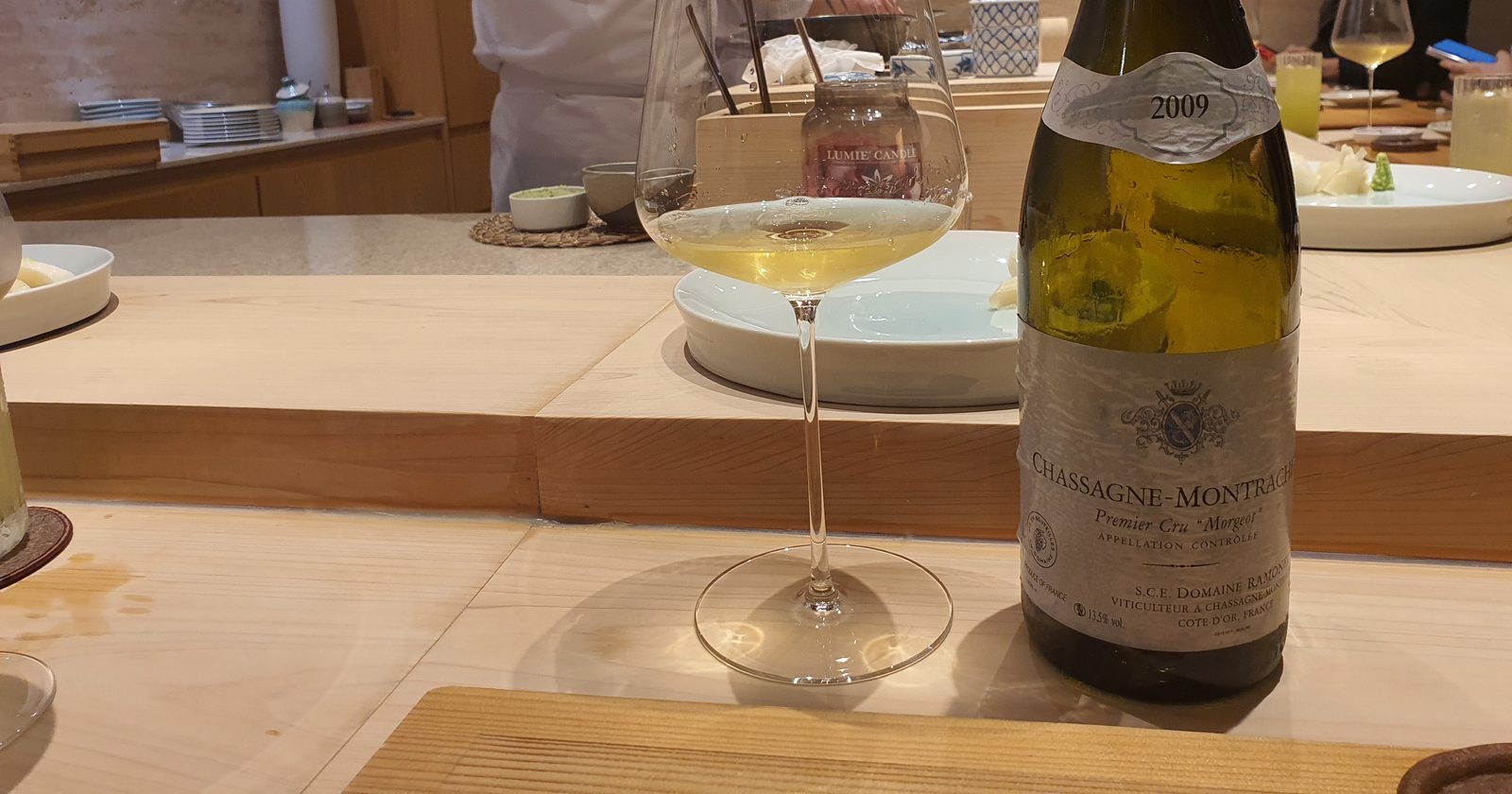
Eleven years on, and this was exactly that wine. The first pour was closed and faintly stony, giving up very little. Twenty minutes later it had opened onto ripe orchard fruit — yellow apple, a little poached pear — with the honeyed, waxy edge that white Burgundy of this age starts to show, and underneath it a nutty, savoury depth that had nothing to do with oak.
The acidity was not the driver here; the texture was. The wine was broad across the palate in the way Morgeot is supposed to be, but the density of the material gave it grip where a warm vintage might have left it slack. It finished dry and long and slightly saline, and it was still gaining when the bottle emptied.
The vintage’s reputation was that it would be drunk early rather than kept. That is probably true of most of it. What this bottle showed is that the good premiers crus were making a different bet — and that in a warm year, a cellar that resists polishing its wines has a real advantage.
For the same house in a cooler, tighter register, see the Bourgogne Chardonnay 2016 and, at the top of the domaine’s range, the Montrachet 2004.