The Wrong Grape in the Wrong Year
Petrolo Galatrona 2014
- Producer
- Petrolo
- Appellation
- Val d'Arno di Sopra DOC
- Grapes
- Merlot
- Tasted
- 5 December 2020
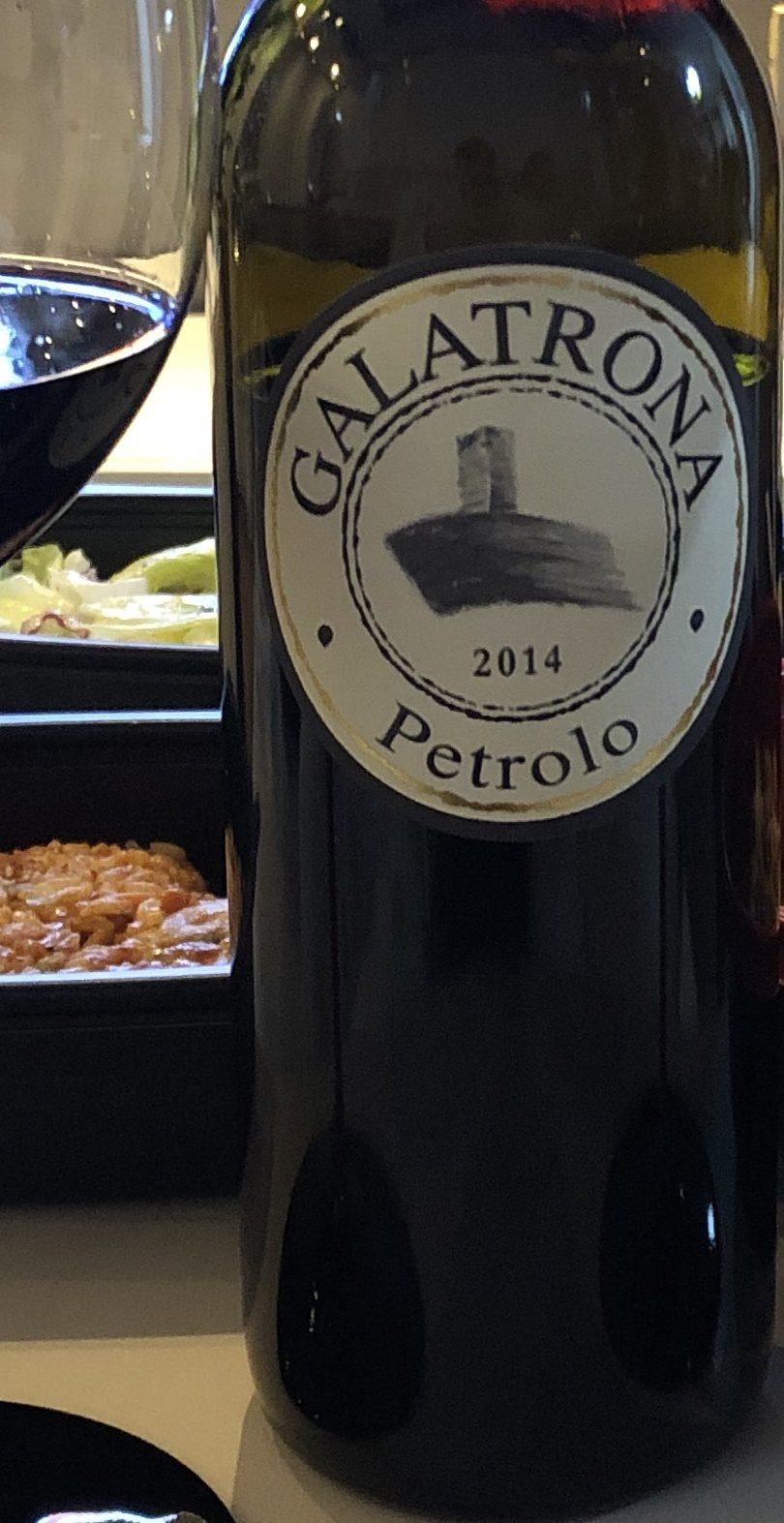
The tower on the label is real. Galatrona is the name of a medieval watchtower on the ridge above the vineyard, and the vineyard took the tower’s name — ten hectares in the Feriale locality, planted in stages from the late 1980s through the mid-1990s with low-vigour Bordeaux clones, sitting at around three hundred metres on the south-eastern edge of the Chianti hills.
The choice of Merlot there was a considered one. The soil is loam heavy with clay, mixed through with schist, marl and sandstone, and the clay is the point: it holds water through the dry Tuscan summer, which is precisely what Merlot needs and rarely gets in this climate. Luca Sanjust’s estate has farmed it organically since 2004, certified from 2016, dry-farmed, and the wine has been made since 1994 — native yeasts, fermentation in cement, malolactic in wood, then eighteen to twenty months in French barrique with about a third new. Around thirty thousand bottles a year.
The Year the Clay Didn’t Help
Everything in that description is designed around drought. 2014 was the opposite problem.
The Tuscan year began warm and wet and stayed wet. It rained on twenty-one days in July. The humidity and the fast vegetative growth brought downy mildew, and the varieties that suffered worst were the whites and the early-ripening reds — with Merlot, which depends on consistent early sun, seeing yields down sharply. A warm, dry September and October eventually rescued the vintage, but that late rescue favoured the slow ripeners: Sangiovese, Cabernet Sauvignon, Petit Verdot. Merlot had already had its season decided.
So a 2014 Galatrona is, in the most literal sense, the wrong grape in the wrong year — a wine whose entire design assumes heat, made in a summer that never delivered any.
In the Glass
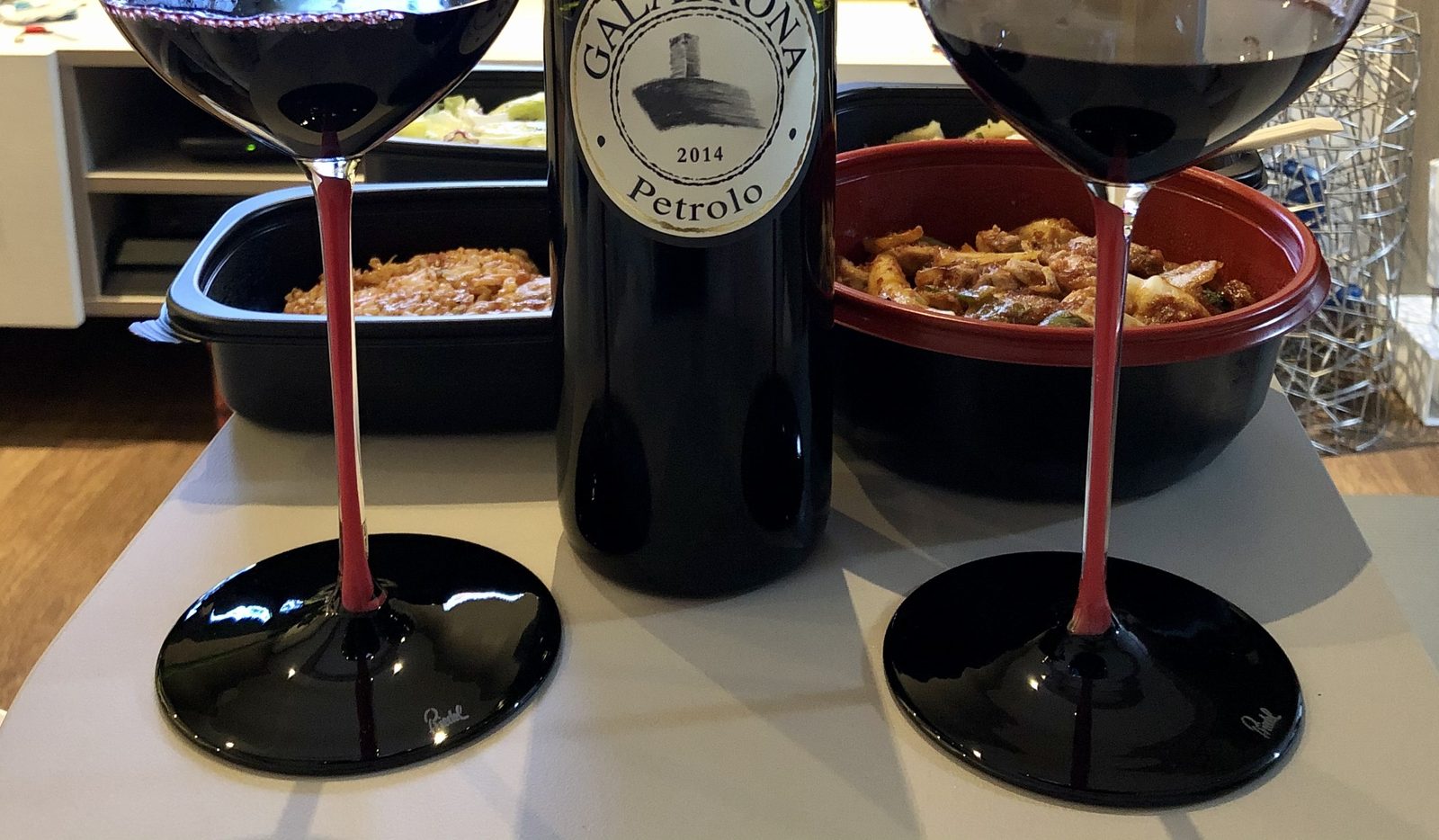
Opened at home six years on, alongside a pasta on a weekday evening, and the vintage was immediately, interestingly visible.
Galatrona in a ripe year is a dark, plush, almost glossy wine, and this was not that. The colour was deep but not opaque. The nose was cooler and higher-toned than usual — black cherry and plum rather than the fig-and-chocolate register, with a graphite edge and a green, leafy top note that in a warmer year the fruit would have buried. The oak was well absorbed and mostly showed as a faint sweet spice.
The palate was the surprise. Without the flesh, the architecture is exposed: fine tannins, more acid than this wine usually carries, and a slim, straight line through the middle rather than a broad one. It is a lesser Galatrona by the estate’s own standards and it would be silly to argue otherwise. But it was also the most legible one — a wine you could see the shape of, because the year had stripped away the upholstery.
There is a real pleasure in drinking a famous wine in a year that did not suit it. The great vintages tell you what a producer can do. The difficult ones tell you what they actually built.