Opened a Little Late, on Purpose
E. Guigal Côtes du Rhône Blanc 2016
- Producer
- E. Guigal
- Appellation
- Côtes du Rhône
- Grapes
- Viognier, Roussanne, Marsanne, Clairette, Bourboulenc, Grenache Blanc
- Tasted
- 10 December 2020
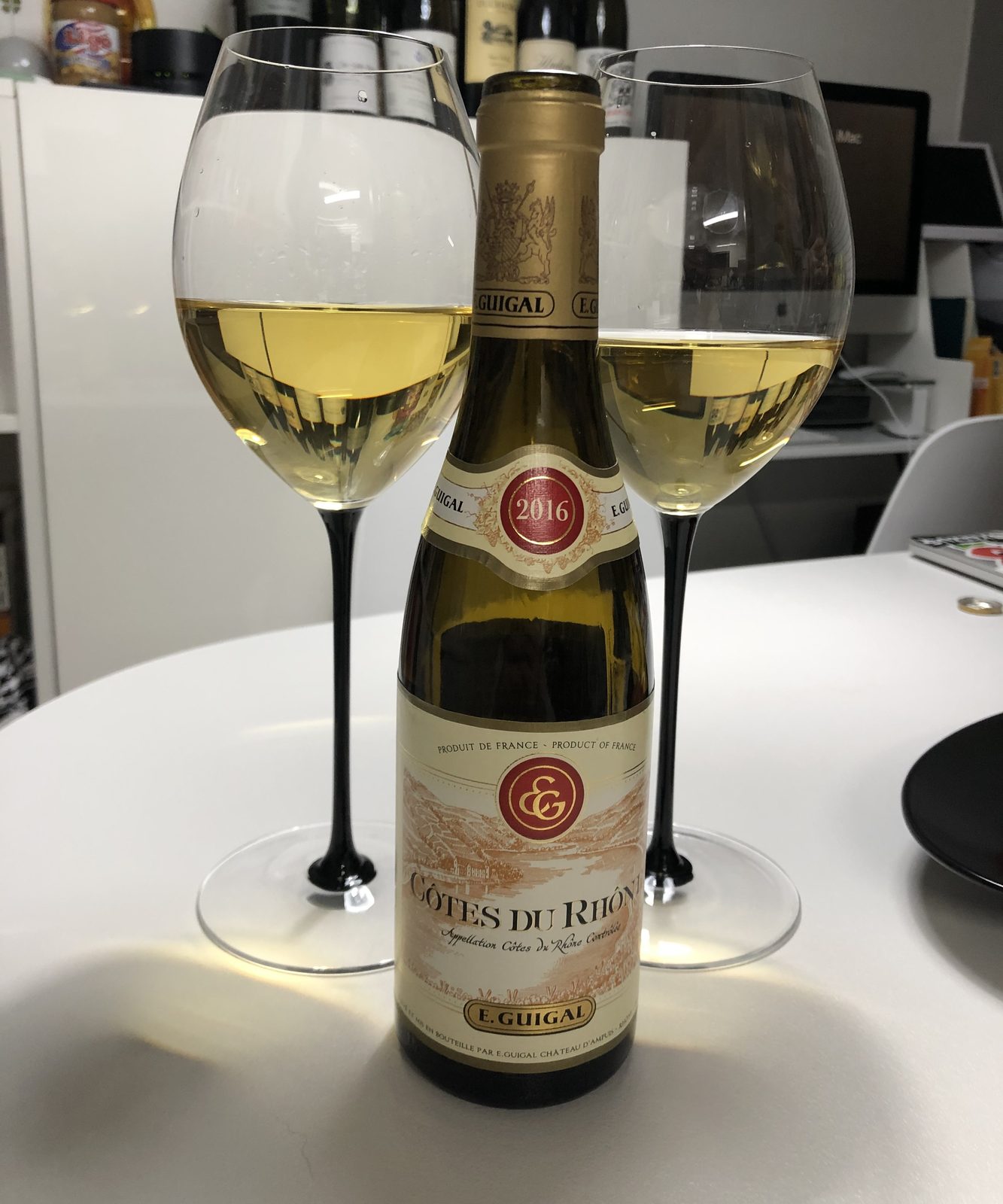
The house at Ampuis is known for three vineyards whose names are said in a particular tone of voice, and for one white wine that nobody says in any tone of voice at all. The Côtes du Rhône Blanc is the everyday bottle — made in quantity, sold at a price that assumes no ceremony, and recommended by more or less everyone to be drunk young.
It is not, however, a simple blend. The 2016 is led by Viognier at around sixty per cent, with Roussanne, Marsanne, Clairette, Bourboulenc and a trace of white Grenache filling in behind it. That is a Viognier-dominant wine made in the southern Rhône by a house whose reputation was built a long way north, in Condrieu and Côte-Rôtie, and the resemblance to Condrieu is the thing people usually reach for when describing it.
2016 in the southern Rhône was one of the strong years of the last two decades — a slow start, then ideal flowering, then a long season of warm days and unusually cold nights. That diurnal swing is what gave the vintage the freshness people kept remarking on, in a year that was also generously ripe.
Four Years, Not Three
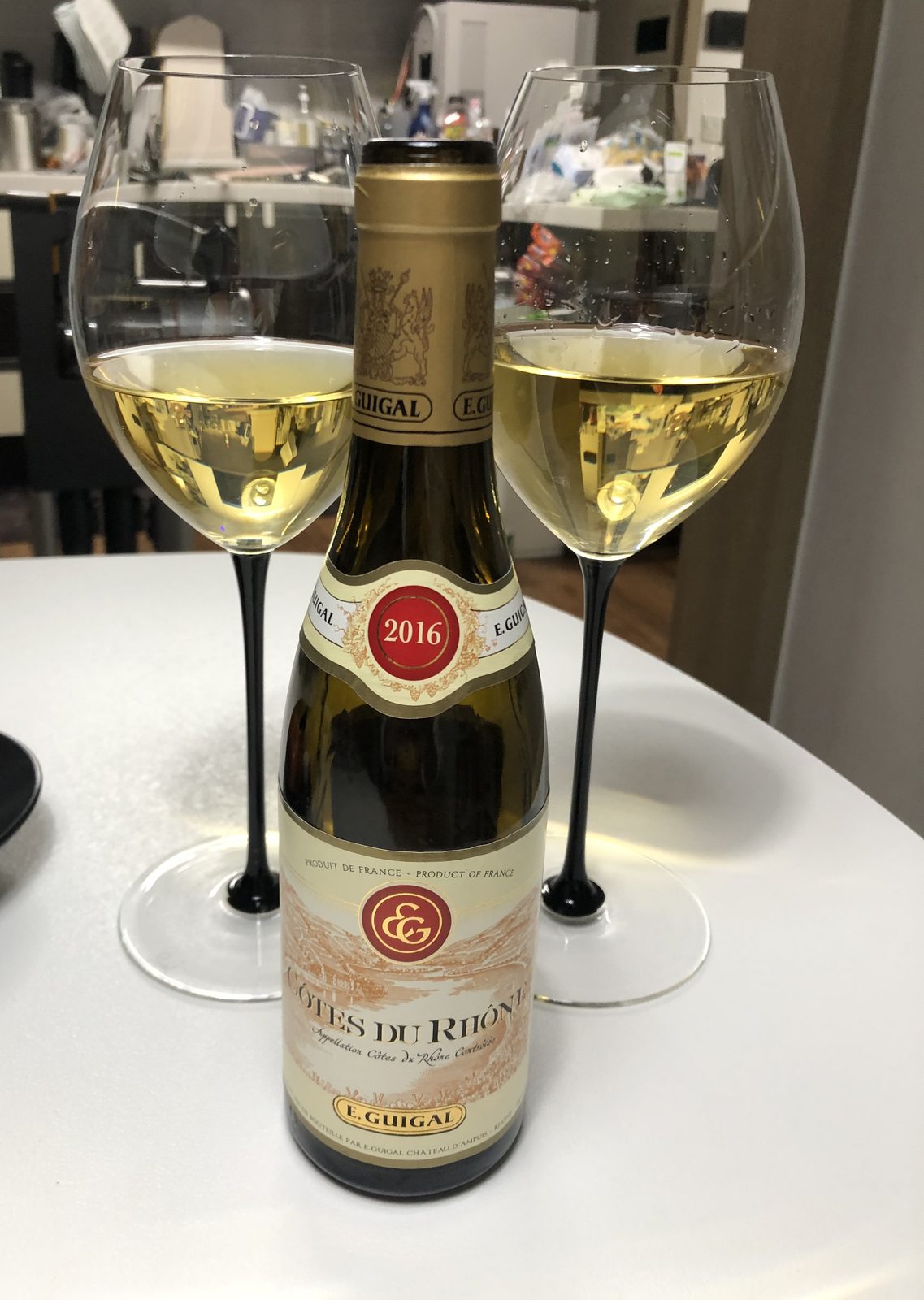
The standing advice on this wine is to drink it inside about three years, and the advice is sound: aromatic whites built on Viognier lose their top notes early and rarely trade them for anything. This bottle was opened in its fifth calendar year, at the end of an evening that had started with a red.
The colour had gone further than a young white — deep gold in the glass rather than pale straw. The nose had made the trade you would expect: less of the acacia-and-white-flower lift that Viognier gives at a year old, more of the settled end of the fruit, apricot turned toward dried apricot, with white peach behind it and a waxy, almost honeyed note that a young bottle does not have.
On the palate it was round and broad, with real weight in the middle — the Roussanne and Marsanne showing more clearly at this age than they would have earlier, while the Viognier’s perfume had stepped back. The citrus edge that keeps a young bottle upright was still just there, enough to stop the richness from settling. It was not a fresher wine than a young one. It was a wider one.
There is no argument for cellaring this bottle, and it is not going to become anything. But drunk a year or two past the point where nobody is watching, it stops being a Condrieu substitute and starts being a southern white in its own right, which is a more interesting thing to taste.
For the Rhône at the other end of the scale, see the Paul Jaboulet Aîné Hermitage La Chapelle 2012; for the red opened earlier that evening, the CVNE Pagos de Viña Real 2004.