The Forgotten Aszú Vintage
Disznókő Tokaji Aszú 5 Puttonyos 2010
- Producer
- Disznókő
- Appellation
- Tokaji Aszú
- Grapes
- Furmint, Hárslevelű, Zéta
- Tasted
- 12 December 2020
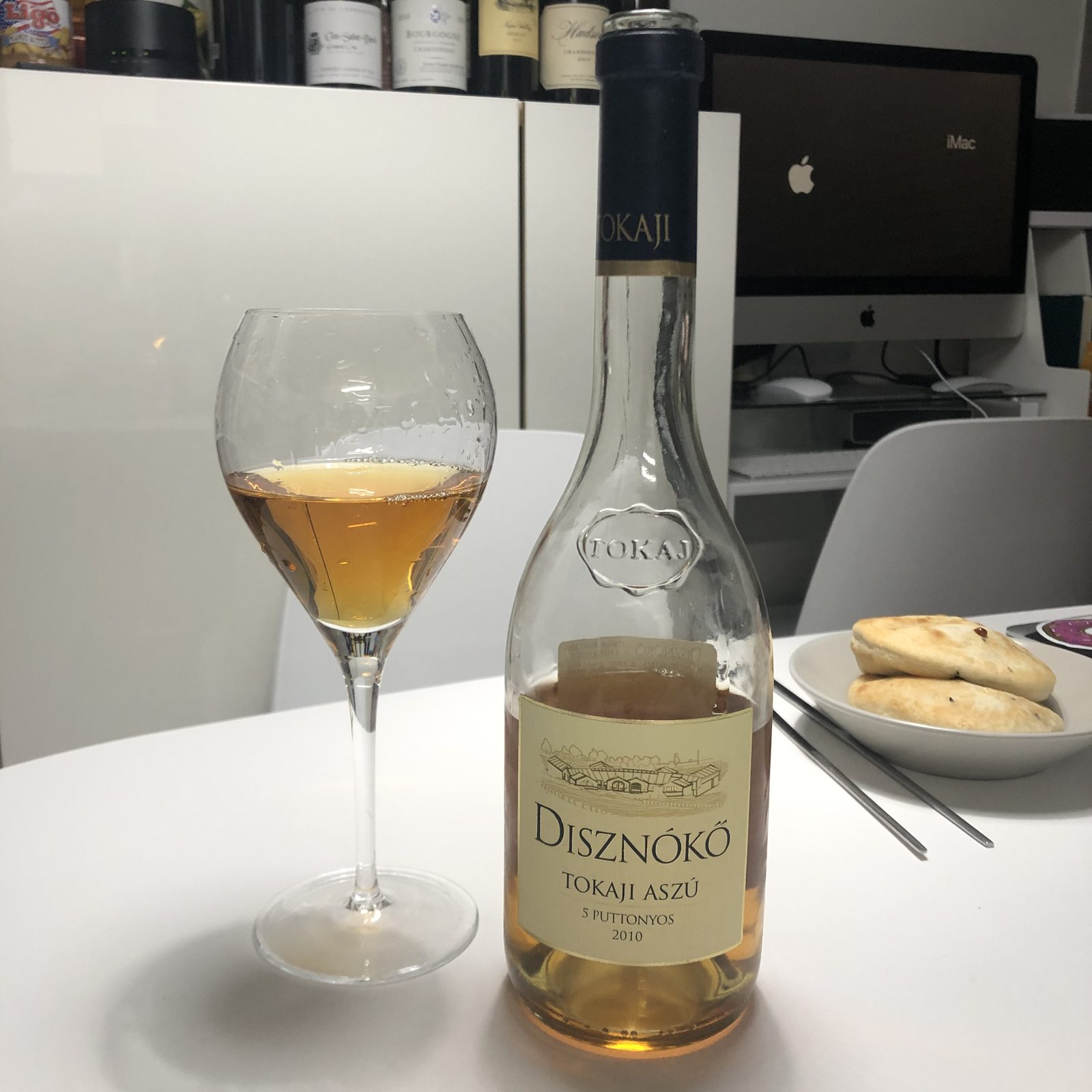
Disznókő takes its name from a stone. There is a boulder at the foot of the hill that generations decided looks like a wild boar, and the estate has been called wild-boar-stone ever since. The vineyard itself was already famous long before anyone thought to photograph the rock: when the Tokaj hills were classified in the eighteenth century — one of the earliest vineyard classifications anywhere in Europe, predating the Médoc’s by the better part of a hundred years — Disznókő was ranked in the first class.
Then came two centuries in which very little went well. What brought the estate back was foreign money arriving at exactly the right moment: in 1992, three years after the political turn, AXA Millésimes bought Disznókő and began replanting the vineyard, restoring the buildings, and rebuilding the cellar from the inside out.
Half the Days Had Rain
2010 is not a vintage anyone in Tokaj talks about willingly. It rained on close to half the days of the year. July and August were hot but wet — the worst possible combination in a region whose entire proposition depends on the difference between noble rot and ordinary rot. Growers spent the season watching the wrong fungus win.
What saved whatever could be saved was a run of drier, sunnier weather from September onward, which finally let aszú berries shrivel properly on the vine. But the sequence had been backwards: in much of the region the botrytis arrived first and the drying came afterwards, and wines made from those berries carried a green or oddly toasty edge that no amount of cellar work could remove.
The exception was rigorous picking. Where a producer had the patience and the labour to take only the berries that had botrytised and dried in the right order, 2010 gave something the warmer, easier vintages did not: aszú with unusually high acidity, and elegance rather than sheer mass. It is a vintage that rewards the estates that were willing to throw most of the crop away.
In the Glass
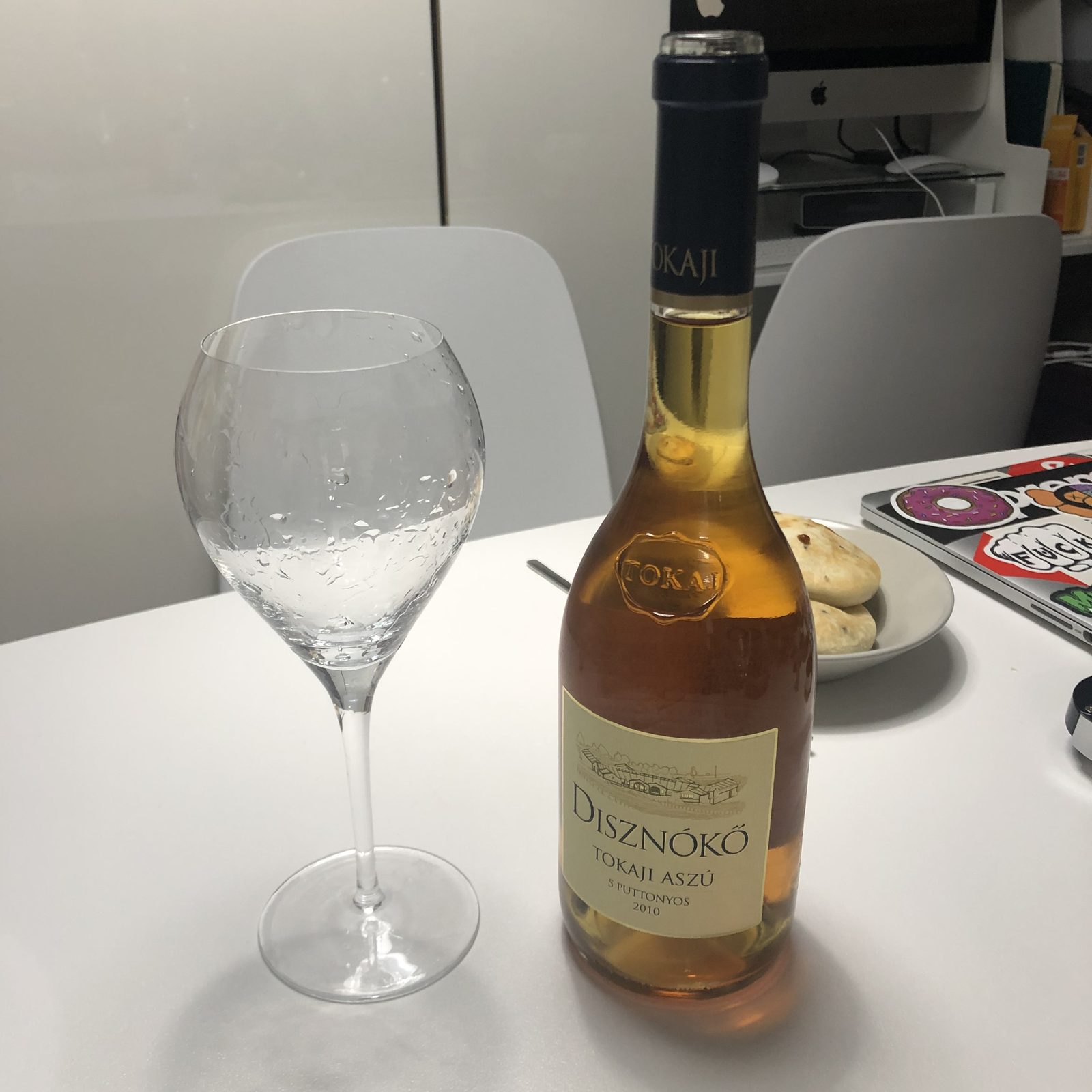
At ten years old the colour had already moved a long way — deep amber shading to burnt orange, closer to old marmalade than to the pale gold of a young aszú, and dense enough that the glass held the light rather than passing it through.
The nose was in the dried-fruit register that Tokaji reaches after a decade: apricot gone from fresh to candied, orange peel, honey, a little walnut and wood spice underneath. On the palate the sweetness is considerable — five puttonyos means a great deal of sugar by any other region’s standard — but it never sits still, because the acidity of this particular year runs straight down the middle of it and keeps the whole thing upright. That is the 2010 signature, and it is the reason the vintage deserves better than its reputation.
Served past midnight with a couple of small pastries, in a 500ml bottle, which is the format Tokaji Aszú has used for so long that a full-size bottle of it looks wrong. The wine was in no hurry, and neither was the evening.
For a Tokaji from the vintage that changed the labelling rules, see the Royal Tokaji Aszú 5 Puttonyos 2013, opened eleven days later; for botrytis in its Bordeaux form, the Château d’Yquem 1982.