Two Hundred Cases from the Côte Brune
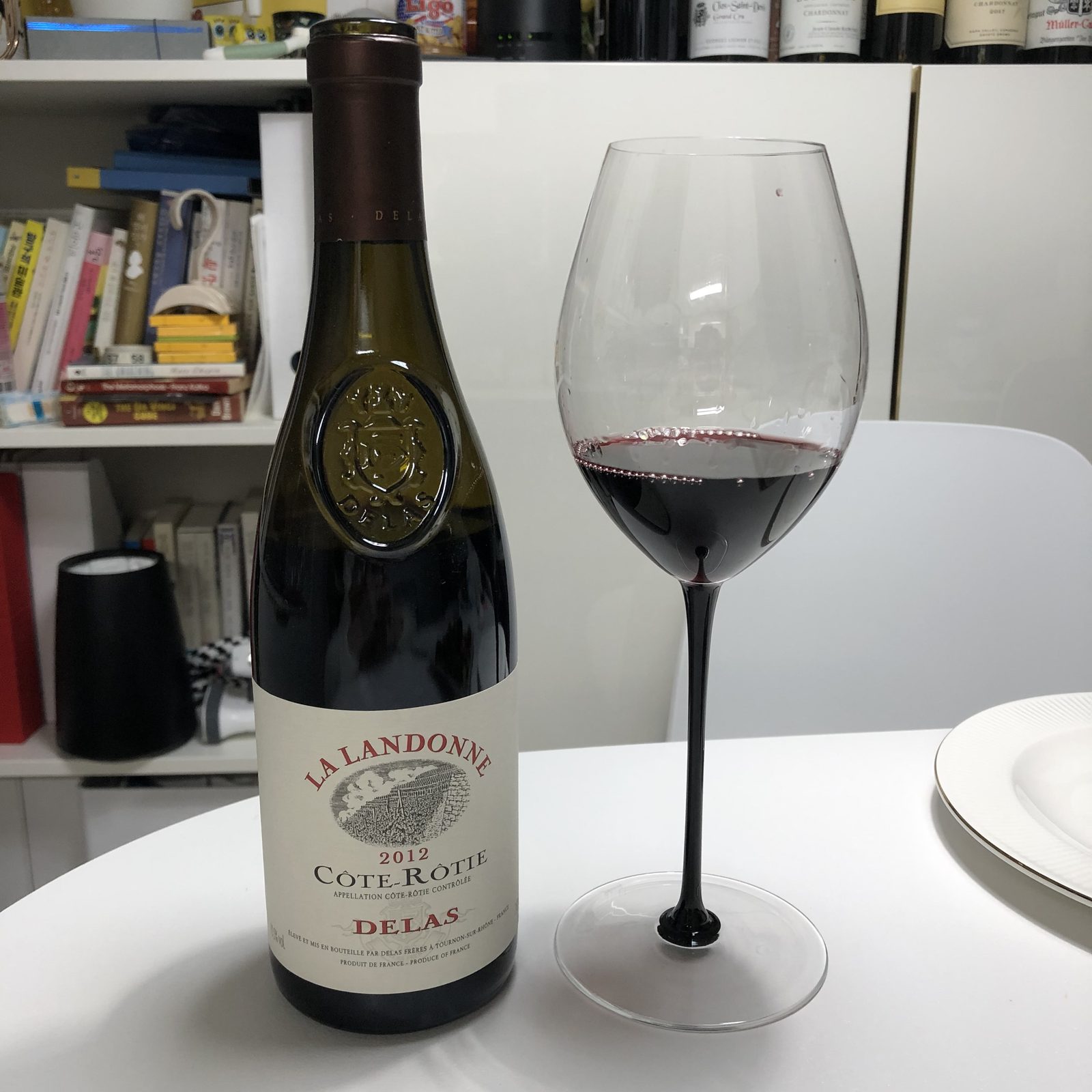
Delas Frères Côte-Rôtie La Landonne 2012
- Producer
- Delas Frères
- Appellation
- Côte-Rôtie
- Grapes
- Syrah
- Tasted
- 16 December 2020
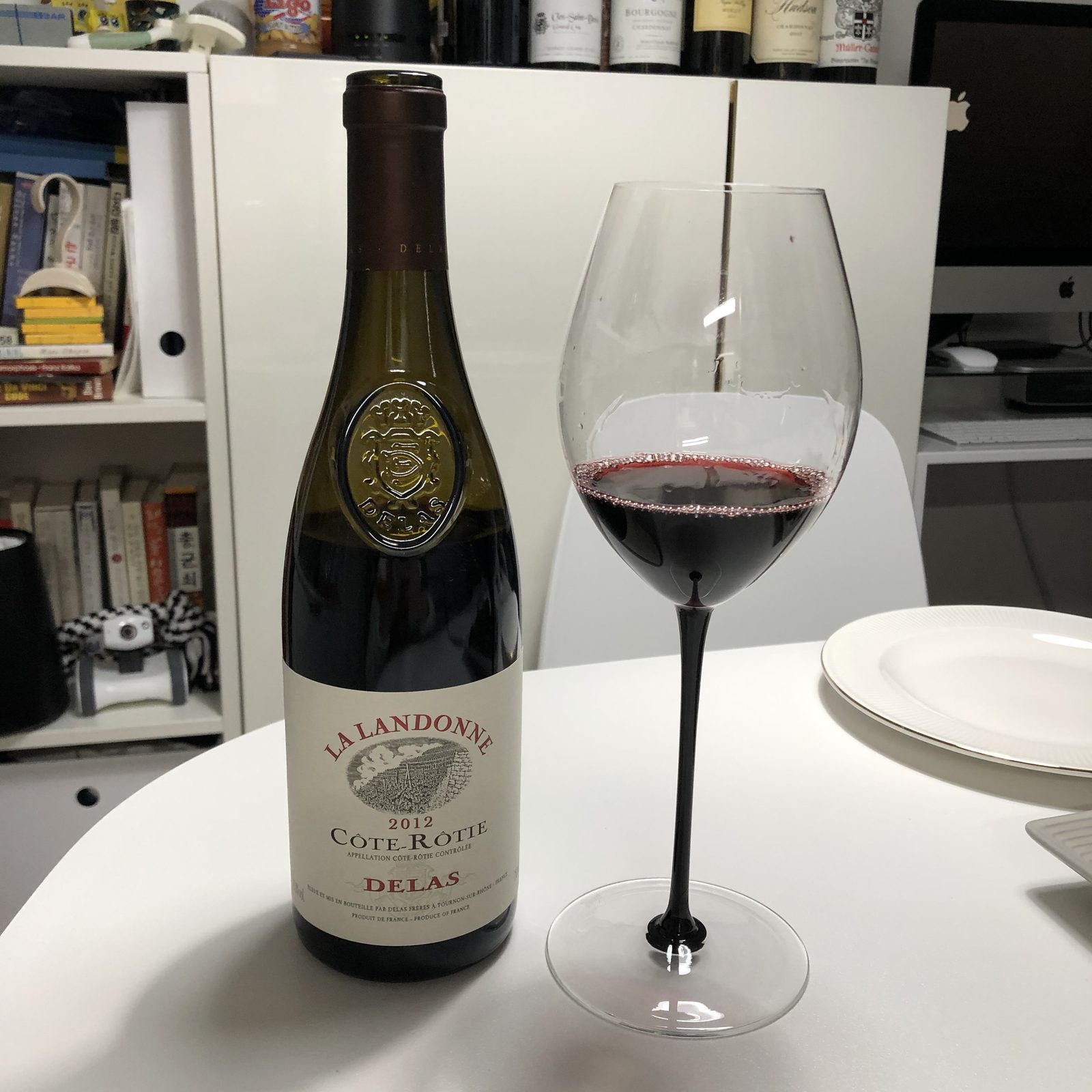
Côte-Rôtie divides, roughly and usefully, into the pale Côte Blonde and the darker Côte Brune, and La Landonne sits on the Brune side. The soil there is schist shot through with iron oxides, mixed with fragments of mica-schist — the sort of ground that gives Syrah its structure rather than its perfume. The name is famous mostly because of the very large bottling one neighbour makes from it, but the slope is shared, and the parcels are small.
Delas holds one of the smaller ones. The wine comes exclusively from a single plot inside the named slope, it is all Syrah, it is raised in new barrels, and it amounts to a little over two hundred cases in a normal year. That is a rounding error next to the house’s Crozes-Hermitage, and it is the reason the bottle turns up rarely.
A House That Was Rebuilt Twice
Delas Frères goes back to 1835, when Charles Audibert and Philippe Delas bought an existing wine business in Tournon-sur-Rhône. Philippe’s sons Henri and Florentin took over in 1924 and gave the firm the name it still carries.
The interesting part of the history is more recent. Champagne Deutz bought Delas in 1977; in 1993 the Rouzaud family, who own Louis Roederer, acquired Deutz and Delas together. What followed was a long, deliberate rebuild under winemaker Jacques Grange — a reduction in what the house bought in, a concentration on the estate’s own steep parcels, and a run of quality that turned Delas from a merchant name into a domaine name over the course of about two decades. This bottle comes from the middle of that run.
2012, Very Good in Parts
The northern Rhône had a difficult start to 2012. The early summer was cool and wet, and growers spent it spraying against mildew. From the beginning of August the weather turned warm and stayed dry through a generally late harvest — warm enough, in fact, that acidities had fallen appreciably by the time the fruit was finally ripe enough to pick.
The result was a vintage that split by producer rather than by appellation. Where yields were controlled and the fruit came from old enough vines, 2012 made recognisable, properly structured Côte-Rôtie. Where they were not, it made wines that came out sweet and slightly dull. It is a year in which a small parcel of mature vines and a house with nothing to prove had every advantage.
In the Glass
At eight years old this was young, and drank like it — the colour opaque at the core, the rim still purple rather than garnet.
The nose is the Côte Brune argument in miniature: cassis and black raspberry first, then violet, then the incense-and-spice-box character that iron-rich schist seems to produce and that separates Côte-Rôtie from every other Syrah in France. There is a savoury, almost peppery edge behind the fruit that keeps it from reading as a fruit wine at all.
The palate is medium to full, and the tannin is the point — fine-grained, tightly woven, and clearly built to outlast the fruit for some years yet. New oak is present but folded in rather than sitting on top. This is a wine with a decade or more of useful life in front of it, opened well before its window, which is what happens when a bottle this scarce is on the shelf on a Wednesday.
Poured at the desk with dinner, followed shortly afterwards by a bottle of Tuscan Sangiovese — an unlikely order, and a reminder of how differently the two traditions handle tannin.
For Syrah from the hill across the river, see the Paul Jaboulet Aîné Hermitage La Chapelle 2012 from the same vintage; for the wine that came next on the table, the Fontodi Chianti Classico 2017.