Frost First, Then Drought
Fontodi Chianti Classico 2017
- Producer
- Fontodi
- Appellation
- Chianti Classico DOCG
- Grapes
- Sangiovese
- Tasted
- 16 December 2020
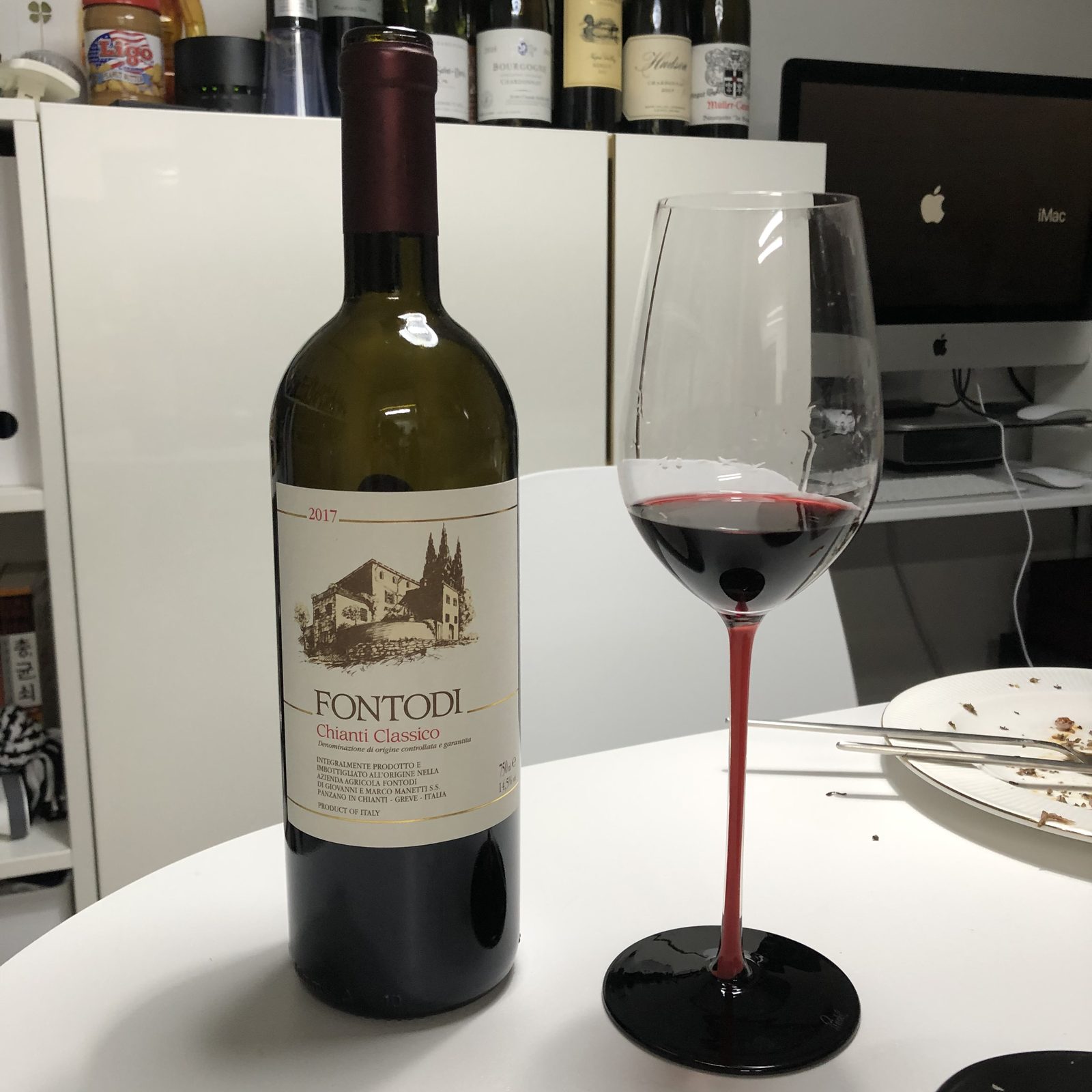
Fontodi sits in the bowl of land south of Panzano that Tuscans call the Conca d’Oro, the golden shell — a natural amphitheatre with the exposure and the drainage that Sangiovese wants and rarely gets. The Manetti family bought the estate in 1968, but they were not new to the region: they have been making terracotta at Ferrone, near Impruneta, since the seventeenth century. It is a useful thing to know about a house whose wines are so consistently about clay, stone, and restraint.
The estate runs to something over 180 hectares with more than ninety planted to vines, almost all of it Sangiovese, and the whole property was farmed organically well before that was a commercial argument — full certification came with the 1998 vintage. The Chianti Classico is straight Sangiovese, with none of the white grapes that the appellation’s rules once required and have now banned outright, and it spends roughly two years in wood before release.
The Frost That Helped
April 2017 brought a frost across Tuscany that took a serious bite out of the crop. What followed was a hot, dry summer — the kind of season that, in a normal year, leaves vines carrying a full load and no water to ripen it with.
Giovanni Manetti’s reading of the year is that the two disasters cancelled. The frost had already reduced what each vine was carrying, so when the drought arrived there was less fruit to support and the vines were never pushed into real stress. The clusters came in small and concentrated rather than shrivelled. It is not a defence anyone would want to rely on twice, but it explains why a vintage that reads badly on paper produced Chianti Classico with more depth than the weather record suggests.
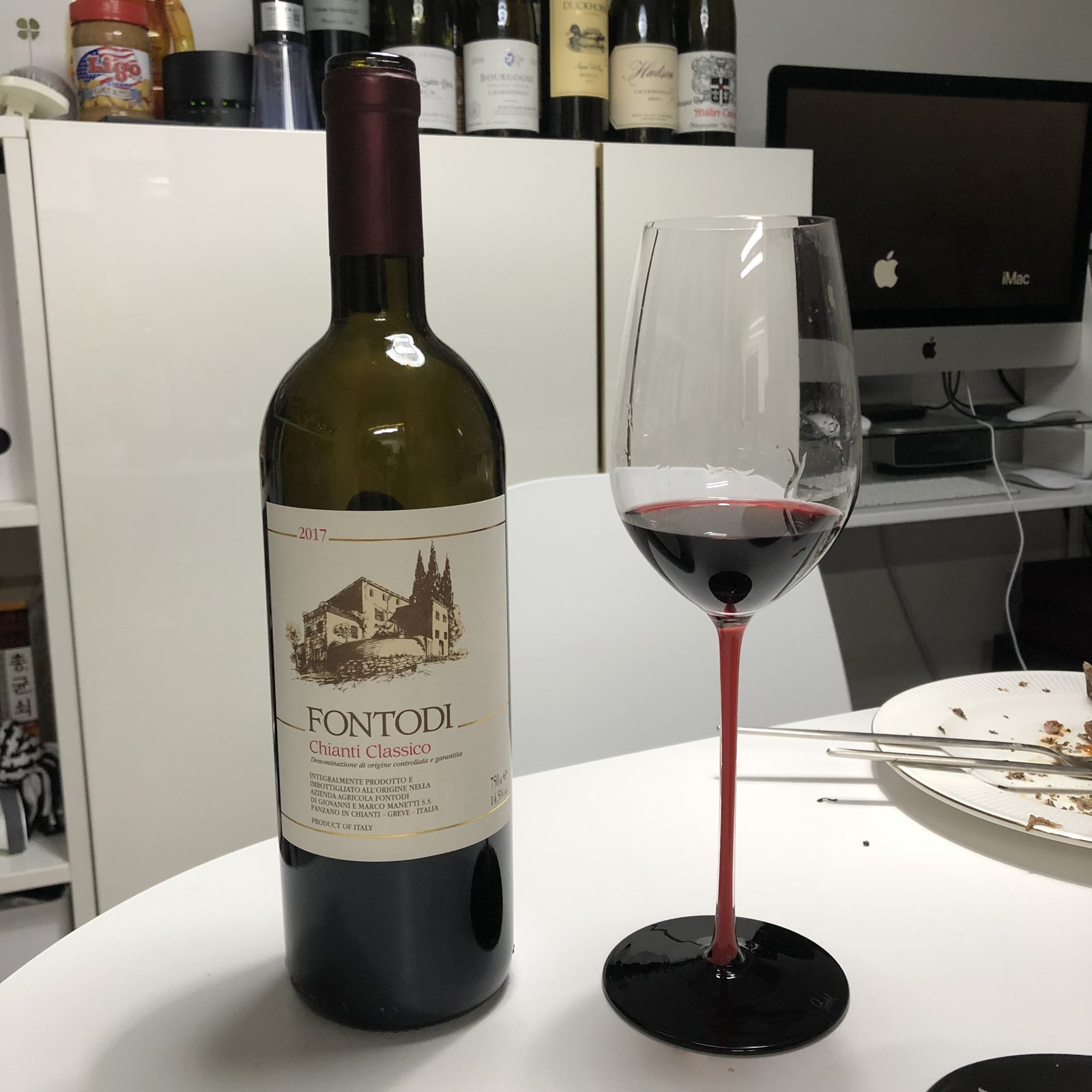
In the Glass
Three years is early for this wine, and the colour showed it — bright, translucent ruby with no sign yet of the garnet that will come.
Sangiovese from Panzano has a particular register, and it was all present: ripe red cherry and wild strawberry, then rose petal, then a distinct blood-orange note that runs through the aromatics and reappears on the finish. Behind the fruit there is sweet spice from the wood, but it is held well back.
On the palate the wine is dry, firm, and built more upright than wide. The acidity is Sangiovese’s own — high, clean, and the reason the grape survives on a dinner table — and the tannins are fine and slightly dusty, gripping the finish rather than the middle. The hot summer shows up as ripeness of fruit rather than weight or sweetness, which is the distinction that matters.
This came out on the same evening as a Côte-Rôtie from the Côte Brune, opened not half an hour after it. Two Mediterranean reds, two entirely different arguments about what tannin is for: one structural and mineral, one savoury and pulled tight by acid. The Sangiovese was the one that wanted food.
For Tuscany from the same decade, see the Castello Banfi Brunello di Montalcino 2014 and the Merlot-based Petrolo Galatrona 2014; for the bottle that stood beside this one, the Delas Frères Côte-Rôtie La Landonne 2012.
A second bottle of the same wine came out four months later, in April, on a home table with a Lambrusco from Reggio Emilia and a South Island Pinot Gris.