The Year Puttonyos Became Optional
Royal Tokaji Aszú 5 Puttonyos 2013 (Blue Label)
- Producer
- The Royal Tokaji Wine Company
- Appellation
- Tokaji Aszú
- Grapes
- Furmint, Hárslevelű, Sárga Muskotály
- Tasted
- 23 December 2020
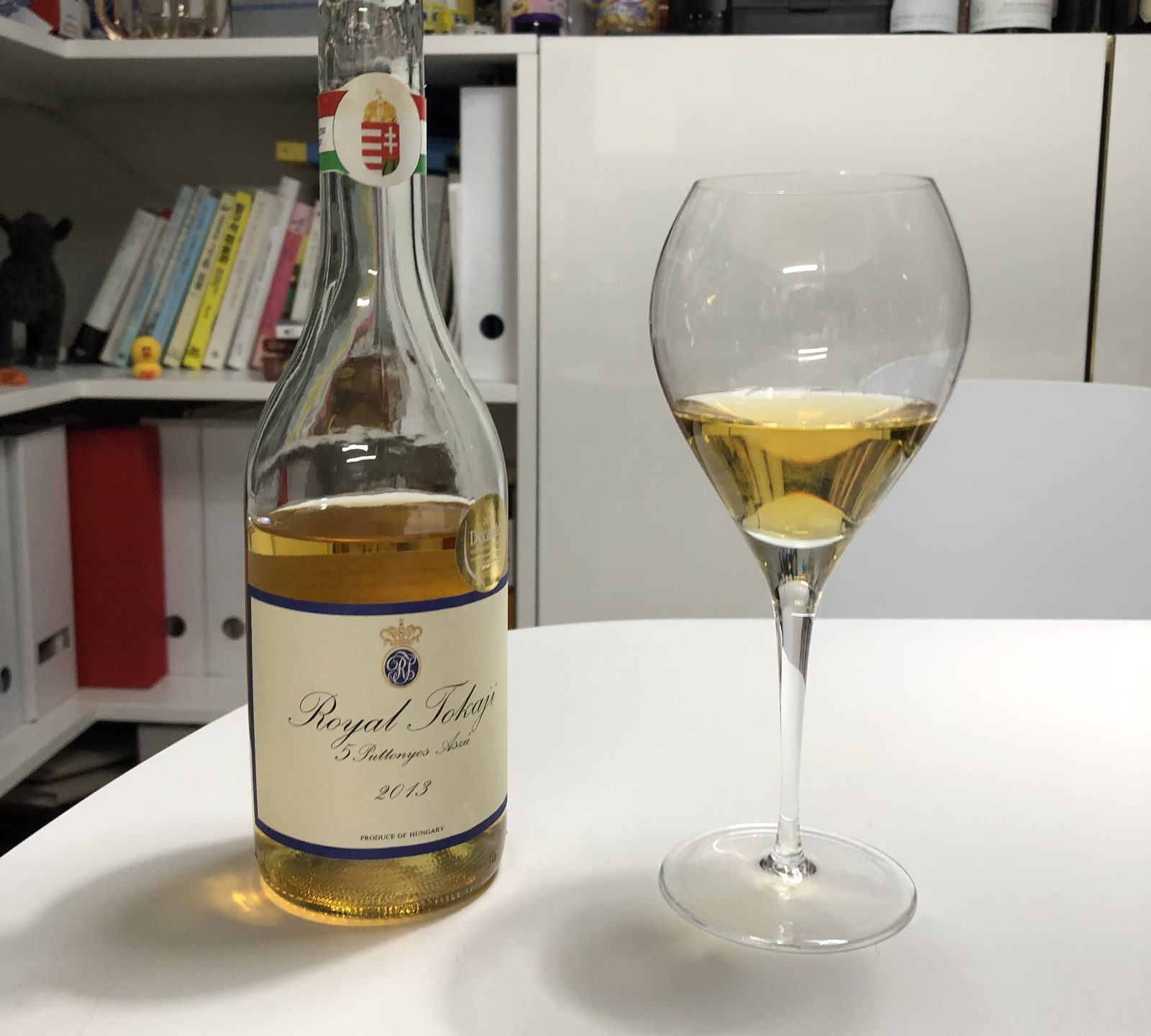
The Royal Tokaji Wine Company was founded in 1990 by the wine writer Hugh Johnson together with the winemaker Peter Vinding-Diers and a group of Hungarian partners, among them István Szepsy. It was one of the first foreign investments in Tokaj after the political turn, and its premise was simple and slightly audacious: that the region’s eighteenth-century vineyard classification was still the right map, and that the way back was to buy the named First Growth sites and make wine from them again.
Thirty years on, that premise is uncontroversial. At the time it required someone to say it out loud.
When the Number Stopped Mattering
The word on the label — puttonyos — is a unit of measure. It counts the hods of hand-picked, botrytis-shrivelled aszú berries kneaded into a base of dry wine or must, and for centuries it was the way Tokaji declared its own sweetness.
From the 2013 vintage, Hungary rewrote the rules. The three- and four-puttonyos categories were abolished outright; anything calling itself Tokaji Aszú now has to carry at least 120 grams per litre of residual sugar and spend a minimum of eighteen months in oak. In effect the legal floor was raised to what five puttonyos had always meant, and the number itself became voluntary — producers may print it if the wine qualifies, and many were expected to drop it altogether once the 2013s reached the market in 2016.
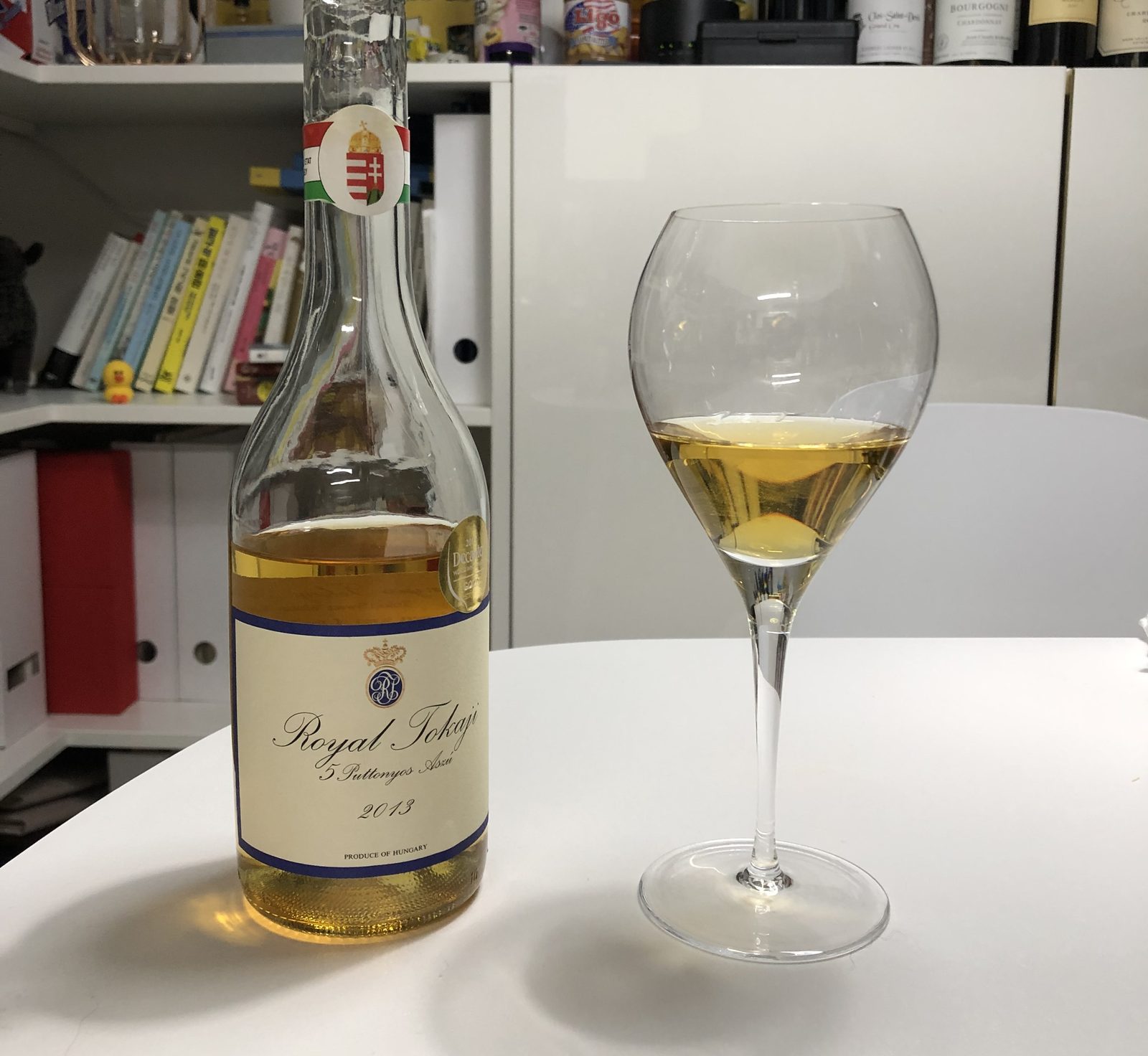
So a 2013 with 5 Puttonyos on the label is making a small statement. It is not a legal designation any more; it is a house choosing to keep a piece of vocabulary its customers understand. The declared numbers make the point neatly — this wine carries 155.7 grams per litre of residual sugar, which is above the threshold that used to define six puttonyos, against 7.9 grams of acidity and 11% alcohol. Under the old system the label could have claimed a higher number. Under the new one the number means less, and the house printed the modest one anyway.
A Good Year to Start With
The timing was kind. 2013 turned out to be one of the strongest vintages of the decade in Tokaj for both dry and sweet wines, with aszú berries that arrived structurally sound and cleanly botrytised — the sequence that 2010 had so conspicuously failed to produce.
The house’s method for this bottling is the classical one: the aszú berries macerated for a couple of days in fermenting must, then pressed, fermented, and filled into second- and third-fill Hungarian oak casks of 300 and 500 litres to mature underground for more than two years. The blend was assembled in the spring of 2016 and the wine went into bottle that August.
In the Glass
At seven years old the colour is still on the young side of Tokaji’s long arc — a clear, luminous gold, well short of the amber that another decade will bring. Set beside a ten-year-old aszú from a rainier year opened earlier the same month, the difference in age reads almost entirely as colour.
The nose is honey and white peach with orange peel behind it, more fresh than dried, and none of the walnut or toffee that comes later. The palate is where the vintage announces itself: the sugar is substantial and completely carried, because the acidity underneath is fast, clean, and long. Spice and citrus run through the finish, and the wine leaves the mouth dry rather than coated — which is the whole trick of good aszú and the thing that badly made sweet wine never manages.
It is a wine with decades ahead of it, opened two nights before Christmas in a 500ml bottle at the end of an ordinary evening. There is no obligation to wait for the occasion the label seems to demand.
For the same wine style from a far harder vintage, see the Disznókő Tokaji Aszú 5 Puttonyos 2010, opened eleven days earlier; for Sauternes, the Château d’Yquem 1982.