The View Is of Marcassin
Boars' View 'The Coast' Pinot Noir 2012
- Producer
- Boars' View
- Appellation
- Fort Ross-Seaview
- Grapes
- Pinot Noir
- Tasted
- 26 December 2020
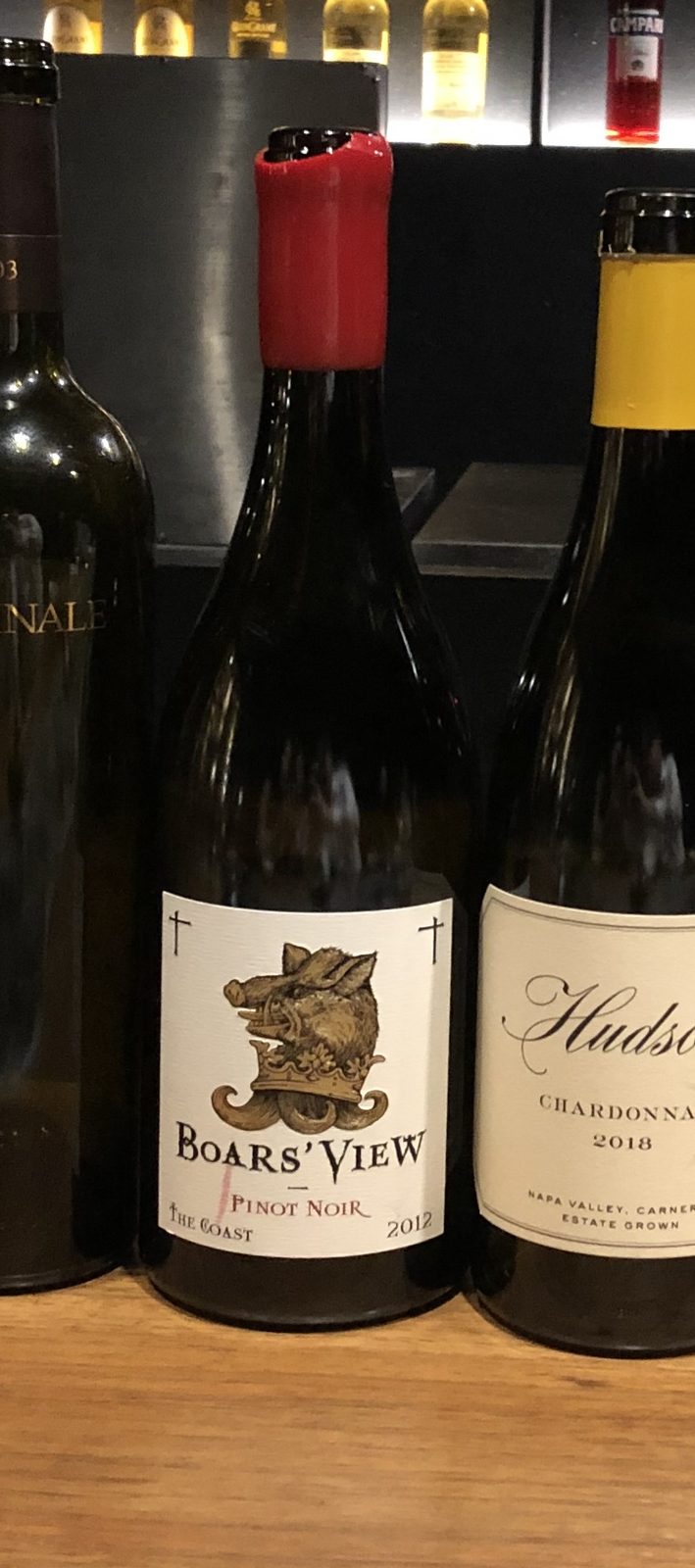
The joke is in the name, and it is a good one. Marcassin, in French, is a young wild boar — the name Helen Turley and John Wetlaufer gave their vineyard on the Sonoma Coast, and one of the most sought-after addresses in California Pinot Noir. Carol and Fred Schrader bought the land next door and called it Boars’ View.
Fred Schrader’s reputation was built entirely on Napa Cabernet, on single-block bottlings from the Beckstoffer vineyards that became some of the most collected wines in the state. This is the other thing he did: forty acres on the second ridge line in from the Pacific, in the Fort Ross-Seaview corner of the Sonoma Coast, planted in 2009 — nine acres of Pinot Noir, one of Chardonnay, on low-yielding Calera, Swan and Mount Eden selections. Thomas Rivers Brown, who had made the Schrader Cabernets since 2000, was asked to make this too.
An Early Bottle
The label launched with the 2011 and 2012 vintages, so a 2012 is from the very beginning of the project — a vineyard three years into bearing, on a site with no track record, made by a winemaker whose entire public identity was Cabernet.
That is worth holding onto, because the wine does not taste tentative. Whatever calibration was going on at the time, it was not being done in public.
2012 on the Coast
After two small, difficult harvests, 2012 was the year northern California got a textbook season back: even bud break, clean flowering, a good set, then a long stretch of warm days and cool nights with the rain holding off until the fruit was where it needed to be. It produced both quantity and quality, which is rare enough that growers still use it as the reference point when a season goes well.
On the far coast, where ripening is never a given, a season like that does something specific — it lets the fruit arrive without the growers having to choose between phenolic ripeness and acidity. The wines from that stretch of coastline in 2012 tend to have both, and to be built on the tension between them.
In the Glass
At eight years old this was still tightly wound, and read as a wine that had barely started.
The colour is deep for Pinot Noir. The nose is black and wild rather than red — bramble, black cherry, a briny, iodine-edged note that the ridges near the ocean seem to give — and behind it a peppery, spice-driven character that is more Fort Ross-Seaview than it is Pinot Noir in general.
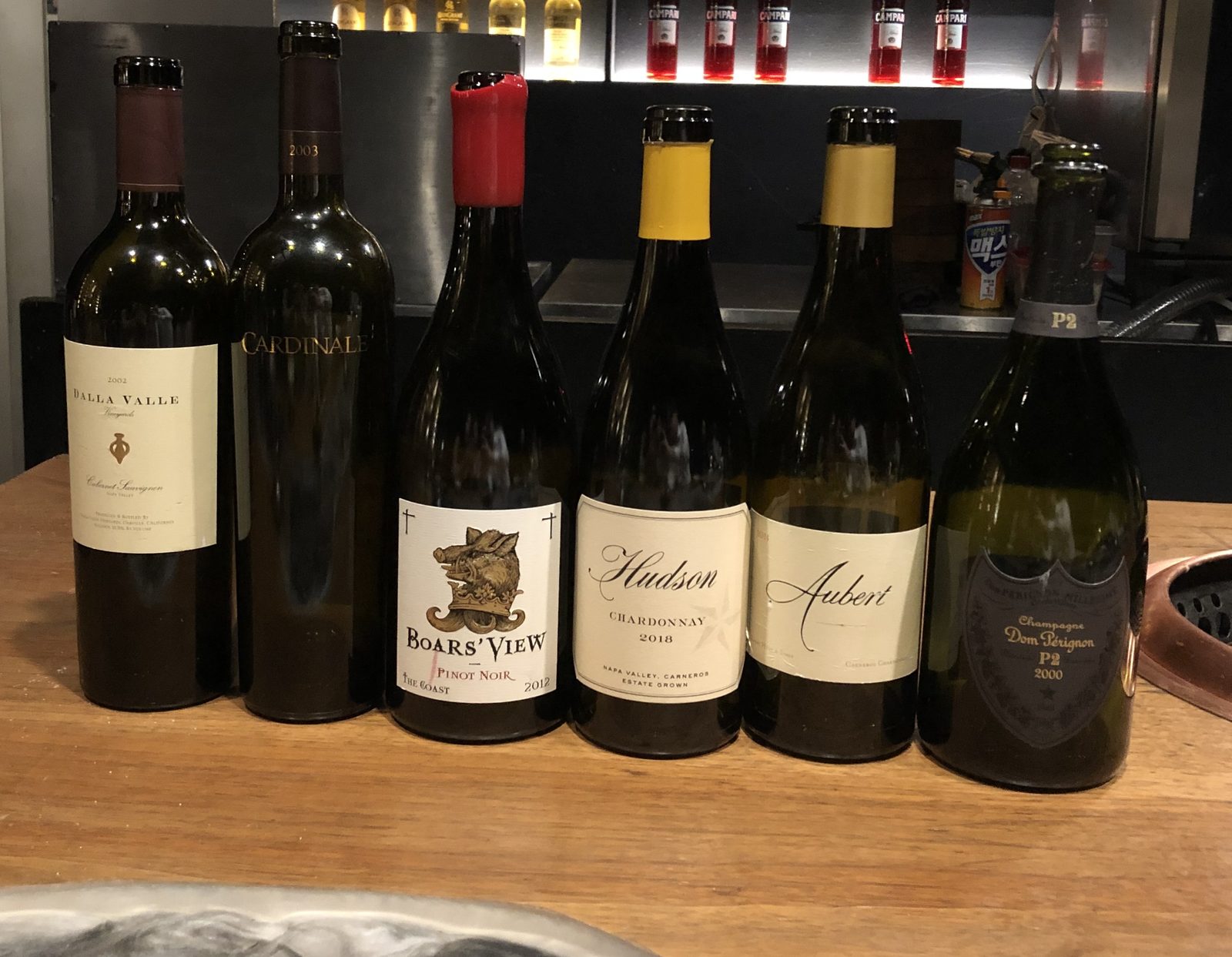
The palate is vivid and concentrated, with the fruit pushed forward and firm, spicy tannins holding it in. Acidity runs the length of it. This is not a delicate wine and does not try to be; it is the coastal, structured end of California Pinot Noir, and at eight years it was still coiled. Opened at a grill counter, between a pair of Napa Cabernets and a Champagne, it was the bottle that most obviously wanted more time.
The rest of the table: Dalla Valle Cabernet Sauvignon 2002, Cardinale 2003, Hudson Chardonnay 2018 and Dom Pérignon P2 2000.