The Year the Clay Was Needed
Petrolo Galatrona 2015
- Producer
- Petrolo
- Appellation
- Val d'Arno di Sopra DOC
- Grapes
- Merlot
- Tasted
- 2 January 2021
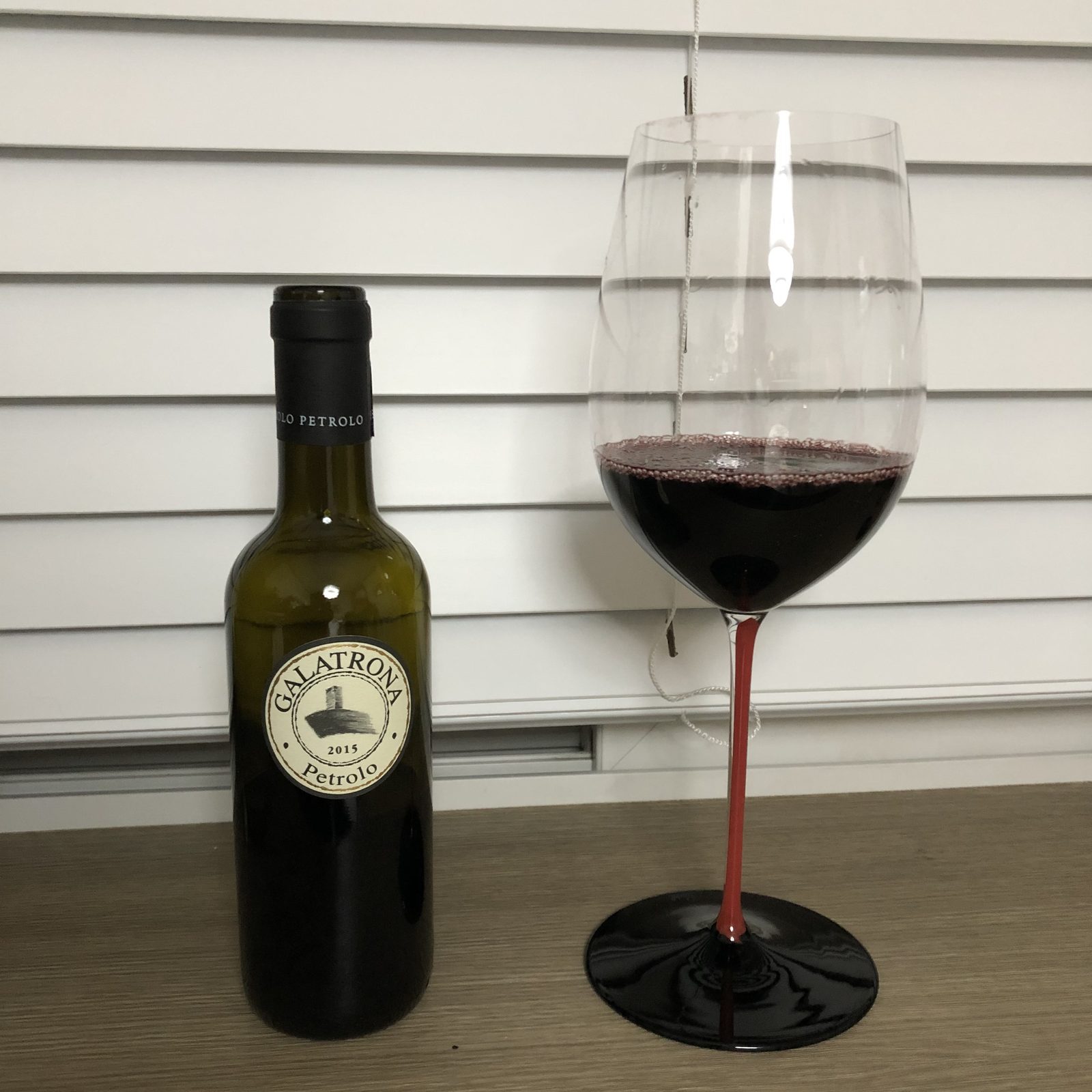
The vineyard was chosen for drought. Ten hectares in the Feriale locality, under the medieval watchtower that gives the wine its name, at around three hundred metres with a south-eastern face — and beneath it a loam heavy with clay, threaded with schist, marl and sandstone. The clay holds water through a Tuscan summer. That is the whole argument for planting Merlot, a variety that wants steady moisture and almost never finds it in central Italy, on this particular hillside.
Four weeks earlier the 2014 had been opened, from a year that rained through July and left the estate’s Merlot with the season already decided against it. That bottle was interesting precisely because the design did not apply. This one was the design working as intended.
A Long, Dry Summer
2015 in Tuscany was hot and dry from June onward, with a July that pushed toward drought, and old vines on water-retaining soils were the ones that came through it without stress. Petrolo’s site is exactly that description. Younger plantings on thinner ground shut down; deep clay kept feeding the vine.
The estate’s method did not change for the year — organic farming, dry-farmed, native yeasts, fermentation in cement, malolactic in wood, then eighteen to twenty months in French barrique with about a third new. Around thirty thousand bottles. What changed was what the vineyard handed over. From the 2015 the wine also carried a different name on the label: Val d’Arno di Sopra, the small appellation Petrolo had pushed to establish, in place of the catch-all Tuscan designation the wine had worn for two decades.
In the Glass
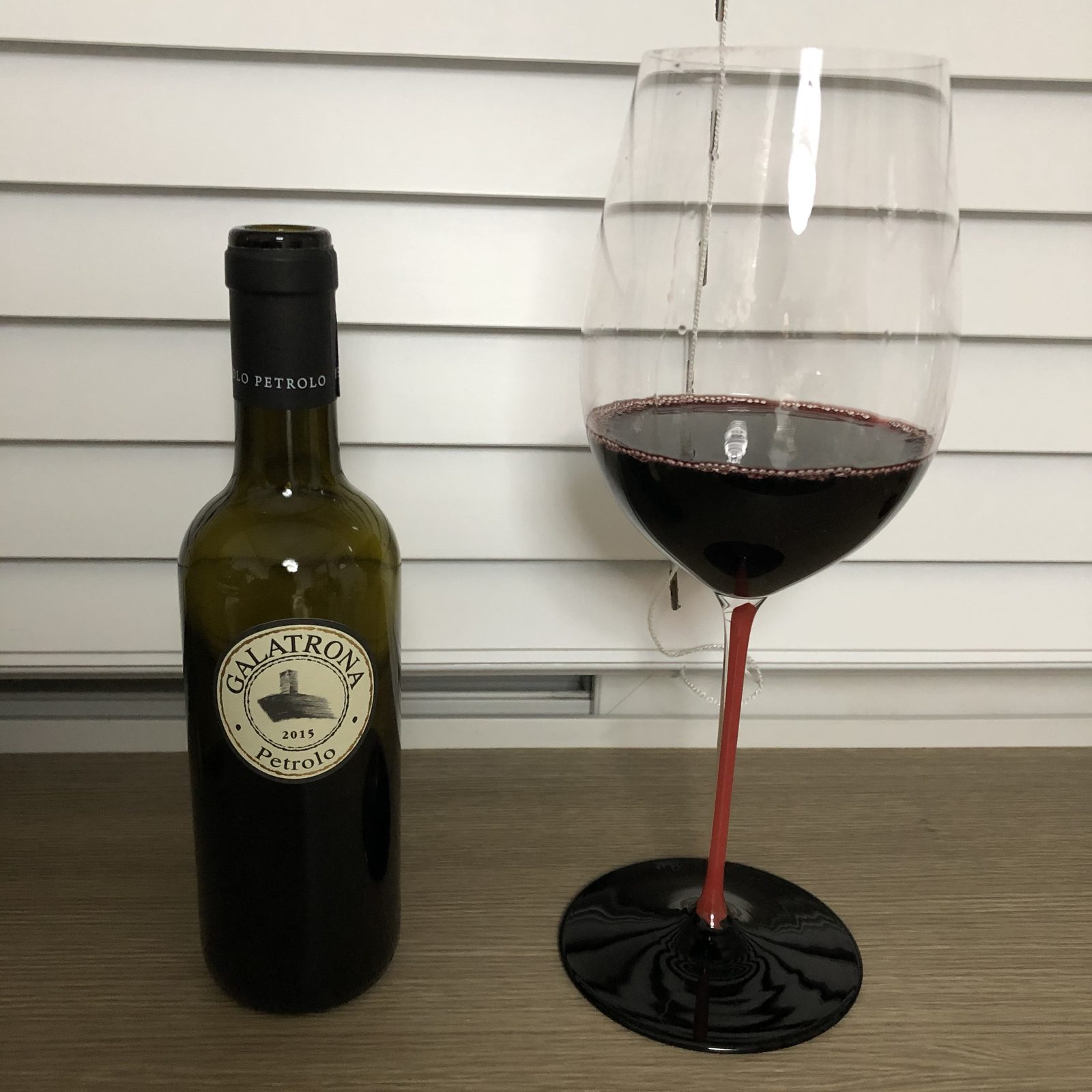
A half bottle, opened at the office late in the evening, at the end of a run that had begun with Charles Heidsieck and gone through Hudson Chardonnay and the Trapiche Iscay. Just under six years from the harvest, and far too young.
The colour was near-opaque, purple to the rim, without any of the transparency the 2014 had shown. The nose was dense and dark — blackberry and black cherry pressed together, violets over the top, and behind them the oak as cocoa and toasted spice rather than as vanilla. Nothing green anywhere in it.
On the palate the contrast with the earlier bottle was almost didactic. Where the 2014 was a slim line with the architecture visible, this was upholstered: thick, glossy, tannins so fine they read as texture rather than grip, and a long finish that stayed on dark fruit and bitter chocolate. Acidity was there and doing its work, but underneath, not on the surface.
It is the better wine, and there is no honest way to say otherwise. It is also, at six years, saying much less about itself. The difficult year gave up its secrets immediately; this one intends to keep them for a decade or two.
Two bottles a month apart, one vineyard, two summers. That is about as close to a controlled experiment as drinking ever gets.