Two, in Quechua
Trapiche Iscay Syrah & Viognier 2015
- Producer
- Trapiche
- Appellation
- Uco Valley
- Grapes
- Syrah, Viognier
- Tasted
- 2 January 2021
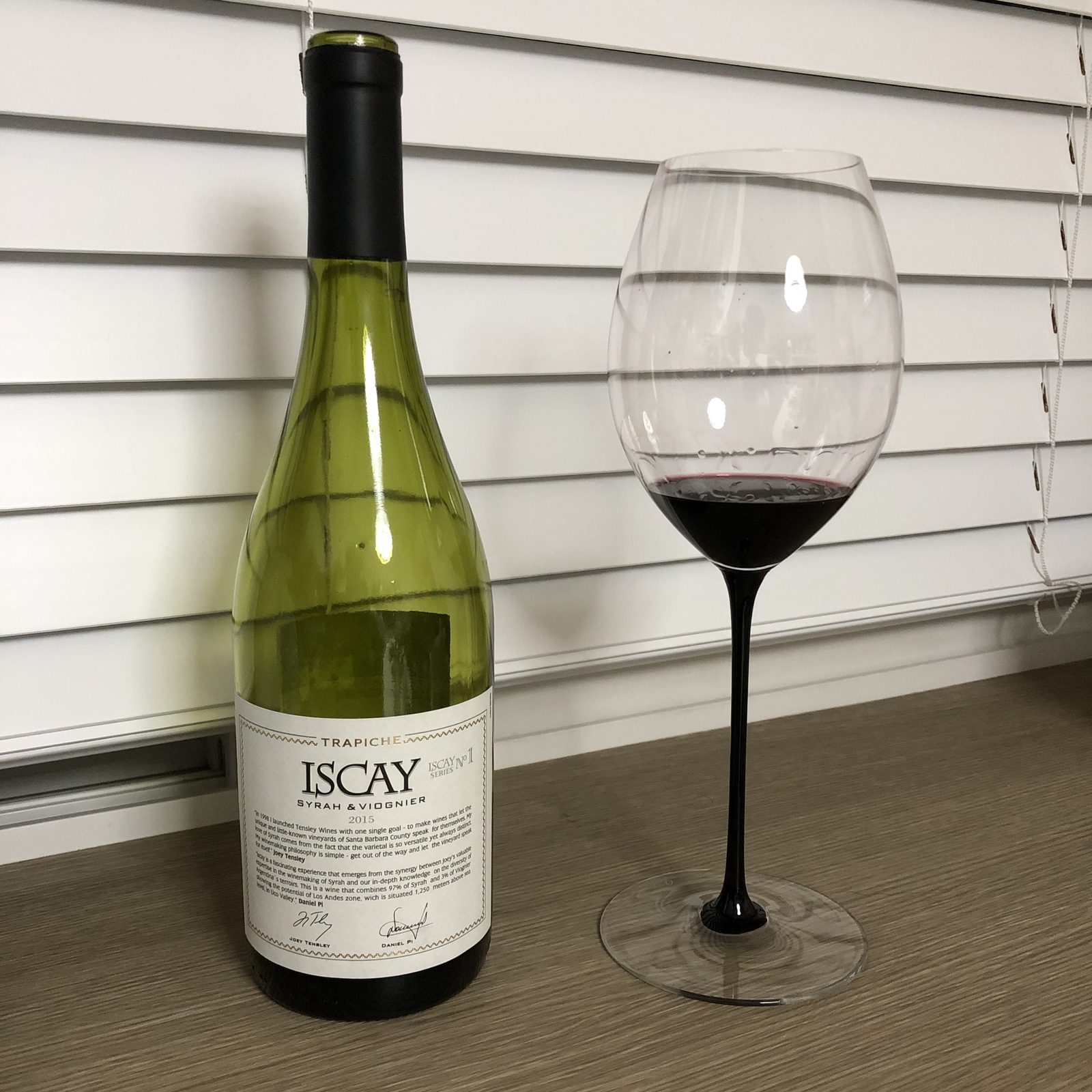
Iscay is Quechua for two, and the name is a description of the method. Trapiche’s Iscay line was conceived as a series of pairings — two varieties, two winemakers, two winemaking cultures — with the house’s chief winemaker Daniel Pi inviting an outside collaborator for each one.
For the Syrah, he asked Joey Tensley, who has spent his career in Santa Barbara County making Syrah and very little else. The label carries both signatures and a short note in Tensley’s voice about launching his own winery in 1998 with a single idea: find well-known vineyards, then get out of the fruit’s way. The blend is ninety-seven percent Syrah with three percent Viognier co-fermented into it — the northern Rhône trick, borrowed by California decades ago and applied here to fruit from Los Árboles, in Tunuyán, at around twelve hundred and fifty metres in the Uco Valley.
So the wine is a Rhône idea, executed by a Californian specialist, on Argentine mountain fruit, by an Argentine house. That is a lot of translation steps for one bottle.
The Bordeaux Year
2015 gave it another one.
It was the hardest vintage Mendoza had faced since the El Niño year of 1998 — a warm winter, then a summer that stayed unusually cool, then rain, thirty percent above average in places and heaviest at the start of April. Rot was widespread. Growers in the region took to calling it el año Bordelés, the Bordeaux year, for the combination of a cool summer, an early harvest, autumn rain and reds that came in with low alcohol and high acidity.
The Uco Valley came through it better than anywhere else, because the Uco Valley drains. On sloped, stony sites the rain acted more as relief from stress than as damage, and the wines that emerged had an unusual balance for the region. The late-ripening Cabernets took the worst of the early-April rain; Syrah, which finishes earlier, had less of its season left to lose.
In the Glass
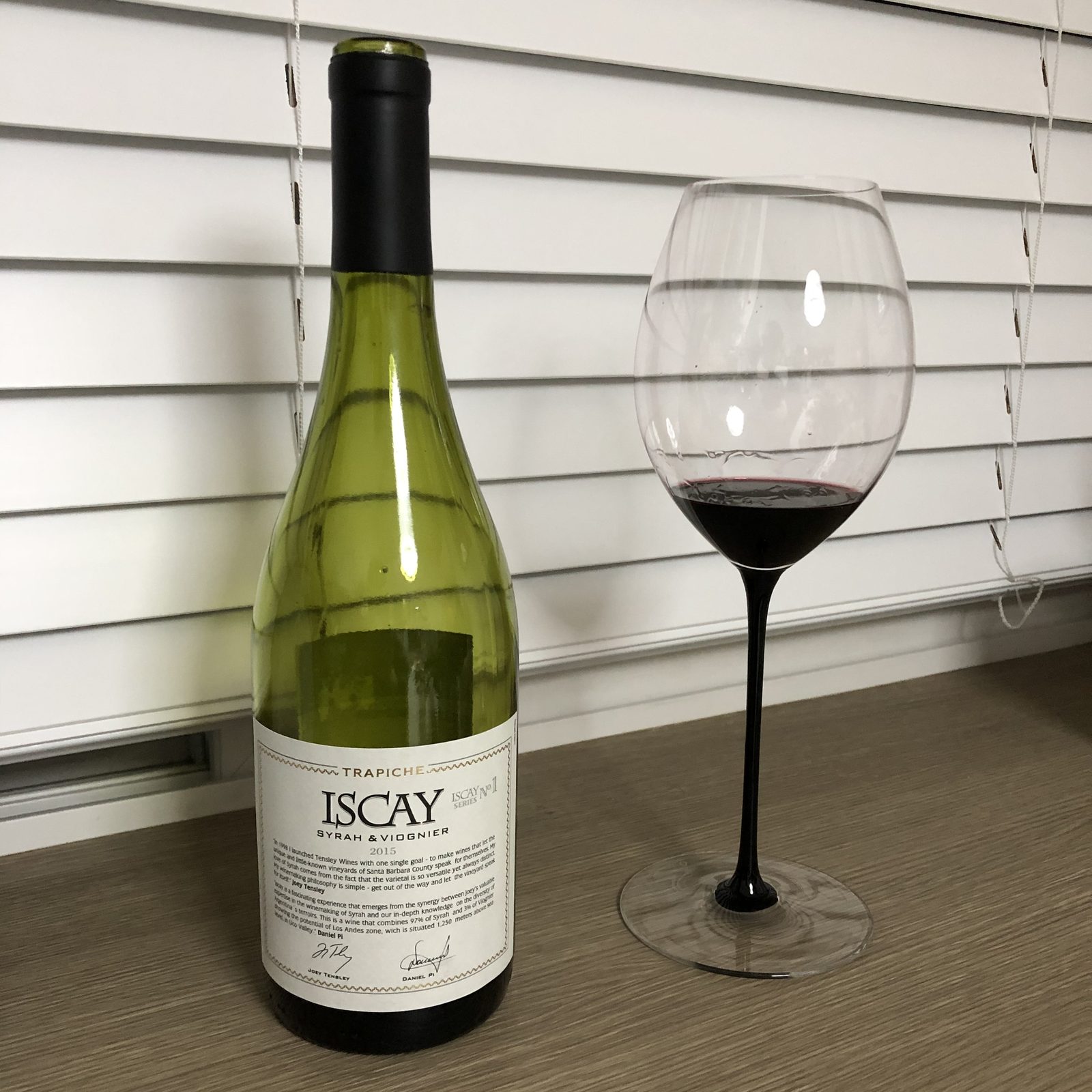
Just under six years from the vintage, opened at the office on an early January evening.
The colour was dense and still purple-edged. The nose was the Viognier’s argument as much as the Syrah’s — blackberry and cassis first, then an apricot-and-violet lift sitting on top of them, and behind that the oak’s contribution as cardamom, cocoa and a little vanilla. There was a black-olive, peppery note underneath that placed the grape without any doubt.
The palate was the interesting part, given the year. This was not the jammy, high-alcohol Argentine red the varietal blend would ordinarily suggest. It was firm and cool-toned, with real acidity running through the middle and tannins that were fine-grained but still gripping at the end. The fruit was concentrated rather than sweet, and the finish went to espresso and cocoa powder rather than to fruit.
A wine assembled from four different traditions, in a year that behaved like none of them expected — and the vintage, in the end, made it better company than a ripe one would have.
The same evening began with the Charles Heidsieck Brut Réserve and continued with the Hudson Chardonnay 2017.