The Château Inside the City
Château Haut-Brion 2001
- Producer
- Château Haut-Brion
- Appellation
- Pessac-Léognan
- Grapes
- Merlot, Cabernet Sauvignon, Cabernet Franc
- Tasted
- 22 January 2021
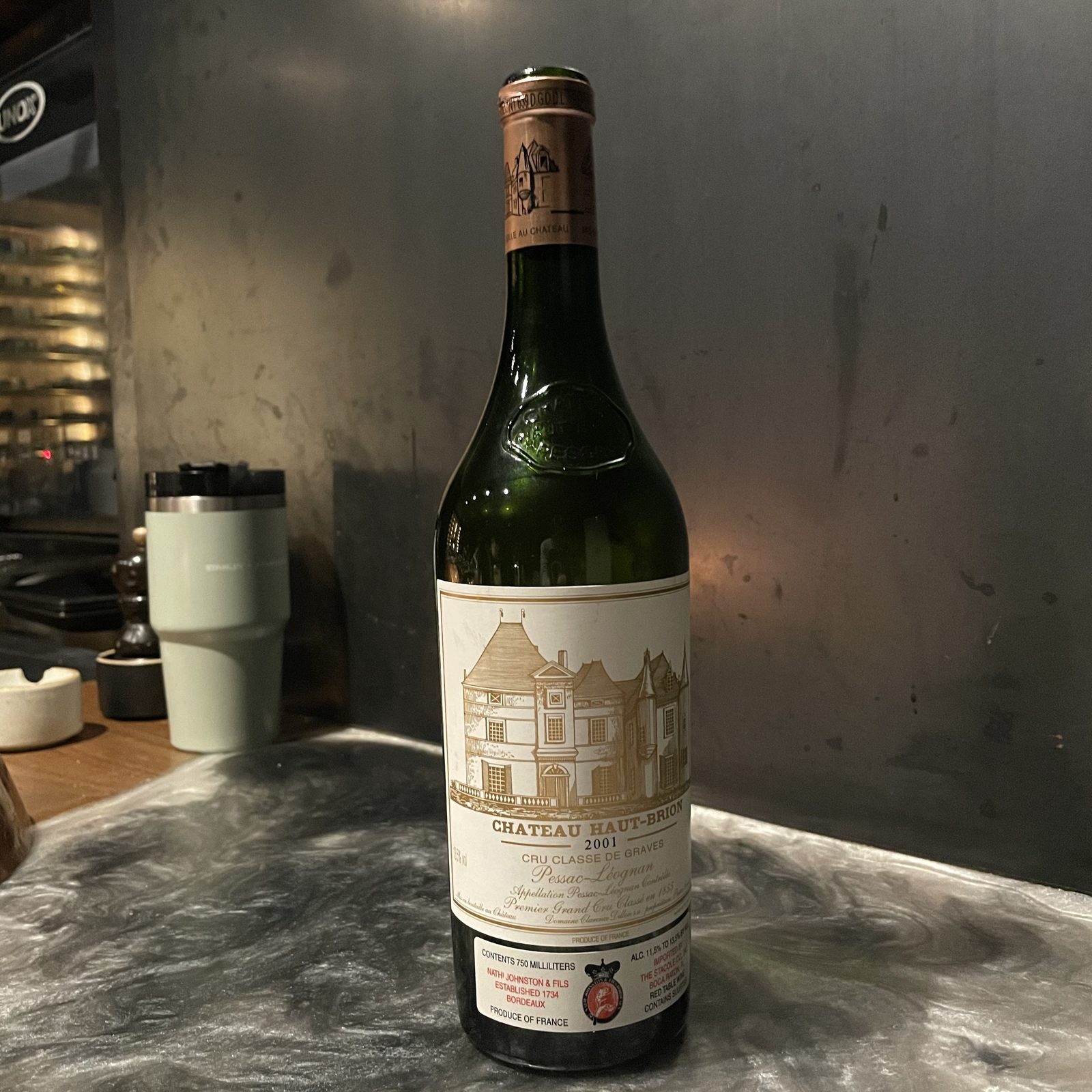
Haut-Brion is the first growth with the longest paper trail — Samuel Pepys wrote down its name in a London tavern in 1663, a century before the 1855 classification made the rank official — and the strangest setting. The Médoc first growths sit in farmland; Haut-Brion’s gravel rises inside Pessac, surrounded on all sides by the suburbs of Bordeaux. Tram lines and apartment blocks border the vines. The warmth of the city is part of the terroir, and the estate is routinely among the earliest of the great châteaux to harvest.
Its signature follows from the place: less about mass than any of its peers, more about aroma — the famous register of warm bricks, smoke, tobacco and hot stone over dark fruit, with a texture that turns silky years before the Médoc catches up.
Living Next Door to 2000
The 2001 vintage spent its whole life being compared to the millennium year before it, and the comparison misses what 2001 actually was: a temperate, even-handed season that produced wines of complexity rather than power, at their best in appellations that value finesse. Pessac-Léognan was one of them, and Haut-Brion made one of the vintage’s quiet triumphs — a wine that critics kept describing, almost apologetically, as more approachable than it had any right to be.
At twenty years, the apology was unnecessary. The nose had become the point: graphite and smoke and leather laced through a blackcurrant core, with violets, cherry and that autumnal, forest-floor turn mature Graves takes. The palate was seamless — tannin fully woven in, mineral and crushed-stone flavours carrying the length, nothing left to resolve. Where the 2000s of the Left Bank were still flexing at this age, the 2001 Haut-Brion was simply ready, and had been for a while.
Fifth of Five
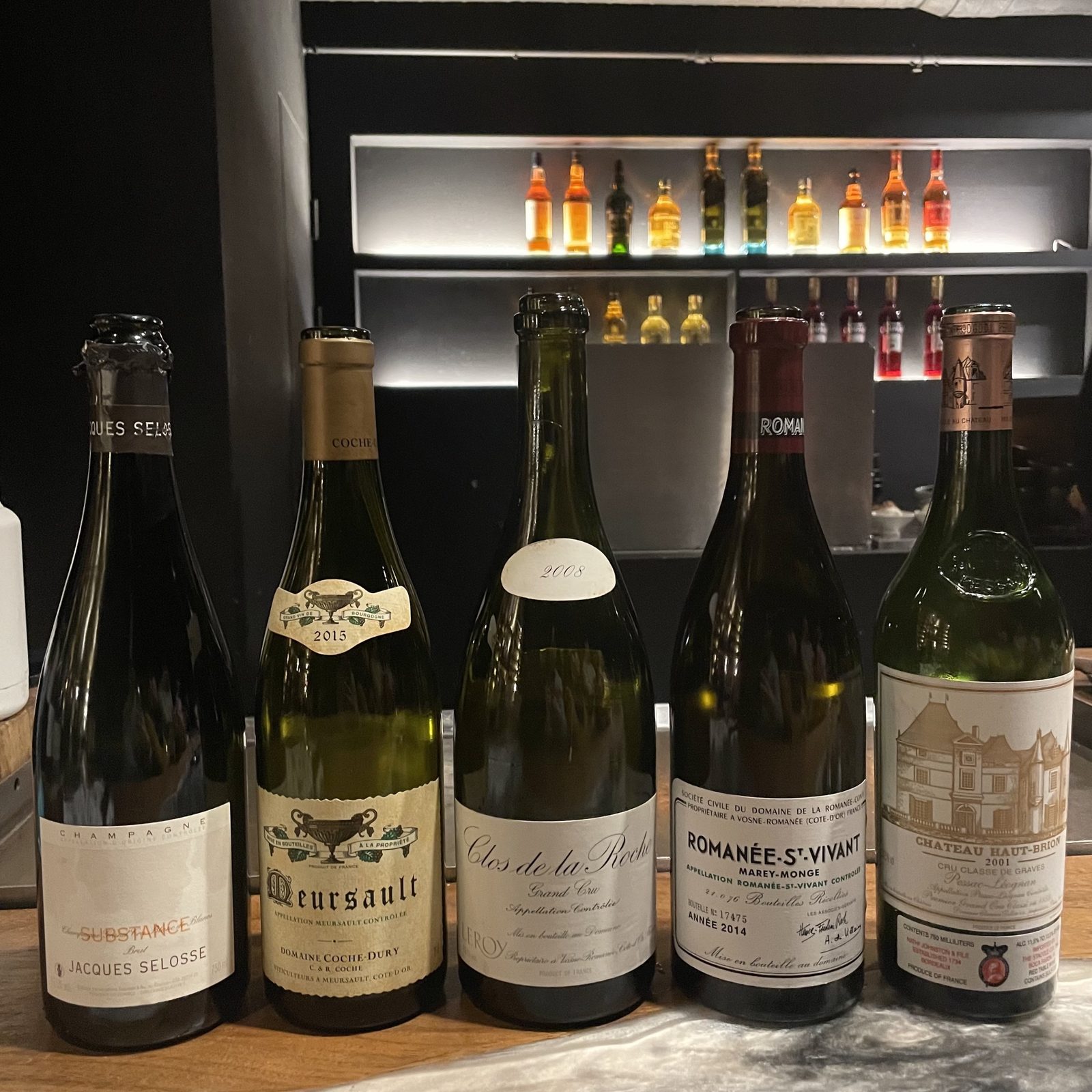
It closed a counter dinner that had run from Selosse Substance through a Coche-Dury Meursault, a Leroy Clos de la Roche 2008 and the DRC Romanée-Saint-Vivant 2014 — four wines of escalating intensity, with Bordeaux asked to have the last word. Following Burgundy of that order is an unwinnable assignment for most claret. Haut-Brion’s advantage is that it has never really been claret in the muscular sense; it is the first growth that behaves like a conversation rather than a speech, and at the end of a long evening, conversation is what a table wants.