Thirty-Five Years for a Fifth Growth
Château Lynch-Bages 1986
- Producer
- Château Lynch-Bages
- Appellation
- Pauillac
- Grapes
- Cabernet Sauvignon, Merlot, Cabernet Franc, Petit Verdot
- Tasted
- 29 January 2021
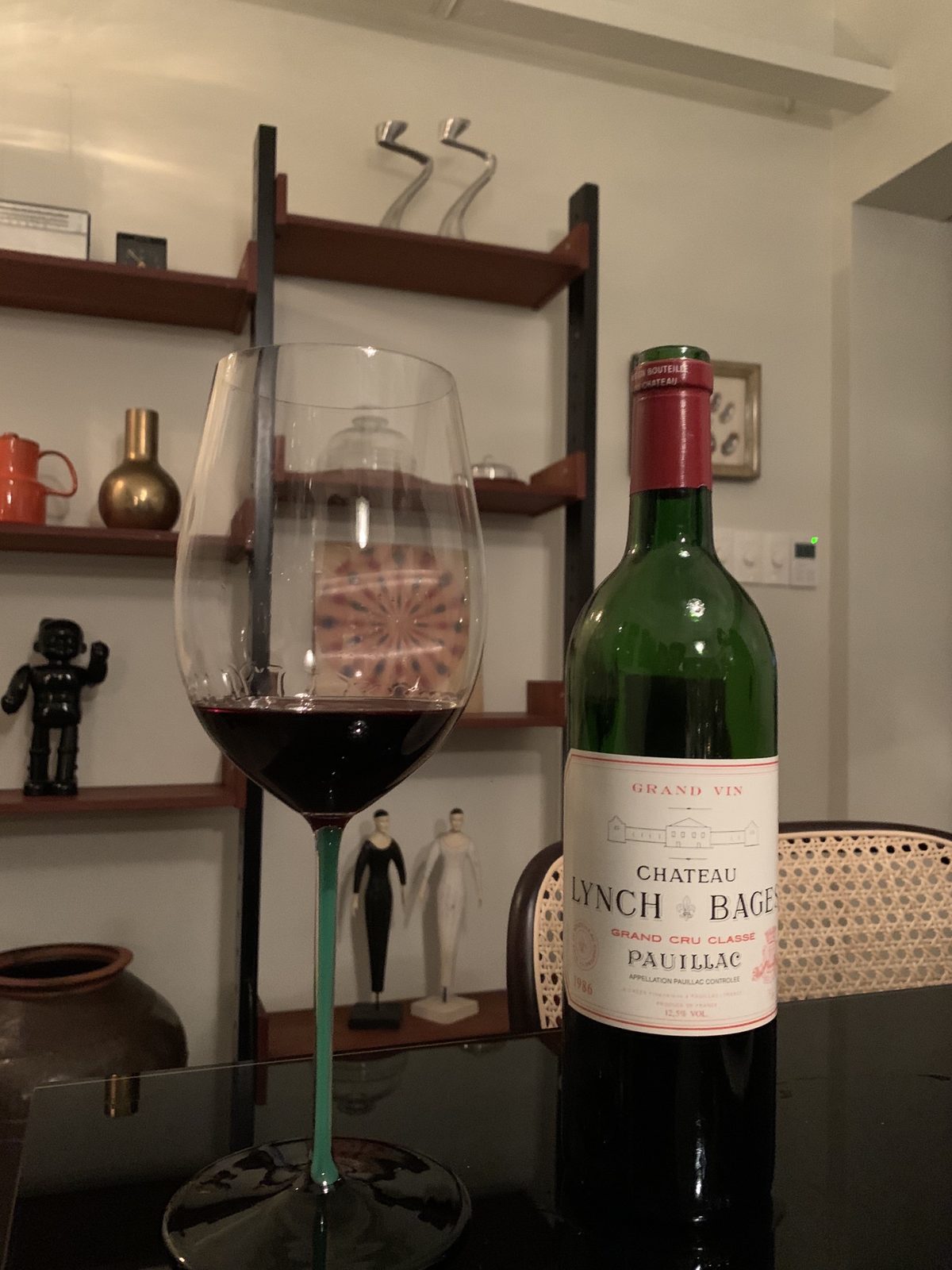
Lynch-Bages was classified fifth in 1855 and has spent the century and a half since arguing, in the glass, with that placement. The Cazes family took it on in the 1930s and rebuilt it slowly; under Jean-Michel Cazes, who ran the estate from 1973 into the twenty-first century, it became one of the best-known Pauillacs in the world — dense, cassis-and-cedar, unmistakably of its commune, and reliably better than its rank.
The vineyard sits on the Bages plateau on the southern edge of Pauillac, deep gravel, mostly Cabernet Sauvignon with Merlot and a little Cabernet Franc and Petit Verdot. The house style in the eighties was full-throated: ripe, muscular, generous with oak, and built to last.
The Year
1986 was a year for exactly that style. A large crop of Cabernet Sauvignon ripened fully in a hot, dry late summer, and the wines came in with tannin levels that startled even people used to Médoc. The vintage was declared great almost immediately and then spent two decades being described as closed — a year that had to be waited on rather than enjoyed. Pauillac and Saint-Julien made the best of it, and the northern Médoc’s Cabernet-heavy estates were where the 1986s were most convincing.
At thirty years, the estate’s own view was that the wine still had more to give. At thirty-five, it was hard to disagree.
In the Glass
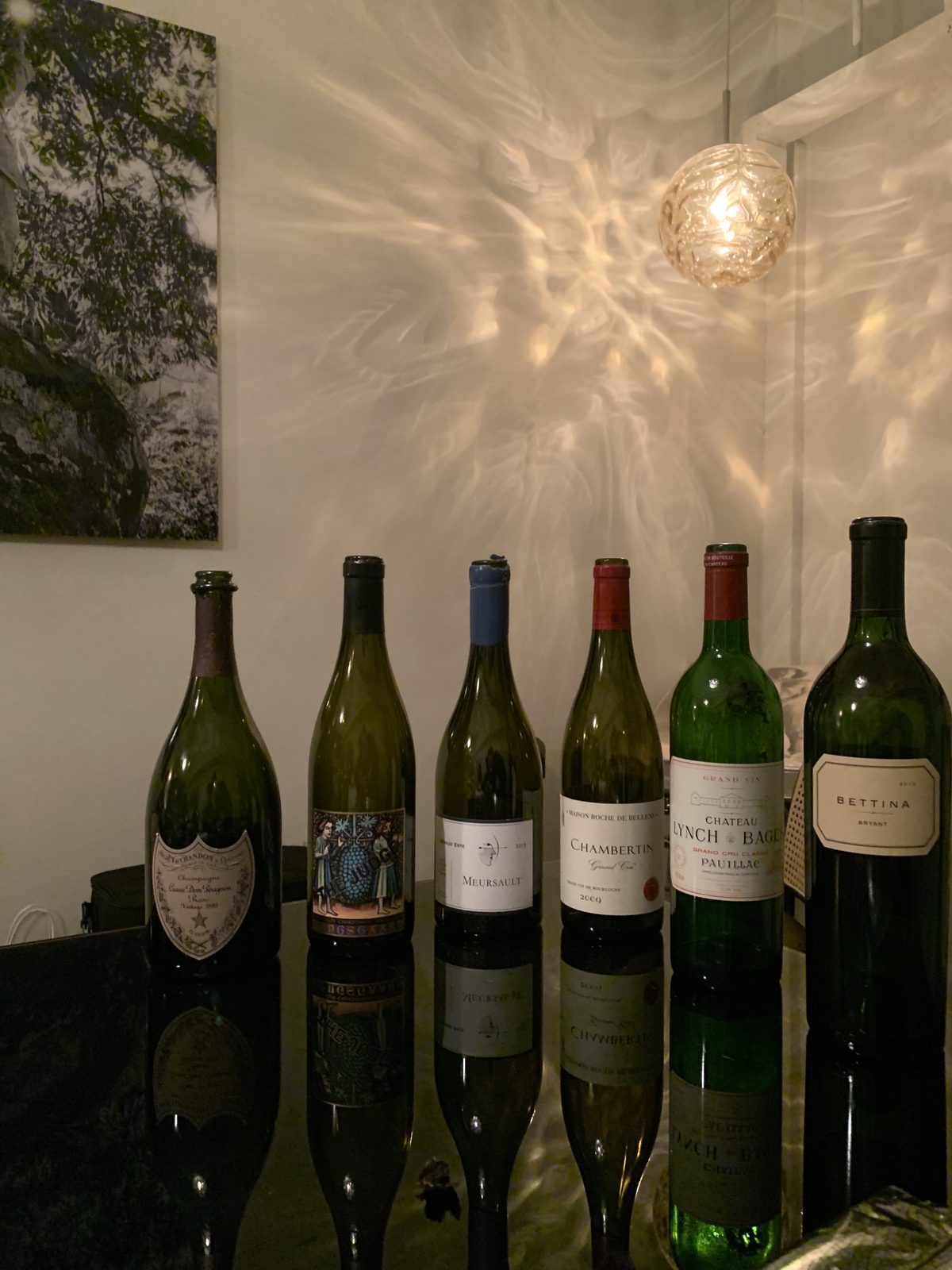
The fifth bottle of an evening at a friend’s table that had already run through a Dom Pérignon Rosé 1993, a Kongsgaard Judge, an Arnaud Ente Meursault and a Roche de Bellene Chambertin 2009, with a Bryant Bettina still to come.
Deep garnet, brick at the rim but far from faded. The nose had reached full maturity and was entirely at ease there: blackcurrant that had dried to cassis liqueur, cedar and cigar box, graphite, mint, a leathery, earthy depth underneath and a lift of dried flowers over the top. Classic Pauillac, without any of the qualifications.
The palate was where the year showed. Thirty-five years had resolved the famous tannins into something fine and long, but they were still there — the wine had a frame, a straightness through the middle, that a softer vintage would have lost by now. The acidity was bright, the fruit still present rather than merely remembered, and the finish went on for a long time, savoury and cool.
A fifth growth from a year that punished impatience, opened at the point where the patience had paid. It made the argument the estate has been making since 1855, and it made it without raising its voice.
For a first growth from the same bank a decade later, see the Mouton Rothschild 1995.