A Burgundy Obsessive in the Santa Cruz Mountains
Rhys Vineyards Alpine Vineyard Pinot Noir Santa Cruz Mountains 2006
- Producer
- Rhys Vineyards
- Appellation
- Santa Cruz Mountains
- Grapes
- Pinot Noir
- Tasted
- 18 February 2021
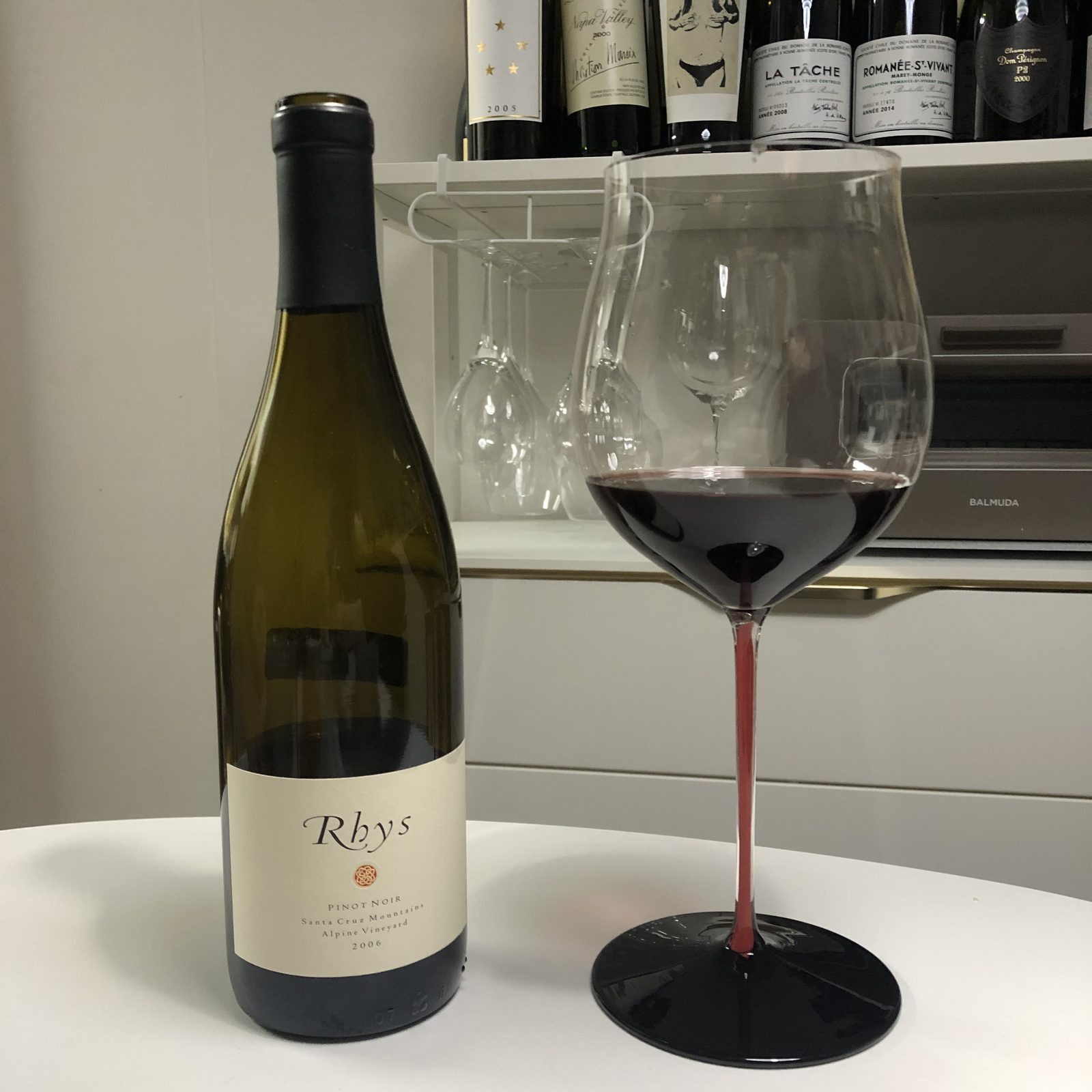
Rhys began as a backyard experiment. Kevin Harvey, a software entrepreneur and venture capitalist with a serious Burgundy habit, planted Pinot Noir on an old Christmas-tree farm at his home in the Santa Cruz Mountains and found the results convincing enough to go looking for more land. By 2001 he had concluded that the mountains above Silicon Valley — cool, foggy, steep, with thin and varied soils — were the closest thing California had to the conditions that make Burgundy interesting, and he started planting in earnest.
The estate’s first Pinot Noir release came in 2004. Alpine Vineyard, on steep slopes high in the range, was one of the earliest sites, and by 2007 all five estate vineyards were in production. Rhys has since become one of the most respected Pinot producers in California, farmed organically, made without much intervention, and pointedly restrained in style — moderate alcohol, whole-cluster fermentation, no new-oak sheen.
This bottle is from 2006, when all of that was a couple of years old and the wines were still, in effect, early drafts.
The Year
2006 in the Santa Cruz Mountains was a cool, long season after a wet spring, with a late harvest and moderate sugars. For a producer trying to make Pinot Noir with structure and freshness rather than fruit, that is the better kind of year.
In the Glass
Opened at home late on a February evening, fourteen years from the vintage.
The colour had gone to a light garnet with a brick edge — a Pinot at full maturity. The nose was fully developed: dried cherry and cranberry, forest floor, dried herbs, a little tea leaf and a savoury, earthy depth that read more like an old Côte de Nuits than like California. A faint whole-cluster spice still hung on.
The palate was light in body, the tannins fully resolved, the acidity still bright and holding everything together. The fruit had moved entirely into the dried register; the finish was long, mineral and slightly saline. It had probably been at its best a few years earlier, and it was still a pleasure.
An early wine from an estate that would go on to become one of the state’s benchmarks for the grape. At fourteen years it had aged like the thing it was trying to be, which is about the strongest evidence a theory can get. The same theory applied to a different grape on a newer site — the Mt. Pajaro Chenin Blanc 2016 — is elsewhere in this archive.