The Eldest Brother's Bourgogne
Pierre-Yves Colin-Morey Bourgogne Chardonnay 2015
- Producer
- Pierre-Yves Colin-Morey
- Appellation
- Bourgogne
- Grapes
- Chardonnay
- Tasted
- 21 February 2021
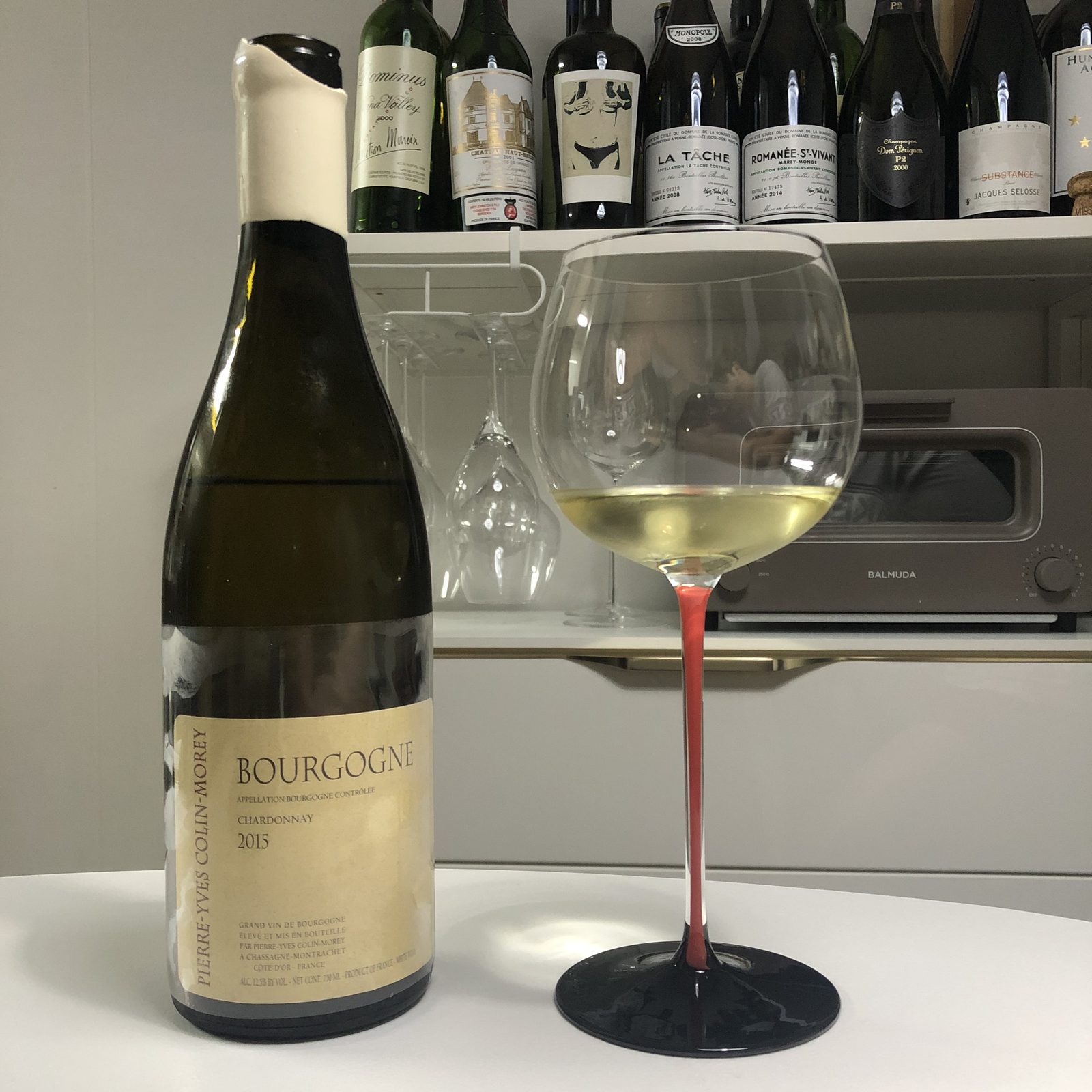
Pierre-Yves Colin is the eldest of Marc Colin’s four children and the first to go his own way — making wine under his own name from 1994 and separating from the family domaine entirely in 2005, with his wife Caroline Morey, whose family holds vines in Chassagne. Within a decade the label had become one of the most sought-after in white Burgundy, and the reason was a method as much as a set of vineyards.
Whole-bunch pressing. Fermentation with native yeasts. Ageing on the lees for up to eighteen months in 350-litre barrels — larger than the standard Burgundian pièce, so the oak’s influence is diluted — and, most distinctively, no bâtonnage at all: the lees are left undisturbed rather than stirred into the wine. The result is a house style that is mineral, taut and reductive when young, with a struck-match tension that has been widely imitated since. The wax capsule over the cork is the visible signature.
The regional Bourgogne gets the same treatment as the grands crus, at a fraction of the scale — fourteen months in barrel, a tenth of it new, then a few months in steel.
The Year
2015 was a warm, generous white-Burgundy vintage — ripe fruit, moderate acidity, wines that were forward and open early. For a producer whose method is designed to keep tension in the wine, a year like that is a useful test.
Five weeks earlier, the Chassagne-Montrachet from Joseph Colin, the youngest of the four siblings, had been on the same table. Two brothers, two domaines, one family style pulling in slightly different directions.
In the Glass
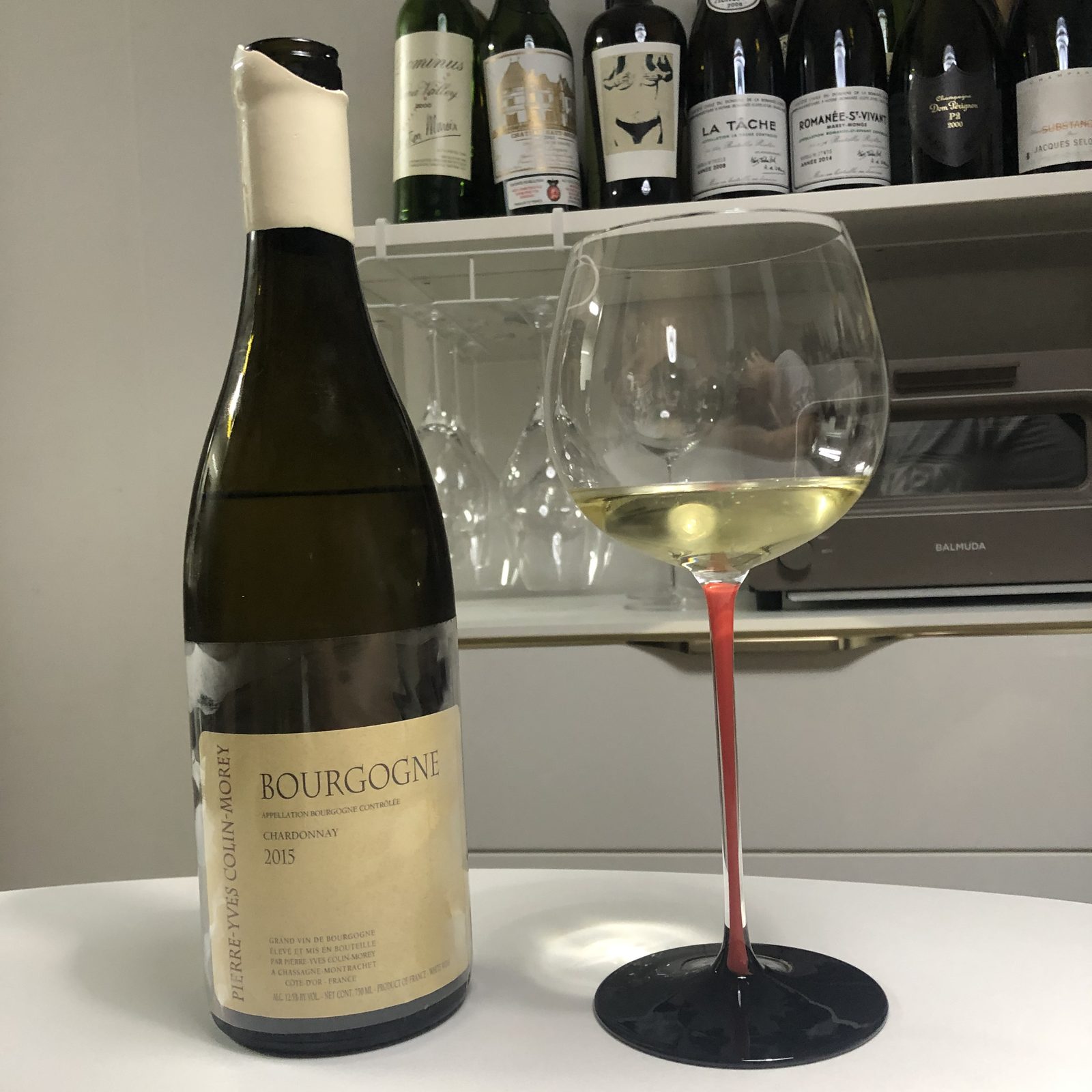
Opened at home on a Sunday evening, five and a half years from the vintage, and a couple of hours before a Clos Les Lunelles 2006.
Pale gold with a green edge. The nose led with the house signature — flint and struck match — then lemon and green apple, white flowers, and a faint oak-derived hazelnut warmth behind. Very clean, very focused.
On the palate it was tight and mineral, with a saline line through the middle, medium body and a citrus-driven acidity that the warm year had not blunted. The finish was longer than the appellation has any right to be, on stone and lemon pith.
A regional wine that behaved like a village one, from a producer whose method turns out to be robust against a hot summer. If the youngest brother’s first vintage had shown precision, the eldest’s Bourgogne showed where that precision came from. The same method on grander ground is in his Meursault Les Narvaux 2013.