The Second Wine of a Famous Neighbourhood
Finca Villacreces Pruno 2014
- Producer
- Finca Villacreces
- Appellation
- Ribera del Duero
- Grapes
- Tempranillo, Cabernet Sauvignon, Merlot
- Tasted
- 3 March 2021
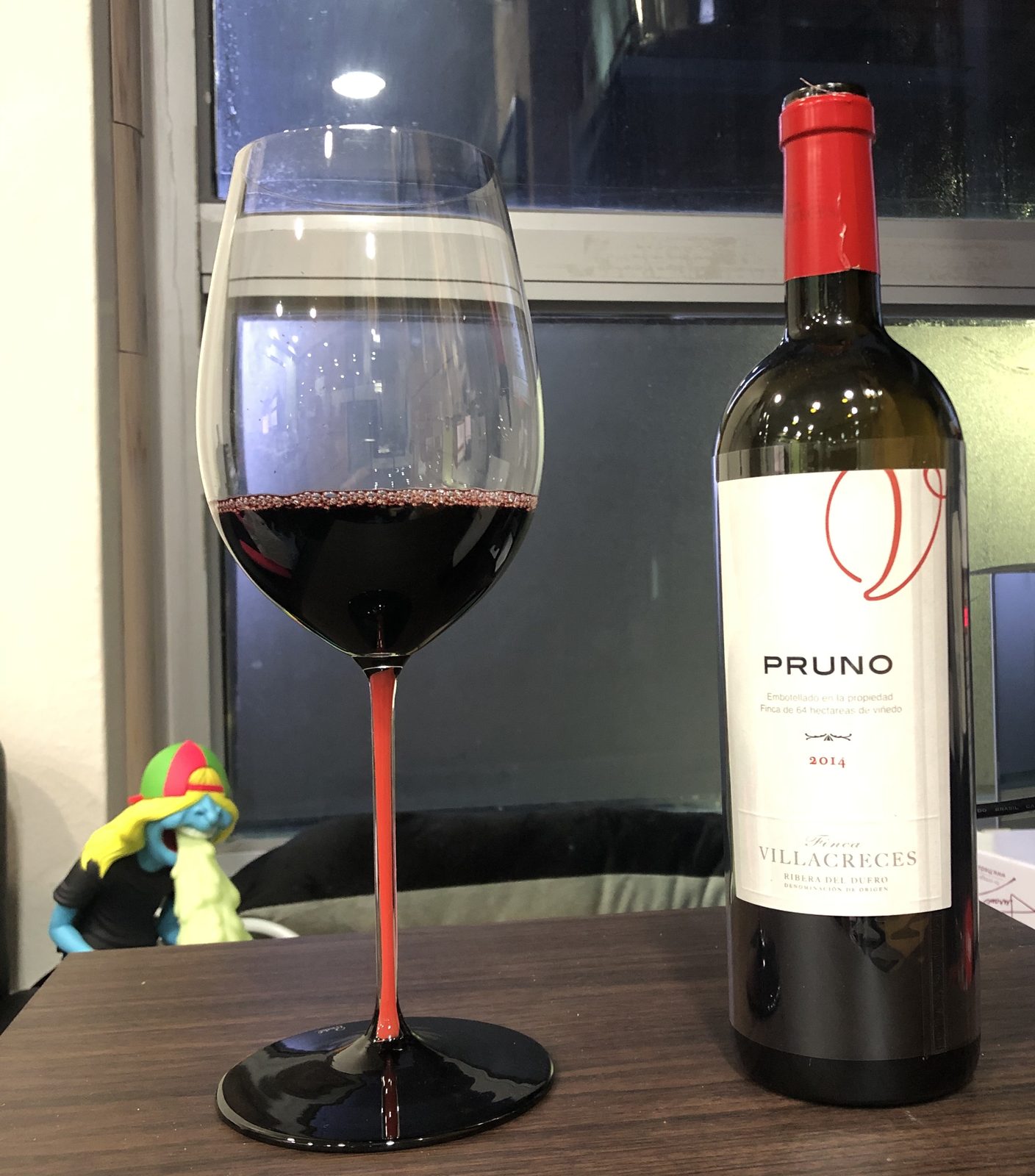
There is a stretch of the Duero between Peñafiel and Pesquera that the Spanish trade calls the Milla de Oro — the golden mile. Vega Sicilia is on it. So is the fruit that goes into Pingus. Finca Villacreces sits in between, sixty-four hectares of vines on the river’s own terraces, and the label says so in small type under the estate name: Finca de 64 hectáreas de viñedo.
The estate has been in the hands of the Antón family since 2003. The plantings are dominated by Tempranillo on sandy soils, with smaller parcels of Cabernet Sauvignon and Merlot on quartz and shingle, and the whole property is ringed by pines planted decades ago as a windbreak against the Castilian winter — the vineyard is effectively a clearing in a forest, which is unusual anywhere in Ribera.
The Wine
Pruno is the estate’s second label, and it was conceived for a specific purpose: a Ribera del Duero that can be opened young, while the flagship wine is still working through its structure. The 2014 is a little over nine-tenths Tempranillo with the Bordeaux varieties making up the balance, and it is raised in second- and third-fill French barrels rather than new wood. That single decision is what separates it from most wines at its level — the oak is a vessel, not a flavour.
2014 in Ribera was rated muy buena by the region’s regulating council. The season passed without any serious weather event and without meaningful disease pressure, which in Castilla y León is worth more than heat: the wines came in with strong colour, dark fruit and enough tannin to give them shape.
In the Glass
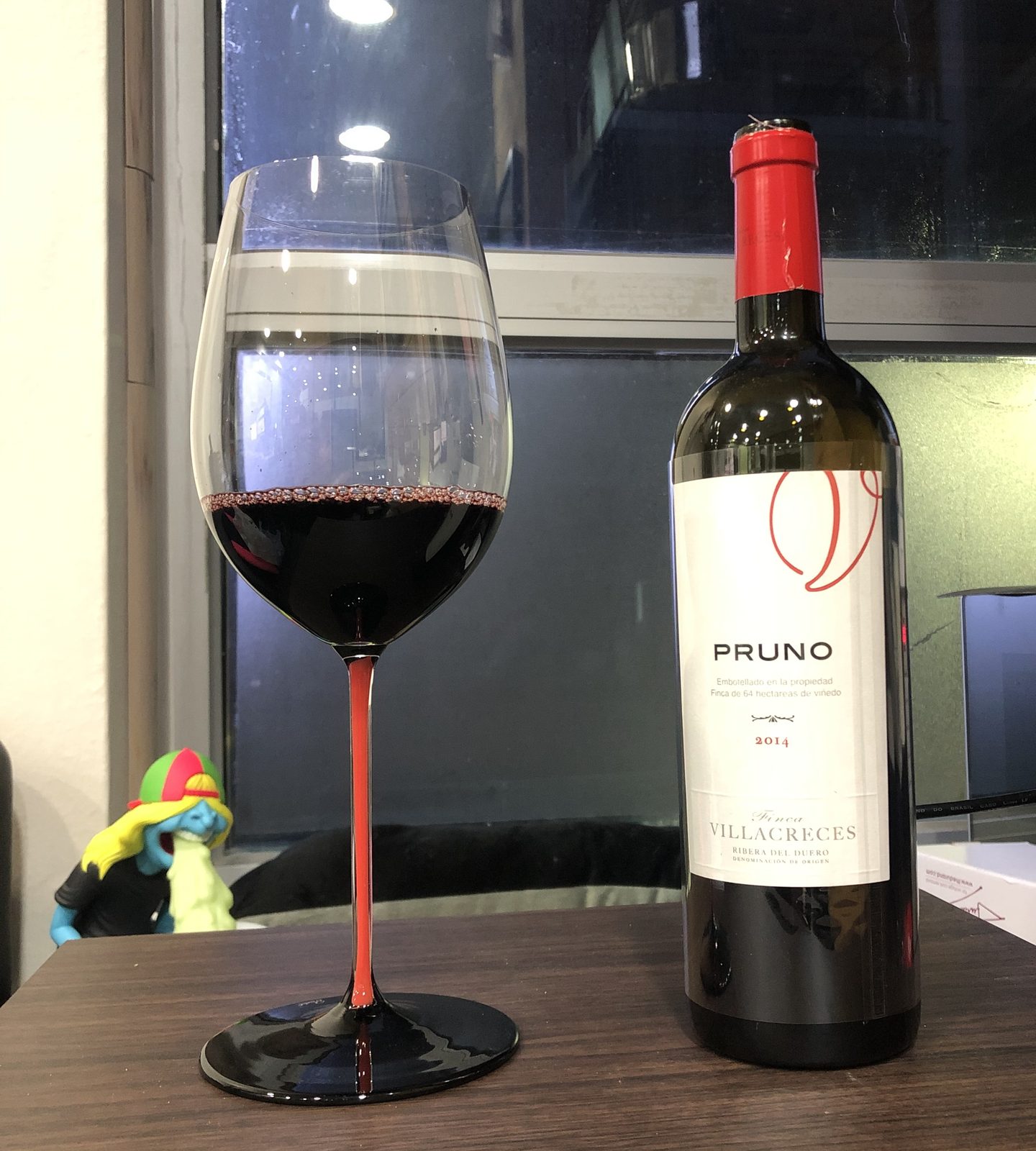
Opened just past midnight at the office, seven years from the vintage.
Opaque black-cherry red, still with a purple rim. The nose came out immediately and without persuasion — blackberry and dark plum, a violet lift, liquorice, and a dry earthy note underneath that is the Ribera signature more than any fruit descriptor. There was no sawdust and no coconut, which is the whole point of used barrels.
On the palate it was full but not heavy, with tannins that were ripe and slightly grainy, decent acidity holding the middle together, and a finish on dark fruit and a faintly bitter cocoa edge. Seven years had smoothed the edges without taking anything away; the fruit was still primary enough to feel young.
A wine made deliberately not to need a cellar, from an address where everything else does. Elsewhere in this archive, the same river valley shows what happens when the wait goes on for decades — a Ribera del Duero from 1966 and 1976 — and further east, Rioja from 2004 makes the Tempranillo argument in a different accent. Later the same day, a Rheingau Riesling.