The Beautiful Slope
Weingut Prinz Hallgarten Schönhell Riesling Grosses Gewächs 2019
- Producer
- Weingut Prinz
- Appellation
- Hallgarten
- Grapes
- Riesling
- Tasted
- 3 March 2021
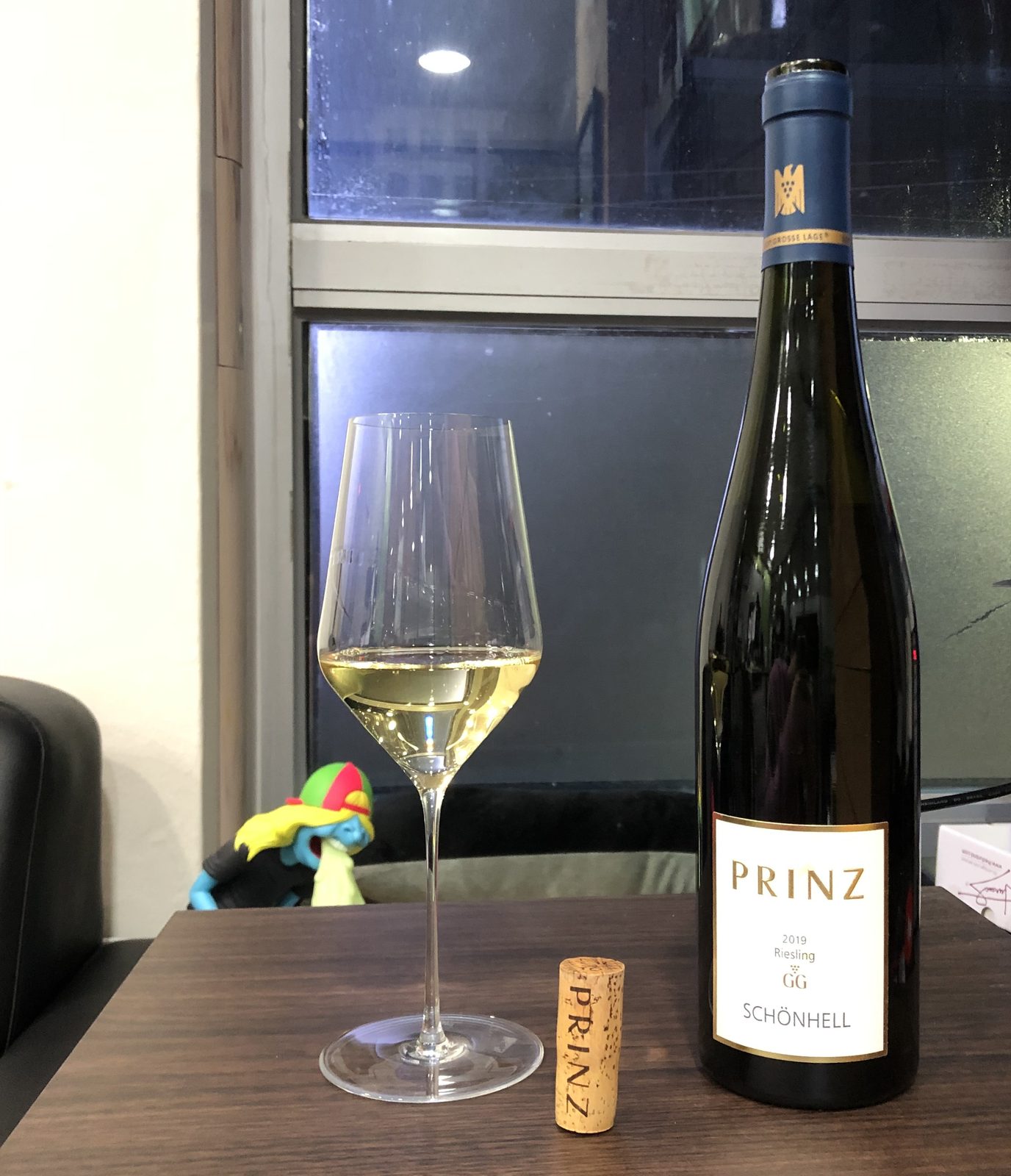
Hallgarten sits high on the Rheingau’s slope, above the river and behind the more famous villages of the appellation. The vineyard called Schönhell — beautiful slope — has carried that name since the early fourteenth century, faces south between roughly 165 and 190 metres, and is now classified VDP.Grosse Lage. Its soil is the reason it works: deep, gravelly loess-loam over clay, holding water where the phyllite sites around Hallgarten shed it. In dry years that difference is the wine.
Fred and Sabine Prinz built their estate the hard way. For years Fred Prinz made his own wines from a small holding while working as the cellarmaster at Kloster Eberbach, the largest estate in the Rheingau — a garagiste with a day job, which in Germany is not a career path anyone plans. The estate is now about eleven and a half hectares, farmed on biodynamic principles, and a VDP member.
The Year
2019 was Germany’s second-hottest summer on record, and the Rheingau’s south-facing slopes took the full force of it. What saved the vintage was timing: rain arrived in late August, before the sugars ran away, and the Rheingau was then spared the September rain that complicated other regions. Clusters were loose and skins thick, so botrytis pressure stayed low and the acidity held.
The result is the combination growers find hardest to engineer — the generosity of a warm year with the tension of a cool one. In a site that holds its water, like Schönhell, a hot summer stops being a threat and becomes ripeness with the structure intact.
In the Glass
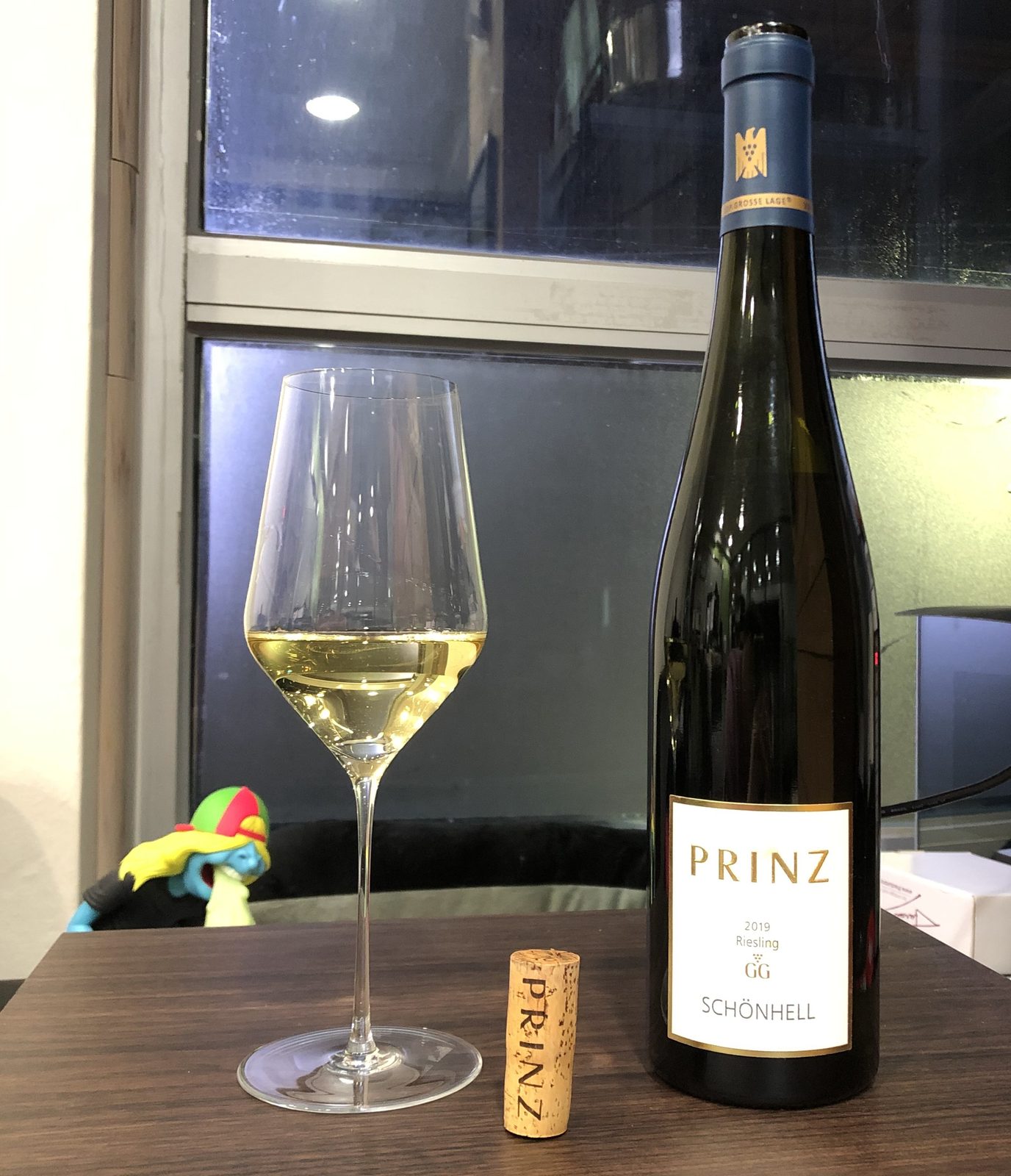
Bright medium gold, more colour than a two-year-old Riesling usually shows.
The nose was ripe and full — yellow peach, apricot, quince, a lemon-oil top note — with the smoky, flinty reduction that a young Grosses Gewächs almost always carries in its first years, and which takes a while to blow off. Underneath all of it there was something chalky and cool that had nothing to do with fruit.
The palate was dry, dense and wide, with real weight through the middle and an acidity that ran straight down the centre of it. Warm-vintage substance, cool-vintage line. The finish was long and stony, drying slightly at the end, with a bitter-almond edge that is characteristic of the category and reads as youth rather than fault.
Two years from the vintage is early for a GG, and the wine said so — it was closed up in the middle and only opened out over an hour. That is the correct behaviour for a wine that will be at its best somewhere in the second half of its first decade. Elsewhere in this archive, a Grosses Gewächs from Baden makes the case for the same vintage in red, at the other end of the country. Earlier the same day, a Ribera del Duero.