Sangiovese in the Bolgheri House
Le Volte dell'Ornellaia 2017
- Producer
- Ornellaia
- Appellation
- Toscana IGT
- Grapes
- Merlot, Cabernet Sauvignon, Sangiovese
- Tasted
- 16 March 2021
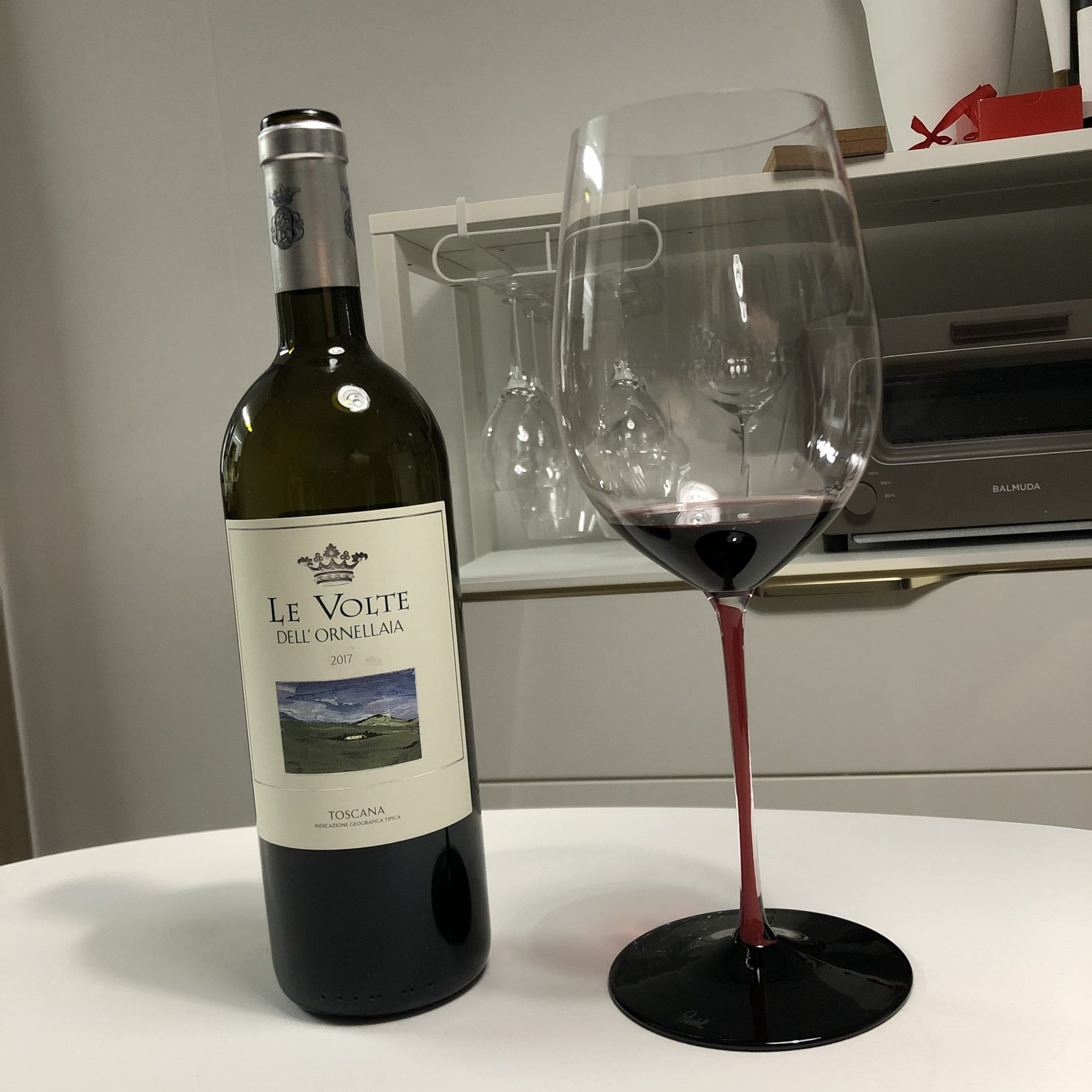
Ornellaia belongs to the generation of Tuscan estates that were built on the argument that Sangiovese was not the only answer. Bolgheri, on the coast, had no classical pedigree and no obligation to the grape; Cabernet Sauvignon and Merlot ripened there in a way they did not inland, and the wines that resulted were allowed to be called nothing more official than table wine for years. That fight is long over, and the appellation exists now because those producers won it.
Le Volte is the estate’s entry wine, and it makes a quiet joke of the history. Merlot leads, Cabernet Sauvignon follows, and about an eighth of the blend is Sangiovese — the variety the estate’s reputation was built on not using. It is bottled as Toscana IGT rather than Bolgheri, which frees it to take fruit from beyond the estate’s own boundaries. Raising is short, around ten months, split between barriques that have already done service for the grand vin and cement tanks, so the wood stays behind the fruit.
The Year
2017 was a drought year across Tuscany, and it announced itself early. A spring frost cut into the crop in some areas, then the summer stayed hot and rainless. Berries never sized up; picking began in the last week of August with Merlot and ran into late September, and rain in mid-month cooled things enough for the later varieties to finish properly.
Small berries mean a high proportion of skin to juice, and every wine from the year carries that signature: dense colour, concentrated dark fruit, and tannin that has to be handled carefully to keep from drying out. In an entry wine, that concentration is close to a gift — it gives a bottle designed for early drinking a density it would not have had in a normal year.
In the Glass
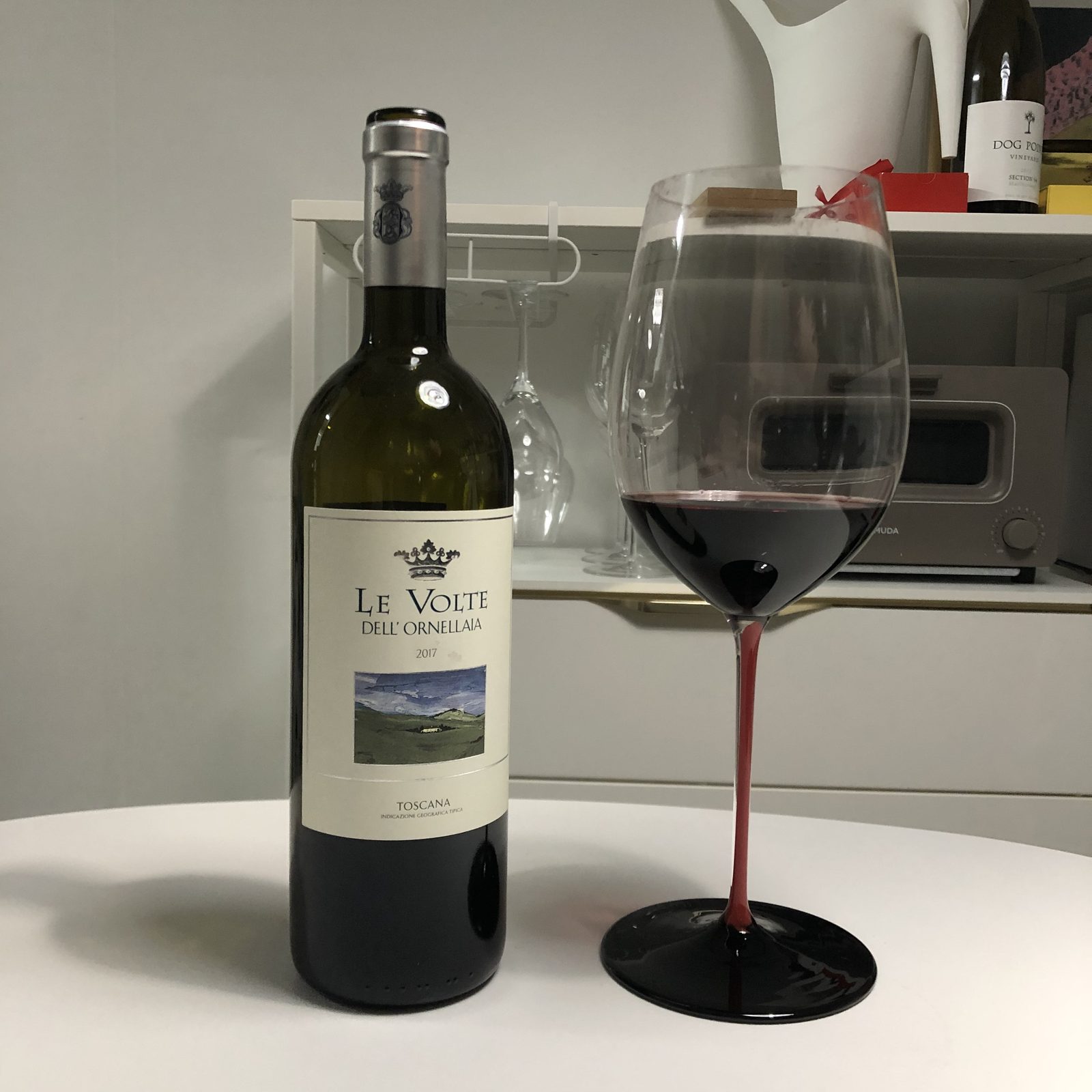
Opened at home on a Tuesday evening, four years from the vintage.
Deep, saturated ruby with almost no rim variation. The nose was dark and immediate — blackberry, black cherry, plum — with a sweet spice and cocoa layer from the used barriques, and a dried-herb, Mediterranean-scrub note that is the coast talking rather than the grapes. The Sangiovese fraction showed as a tart red-cherry edge on top of the black fruit rather than as anything structural.
On the palate it was ripe and full, the drought concentration obvious in the middle, with tannins that were fine and slightly drying at the back and enough acidity to keep the whole thing lively. The finish was medium-long, on dark fruit and a bitter-cherry note that Sangiovese leaves behind wherever it goes, even in a supporting part.
Four years is about right for this bottling — the fruit was still fully in front, and the tannin of the vintage had softened enough not to be conspicuous. Elsewhere in this archive, Chianti Classico from the same year shows what 2017 did to Sangiovese when Sangiovese was the entire wine, and a Tuscan Merlot shows the other half of the blend given the lead role.