Two Mr. Ks and a Bed of Straw
Sine Qua Non Mr. K The Straw Man 2003
- Producer
- Sine Qua Non
- Appellation
- Central Coast
- Grapes
- Sémillon
- Tasted
- 19 March 2021
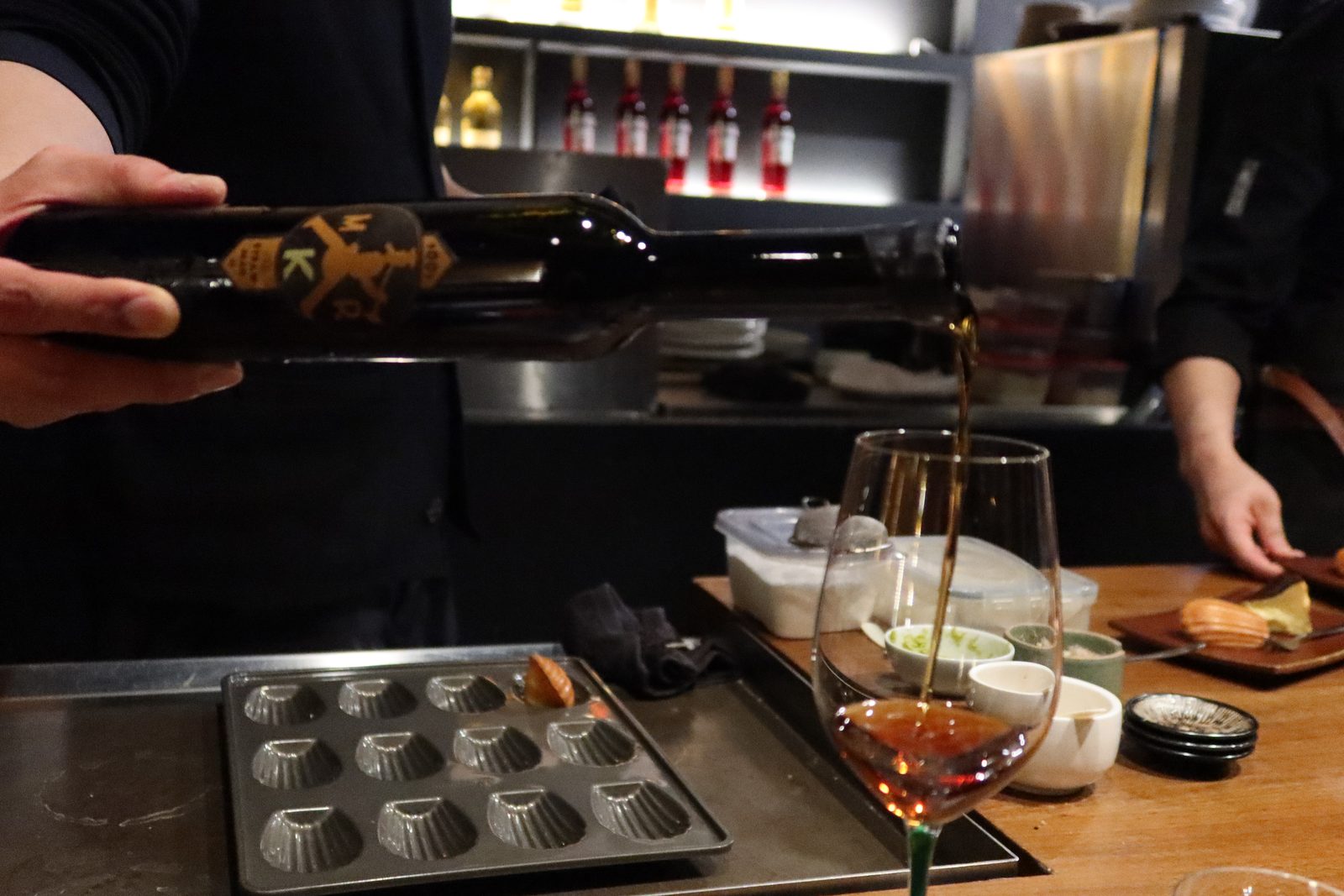
Mr. K is two people. The label belonged to a collaboration between Manfred Krankl of Sine Qua Non and Alois Kracher, the Burgenland winemaker who had turned the sweet wines of Austria’s Neusiedlersee into a world reference. Both men were Austrian by birth, both had a surname beginning with K, and from the 1998 vintage they made dessert wines together in Krankl’s cellar in Ventura. The project ended with the 2006 vintage; Kracher died in December 2007, and Krankl chose not to continue it without him.
There were three wines, each a Central European sweet tradition transplanted to the Central Coast: the Ice Man, from frozen grapes; the Noble Man, from botrytis; and the Straw Man, a vin de paille, from grapes laid out to dry on straw mats for around two months before pressing. All of them came only in slender half-bottles, with a small gold emblem of a figure striding with a scythe over his shoulder and the letters M, R and K around him.
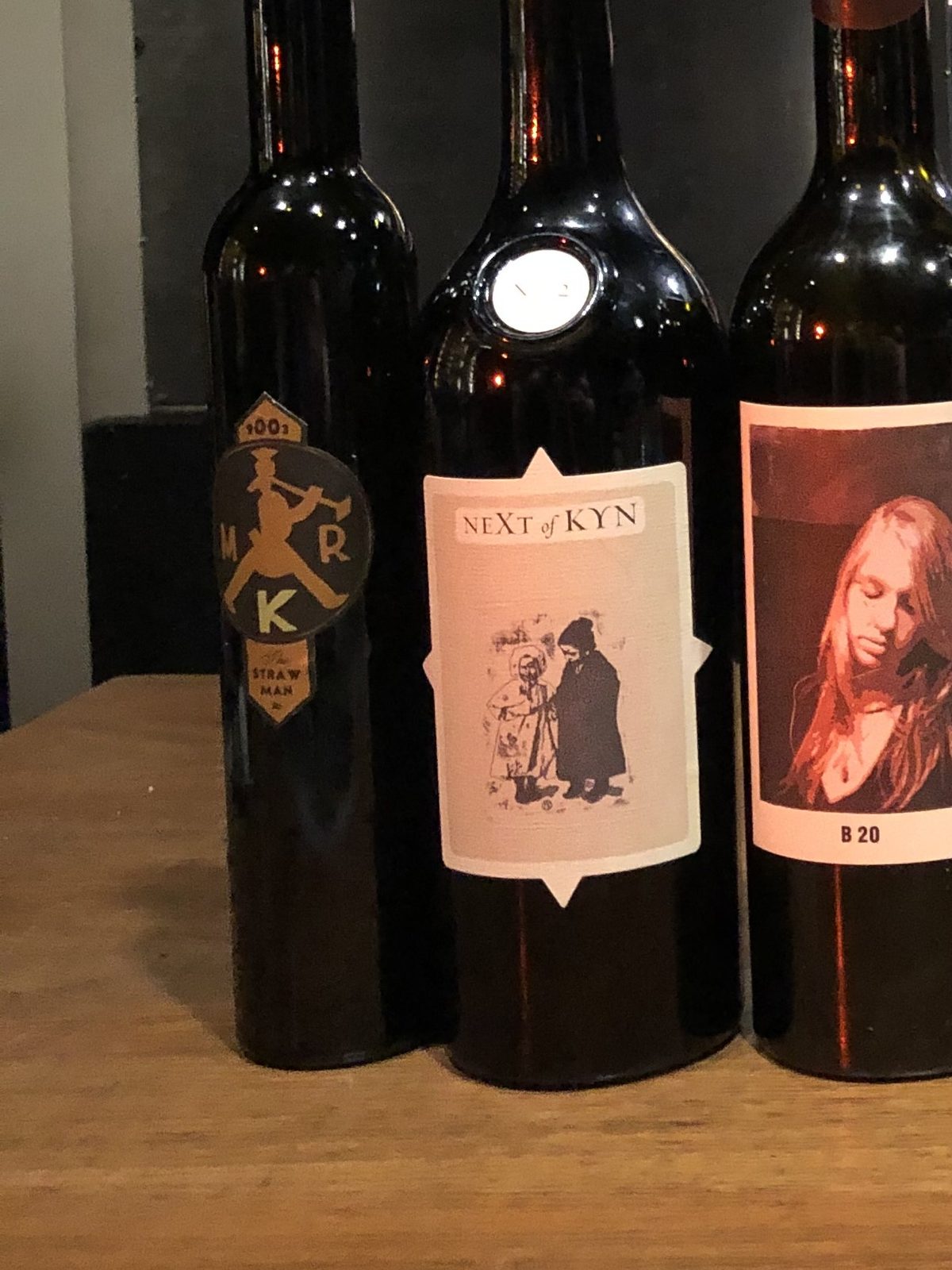
2003
The Straw Man was made from Sémillon through 2004 and from Marsanne in its last two years. The 2003 is a Sémillon, from the Brander vineyard in the Santa Ynez Valley — a grape with a long history of doing this exact thing in Sauternes and in the Hunter Valley, and one of the few that dries down to concentration without losing its acidity. The straw method has none of botrytis’s mushroomy funk; what it gives instead is a dense, raisined purity, sugar and acid both pushed to extremes and held in balance by the grape’s own structure.
Early accounts of the Mr. K Straw Man wines describe luminous amber-gold colour and a nose of candied kumquat, glazed pineapple, caramel and crystallised citrus, with a palate that reads as rich, dense, almost treacly — fig, date and raisin — and yet never cloying because the acidity underneath it is so high.
In the Glass
It closed the evening, poured after the Bernstein Charmes, Next of Kyn and the B 20, into a glass beside a tray of madeleines coming out of the kitchen.
Eighteen years on, the colour had gone to a deep burnished amber, the colour of old cognac. The nose was extraordinary in its layering: dried apricot and orange peel, honey, roasted nuts, quince paste, a smoky caramel edge, and under it all a saline, marmalade-bitter note that kept it from being simply sweet. On the palate the density was total — thick, glycerous, coating — and then the acidity cut straight through it, so that the finish was long and clean rather than heavy. Sweetness at this level usually wins; here it was held to a draw.
Alois Kracher’s own wines from the Neusiedlersee are built on that same principle of sugar countered by acid. This was that principle, applied to a Santa Barbara Sémillon, by two men who happened to share an initial. Elsewhere in this archive the Hungarian side of the tradition appears in a Disznókő Aszú and a Royal Tokaji.