The Walled Garden at the End of Nuits
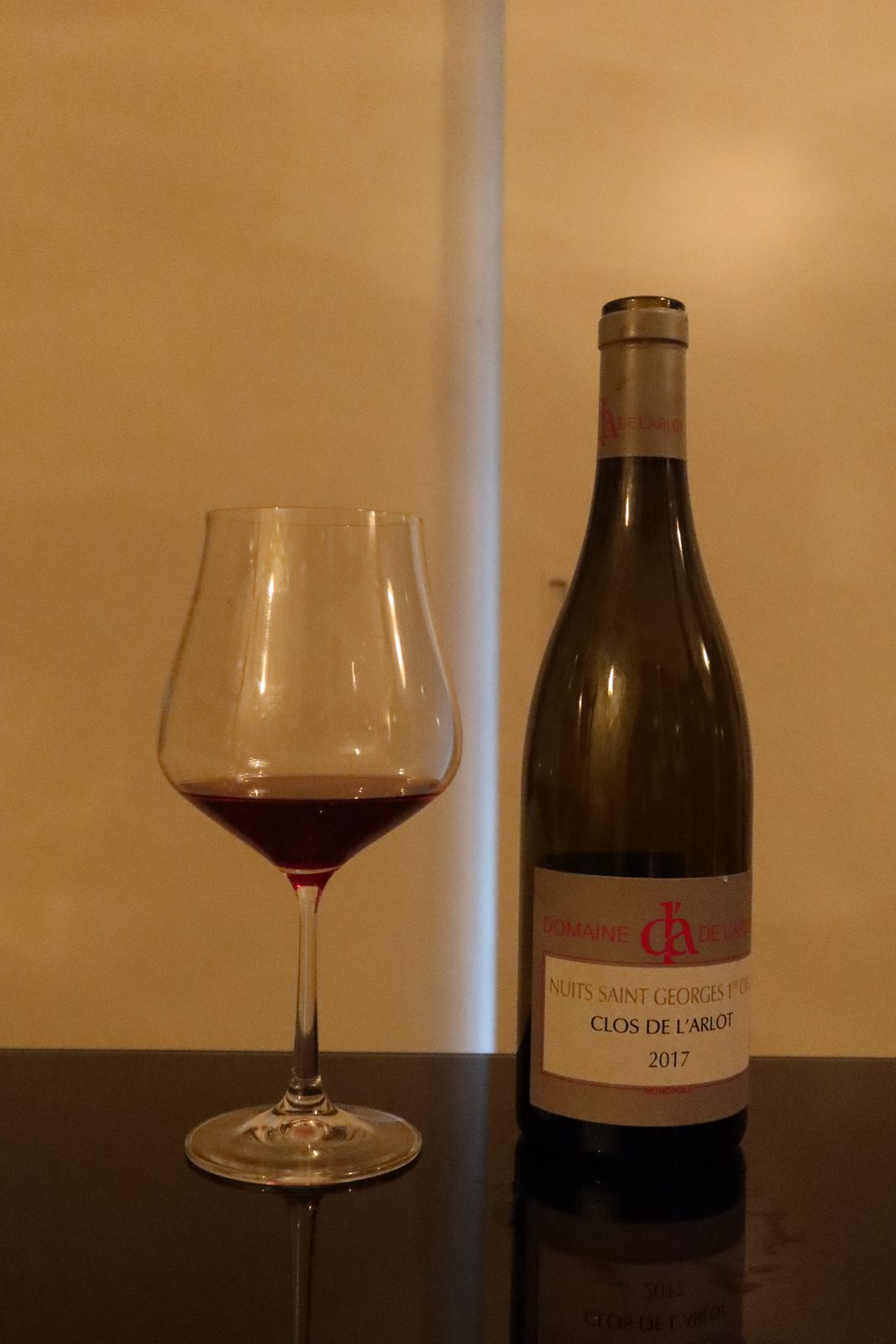
Domaine de l'Arlot Nuits-Saint-Georges 1er Cru Clos de l'Arlot 2017
- Producer
- Domaine de l'Arlot
- Appellation
- Nuits-Saint-Georges 1er Cru
- Grapes
- Pinot Noir
- Tasted
- 2 April 2021
The Clos de l’Arlot is a walled vineyard in Premeaux-Prissey, the hamlet at the southern end of the Nuits-Saint-Georges appellation, wrapped around the domaine’s own house and garden. It is a monopole, and it produces both red and white; the older, terraced amphitheatre of Pinot Noir on marl soils, with plantings going back to the 1950s, gives the premier cru red, while a cooler block at the southern edge is given over to Chardonnay.
The modern domaine dates from 1987, when the insurance group AXA bought the old Jules Belin property and put it in the hands of Jean-Pierre de Smet, who had trained with Jacques Seysses at Dujac. He brought Dujac’s habits with him — whole-cluster fermentation above all — and ran the estate until his retirement in 2006. Biodynamic farming came in stages from 2000 and covered the whole estate by 2003. Since the mid-2010s the wines have been made by Géraldine Godot, who kept the whole bunches but eased the extraction and the new oak, aiming for purity of fruit rather than weight. Her line on the stems is that she chooses them with her eyes, vintage by vintage, cuvée by cuvée.
A Tranquil Year
2017 came after the frost-ravaged 2016, and Godot called it a tranquil vintage — quality and volume together, with good surprises in some parcels. The difficulty was timing: acidity stayed high late into August, and the harvest had to wait for maturity without losing it. The élevage, she said, was where the wines were built. Early notes on the Clos de l’Arlot from that year spoke of an extra spice on the nose, wild strawberry and raspberry, a distinct rose note, and round, velvet-fine tannin with real energy behind it.
In the Glass
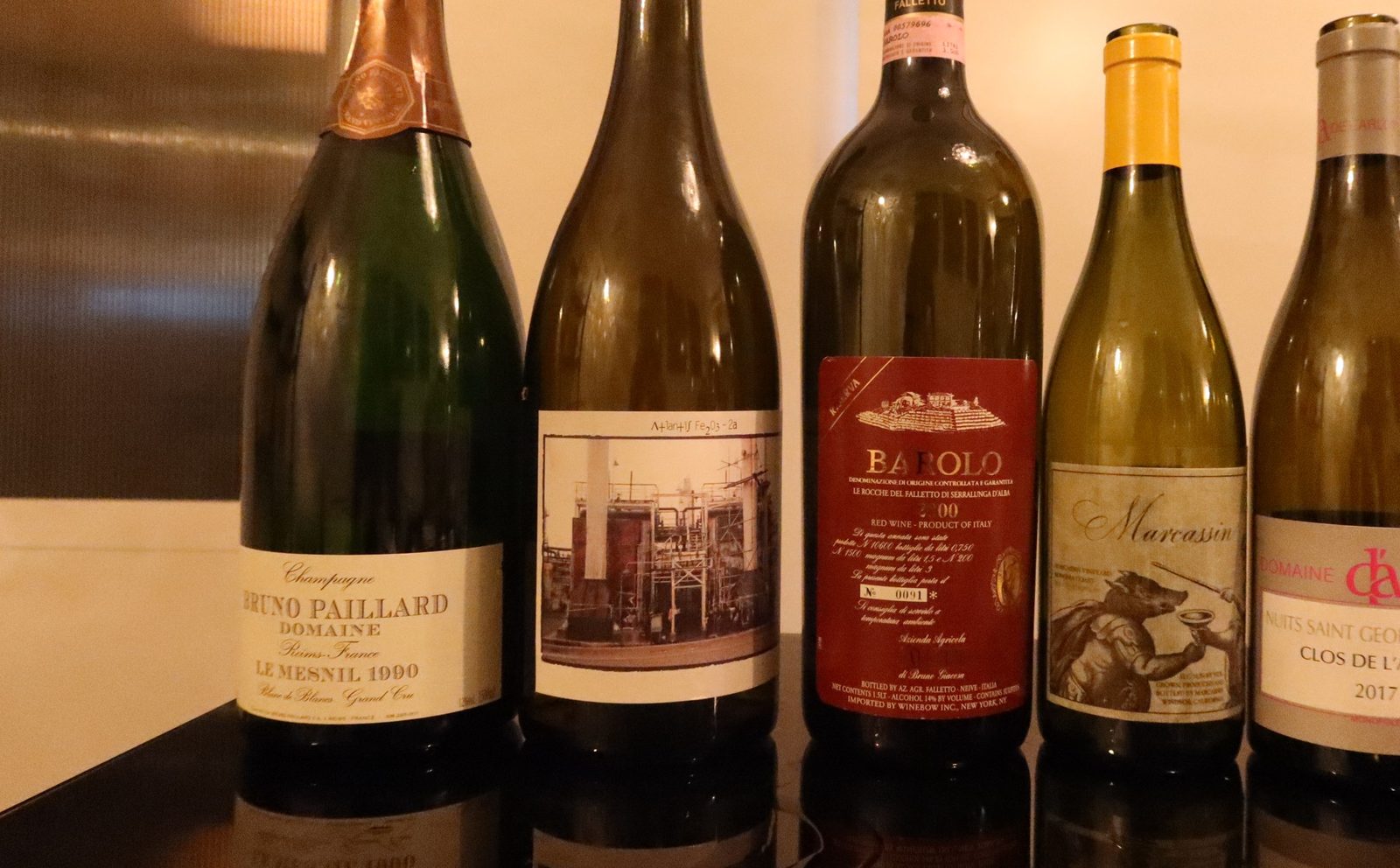
It closed an evening that had run through a 1990 Paillard, a Giacosa Riserva 2000 in magnum and a 2005 Sine Qua Non Grenache. After three mature wines, a Burgundy not yet four years old had the hardest job at the table — and the pale colour in the glass announced the house style before anything else did.
A light, bright ruby, almost translucent, in the domaine’s habitual manner. The nose was fresh and high-toned: red cherry, wild strawberry, rose petal, a stemmy, peppery spice from the whole clusters, and a cool earthiness underneath. The palate was medium-bodied with a lovely lift — the acidity of that late-August wait still fully present — and tannins that were fine and slightly grippy, as they should be in Nuits at this age. The finish was clean, savoury and moderately long, with the spice lasting longest. A wine at the very start of its arc, and clear about where the arc was heading.
Elsewhere in this archive the same appellation appears from the opposite end of the village, in Liger-Belair’s Aux Cras 2015 — Nuits at the Vosne border rather than the Premeaux one, and a useful contrast in what the two ends of one long commune do.