Red Label, Number Ninety-One
Bruno Giacosa Barolo Riserva Le Rocche del Falletto 2000 (Magnum)
- Producer
- Bruno Giacosa
- Appellation
- Barolo DOCG
- Grapes
- Nebbiolo
- Tasted
- 2 April 2021
Bruno Giacosa spent the first half of his career as a buyer of grapes. His family had been négociants in Neive for generations, and his genius lay in knowing which rows in which hills to take — a knowledge accumulated walking the Langhe with his father from boyhood. In 1982 he bought land for the first time: the Falletto vineyard, a south-facing amphitheatre in Serralunga d’Alba whose grapes he had been vinifying on contract since the sixties. At the rocky top of that slope sits the parcel he came to bottle separately as Le Rocche del Falletto.
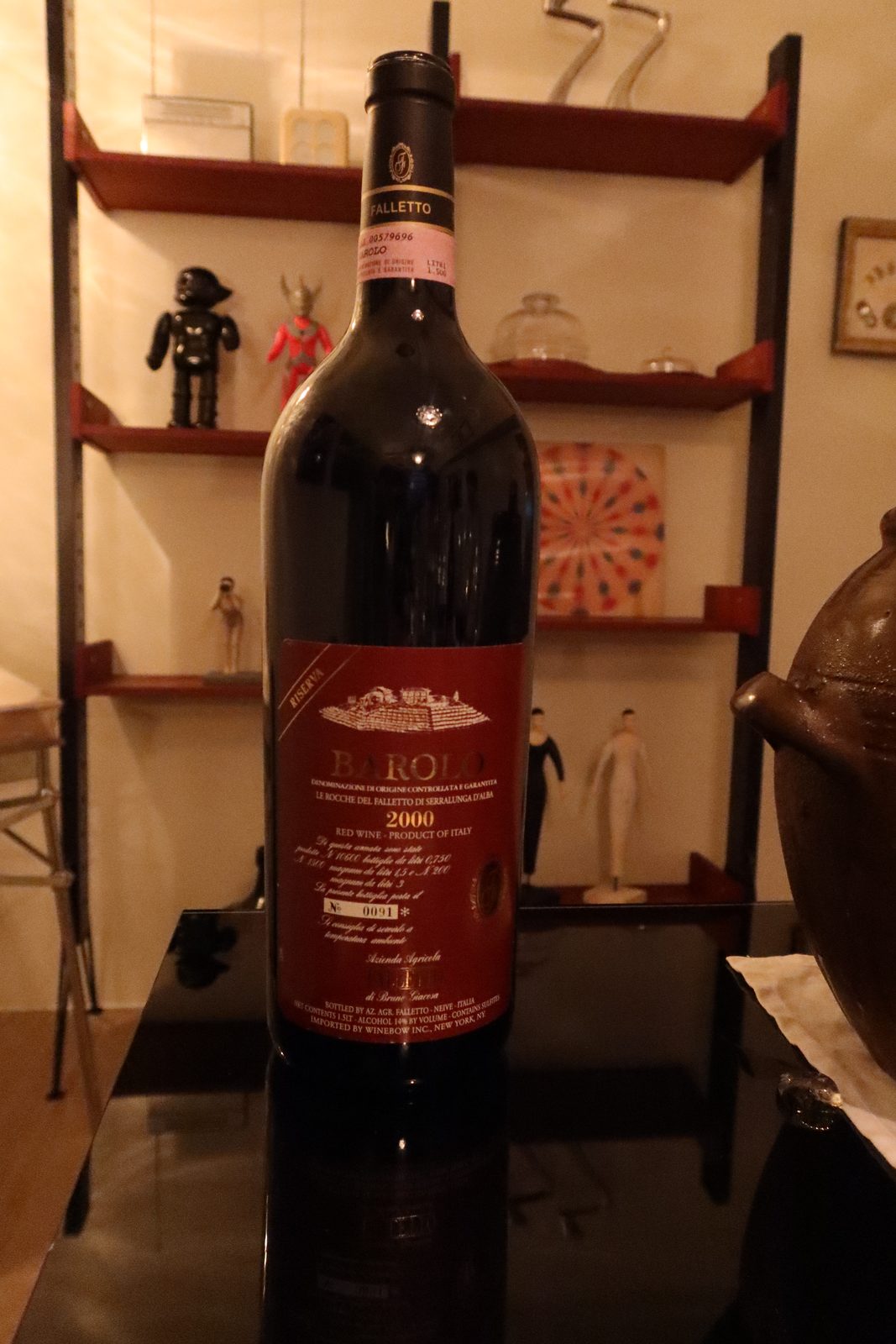
The label colour is the house’s own grading system. White label means the estate Barolo; red label means Riserva, released only from vintages Giacosa considered exceptional, after longer ageing in wood and in bottle. For Le Rocche the red label appeared in 2000, then 2001, 2004 and 2007, and a handful of years since. The label carries its own accounting, in a fine script: the vintage yielded ten thousand six hundred bottles, fifteen hundred magnums and two hundred double magnums, and this magnum bears the number ninety-one.
A Hot Year, Handled
2000 in Piedmont was a warm, generous growing season, the kind that produces ripe, forward Barolo and gets praised early — sometimes more than it is later thought to deserve. Giacosa’s Riserva from that year has stood apart from the vintage’s general reputation. It was described young as pure crushed strawberry and raspberry with fresh roses, full-bodied but silky, with sweet, ripe tannins framing the fruit; later, at fifteen and more, as a beam of cherry with rose and mint, fully integrated tannin, and — the telling phrase — delicate for the vintage.
Giacosa’s cellar by then had moved from cement to stainless steel and from Slavonian oak to large French casks, but the wines never went modernist: long macerations, big neutral wood, and a style that critics reached for the word ethereal to describe.
In the Glass
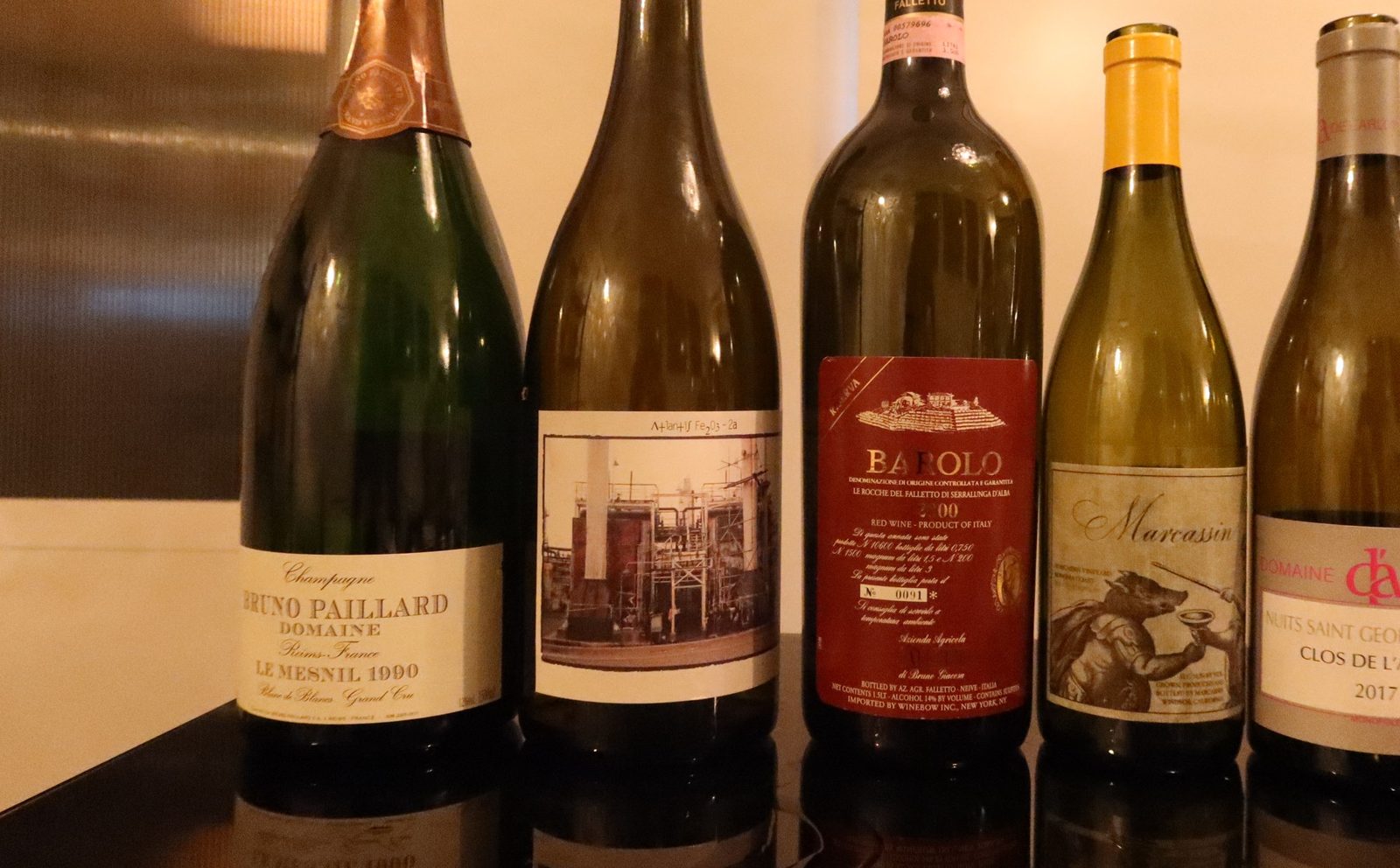
Opened at home, over an evening that also held a Bruno Paillard Le Mesnil 1990, a Sine Qua Non Grenache and a young Clos de l’Arlot. The magnum came first from the cellar and was poured through the evening.
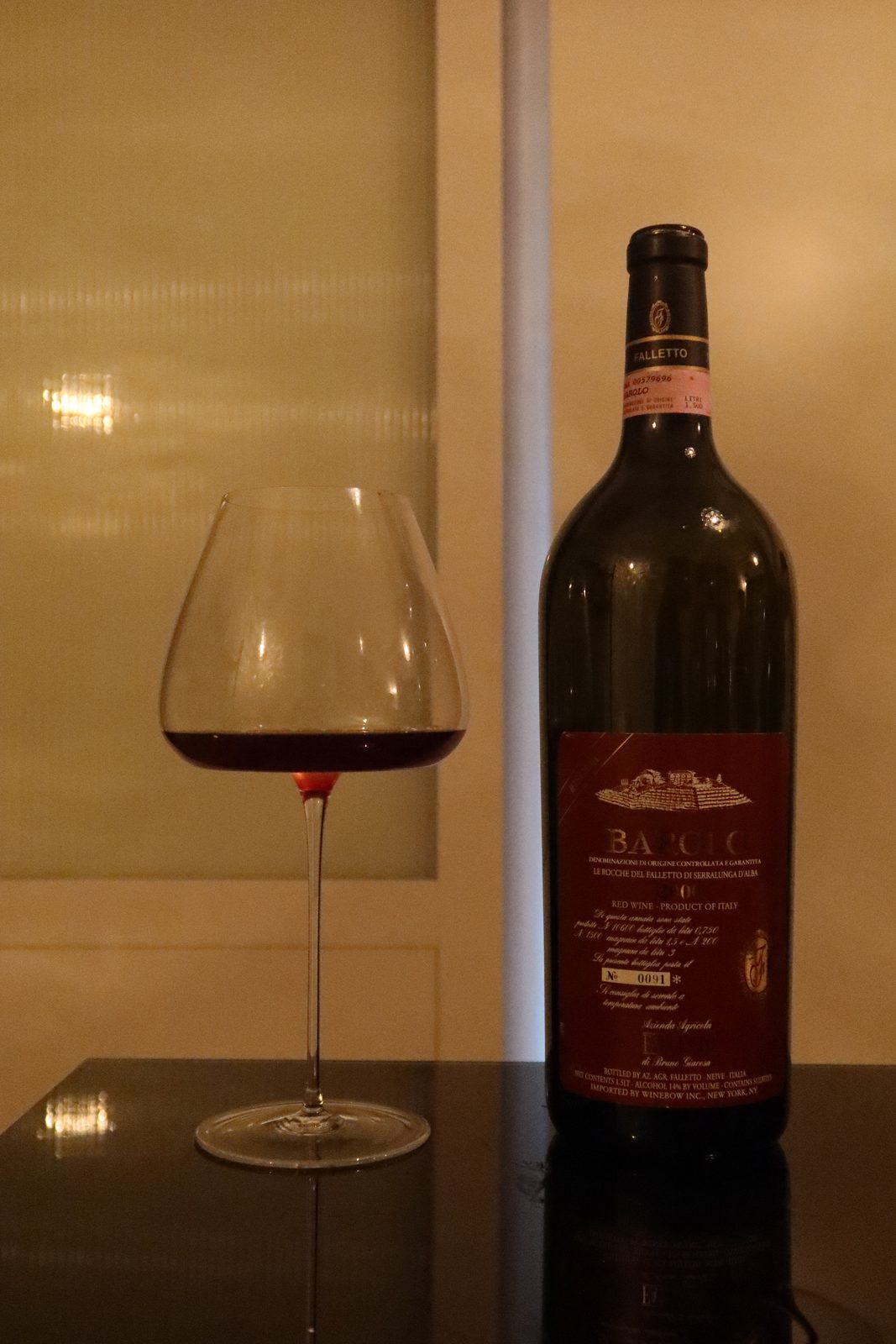
Twenty years on, the colour was a deep garnet with a broad orange rim, darker than most Nebbiolo of that age, and the format had clearly slowed its clock. The nose was classical Serralunga in full maturity: dried rose, tar, sour cherry, mint, orange peel, leather, a sweet balsamic undertone. The palate was where the label earned its colour — full, but with a silk texture that made the weight feel effortless, the tannins entirely resolved into a fine grain, the acidity still fresh, and a finish that went on for a long time on rose and tar. Nothing about it was heavy. A wine from a hot year that had aged like one from a cool one.
The archive’s other Barolo, Massolino’s 2014, comes from the same commune, a generation younger and from the opposite kind of vintage. Together they make a short course in what Serralunga does with time.