A House Built of Earth
Mud House South Island Pinot Gris 2020
- Producer
- Mud House Wines
- Appellation
- Marlborough / Waipara Valley
- Grapes
- Pinot Gris
- Tasted
- 4 April 2021
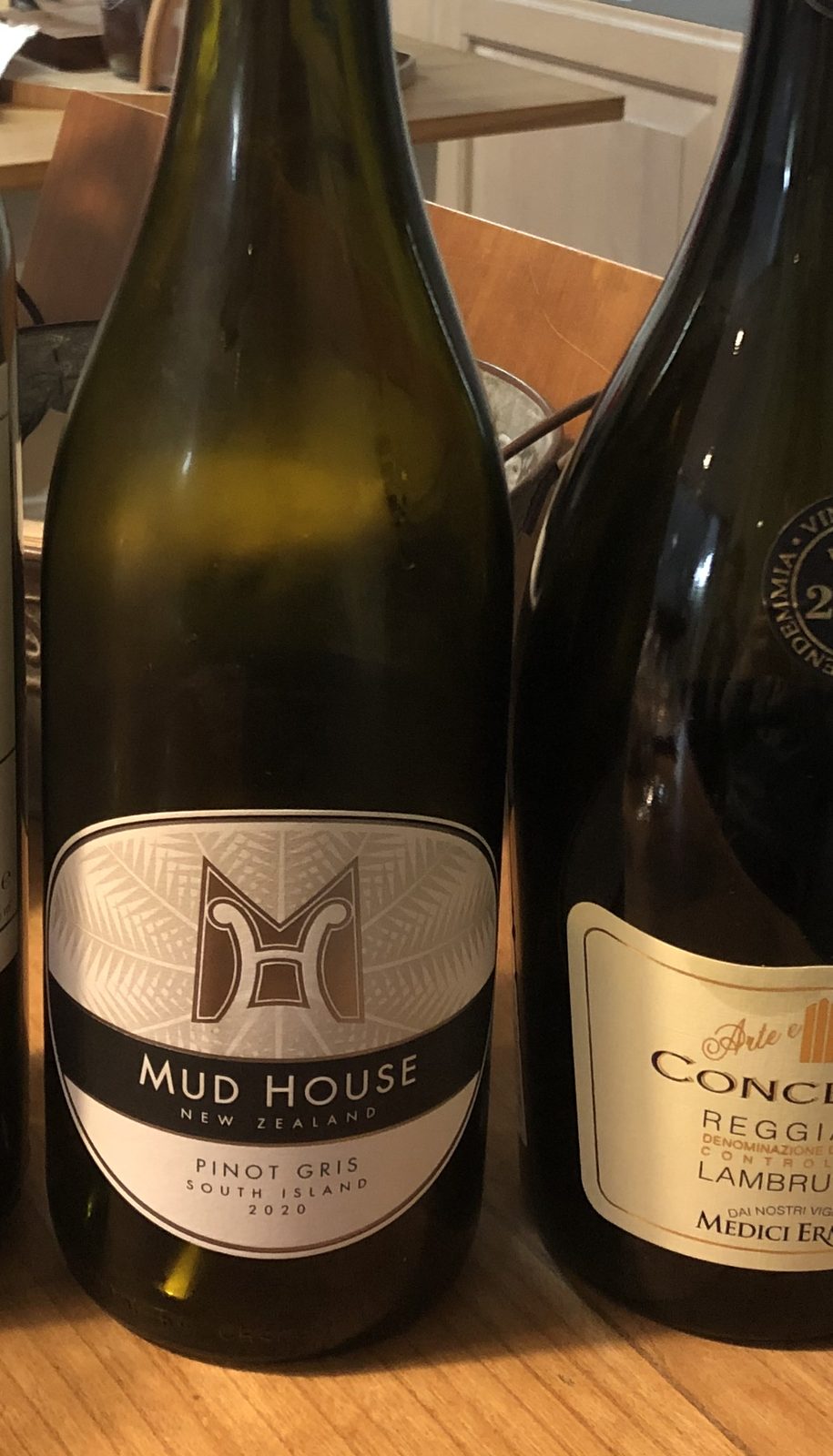
The name is literal. John and Jennifer Joslin, an English couple who had sailed around the world before settling in Marlborough in the mid-1990s, built their house there out of the local earth, and when they started making wine in 1996 they named the label after it. The business grew quickly, from a few hundred cases to tens of thousands within a decade, and it has changed hands more than once since — it went to a New Zealand vineyard group in 2006 and then, in 2014, to Accolade, the Australian company that also owns Hardys. The winery is now in North Canterbury, at Waipara, with vineyards in Marlborough as well.
That geography is what the “South Island” on the label means. It is a blend across the two regions rather than a single-district wine: Pinot Gris from Marlborough’s sandy loams over river gravel, and from the gravelly loams of the Waipara Valley an hour north of Christchurch. The idea is to take the riper, more textural fruit of the one and the cooler line of the other and make something in the middle.
The Lockdown Harvest
2020 in New Zealand was a very good season with a strange ending. The summer was warm and unusually dry — Marlborough had a fraction of its normal rainfall between Christmas and the end of April — and the autumn stayed settled, so growers could wait for flavour rather than picking ahead of rain. Waipara recorded its earliest harvest ever.
Then, with picking barely under way, the country went into a Level 4 lockdown on 25 March. Wine had been declared an essential business two days before, which is the only reason the crop came in at all. Wineries split their staff into separated teams, and in Waipara the last fifth of the fruit was hand-picked because the usual machine and contract crews could not be assembled. The same fortnight produced the Allan Scott Sauvignon Blanc that appears elsewhere in this archive, harvested a few valleys away under the same rules.
The Pinot Gris was pressed gently, settled in tank and fermented warm with selected yeasts, part of it in older French oak. It rested on light lees before blending, and was bottled under screw cap early in July — a wine that went from vine to bottle in about three months.
In the Glass
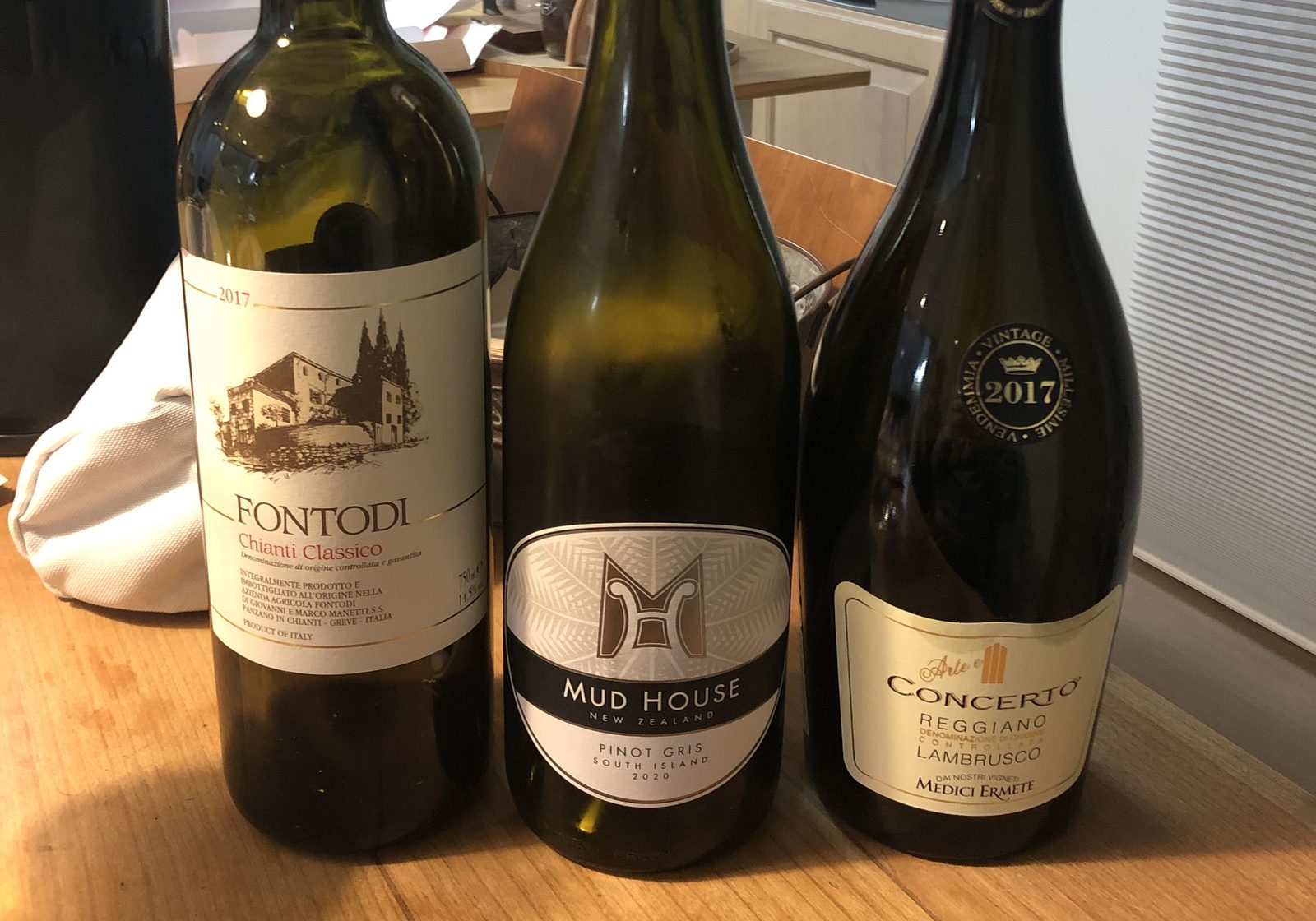
The white of a home dinner that also ran to a Chianti Classico and a dry Lambrusco. It sat in a cooling sleeve on the table for most of the evening, which is the right place for a wine like this.
Pale straw. The nose was clean and open: ripe pear and red apple, a faint ginger spice, a little honeysuckle. The palate was where the blend showed its purpose — juicy and generous in the middle, with a suggestion of texture from the lees and the old oak, but finished dry, with enough acidity to keep it upright. Not a long wine, and not trying to be one.
Pinot Gris in New Zealand lives in the shadow of Sauvignon Blanc, and this bottle was a fair account of why the grape persists there anyway: it gives weight without sweetness and fruit without shouting. For the region’s argument with itself over the other grape, see the Dog Point Section 94.
The red beside it was a Lambrusco from Reggio Emilia, and the Chianti was a second bottle of the Fontodi 2017 that had been on the table in December.