Not Less Than Fifty-One Percent Concord
Manischewitz American Concord Grape (Kosher for Passover)
- Producer
- Manischewitz Wine Company
- Appellation
- American
- Grapes
- Concord
- Tasted
- 2 May 2021
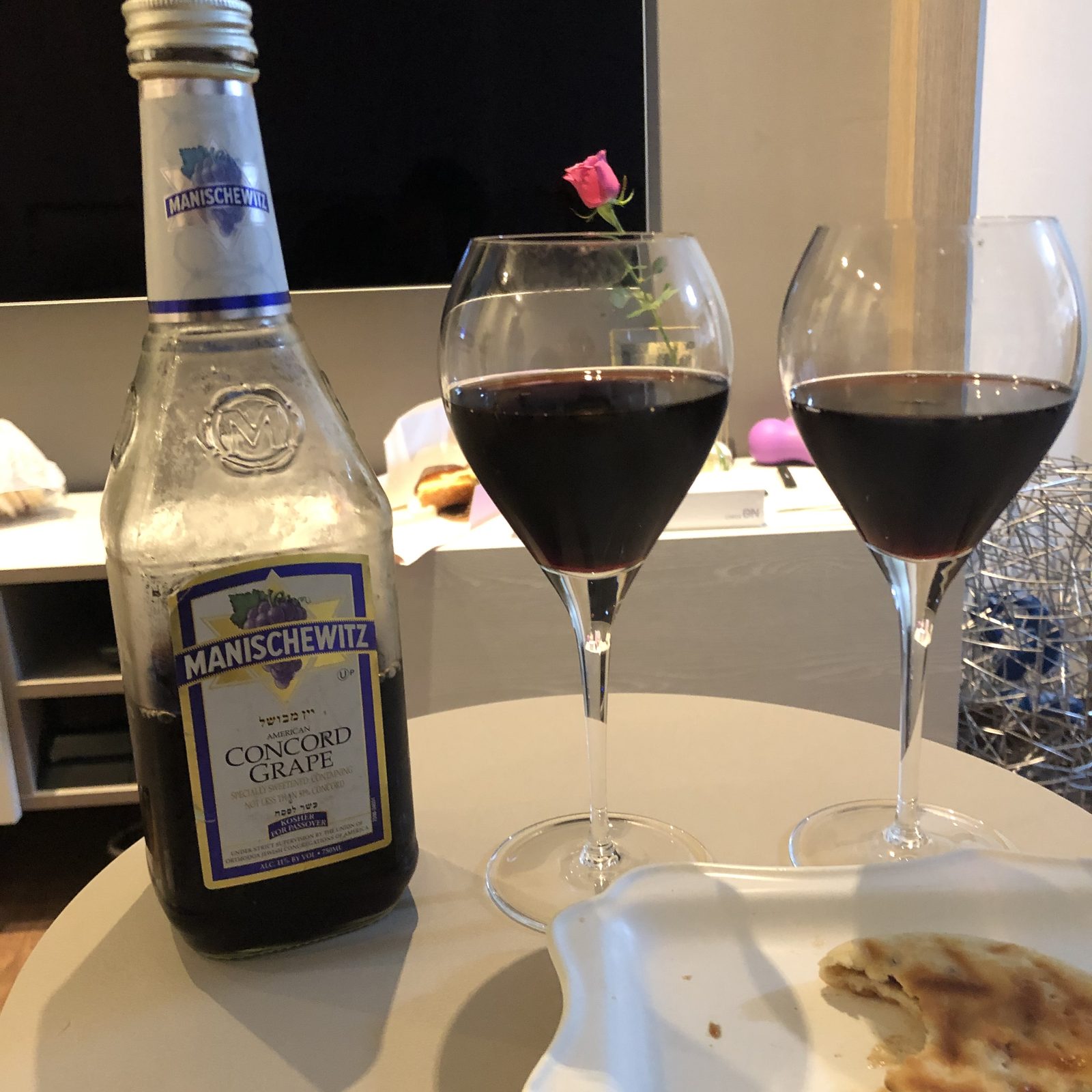
The grape came first. Ephraim Wales Bull, a goldbeater with a garden in Concord, Massachusetts, spent years selecting seedlings of the wild native vine and in 1849 settled on one that ripened early, survived the winter and tasted, to nineteenth-century Americans, like grape ought to taste. He released it in 1854 and never made money from it; the Concord became the jelly and juice grape of the eastern United States, and its slip-skin, musky, “foxy” character became the thing European-trained palates learned to dislike.
The wine came later. Monarch Wine Company started in Manhattan in the early 1930s and moved to Brooklyn’s Bush Terminal in 1939, making sacramental wine from the cheapest, hardiest fruit available, which in upstate New York meant Concord. Because the grape was bitter and thin when fermented dry, they added sugar, and the sweet style that resulted became the definition of kosher wine in America for two generations. The Manischewitz name was licensed from the matzo company — sources disagree on the year, somewhere between the late 1930s and 1947 — and the brand went national on an advertising slogan and a run of television spots fronted by Sammy Davis Jr. By the early 1950s most of the people buying it were not Jewish at all; it has been called the first Jewish crossover product. An astronaut on Apollo 17 is reported to have quoted the slogan from the surface of the Moon.
The Brooklyn plant closed in the mid-1980s and production moved upstate to Canandaigua, whose owner later became Constellation; Gallo bought the brand in January 2021, a few months before this bottle was opened.
What the Label Says
The label is a small legal document. American Concord Grape — American rather than New York, because the fruit is not all from one state. Specially sweetened, containing not less than 51% Concord, which is the minimum for a varietal claim. Kosher for Passover under the supervision of the Orthodox Union, meaning the sweetening is cane sugar rather than the corn syrup used in the standard bottling, since corn is forbidden to Ashkenazi Jews during the festival. The wine is also mevushal — heated briefly, so that it remains kosher whoever pours it. Eleven percent alcohol. The sugar level is well into dessert-wine territory, though nobody drinks it as one.
In the Glass
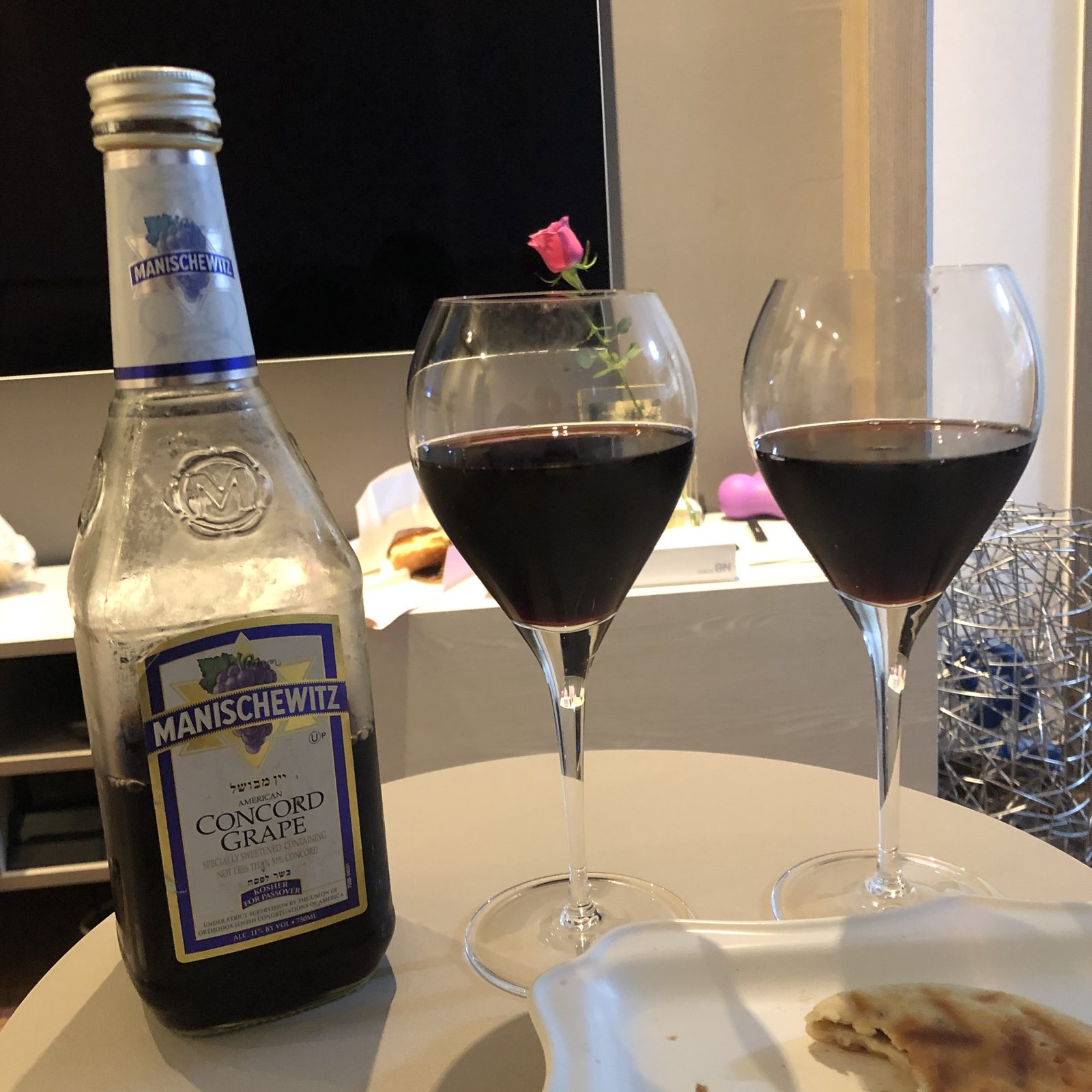
Two glasses, just after midnight, with a single rose in a bud vase and a flatbread on the side.
The colour was the deep violet-purple that only Concord gives — closer to the juice than to any vinifera red. The nose was the grape, unmistakably: that musky, floral, grape-candy character, with a whiff of something like cherry cough syrup behind it. The palate was sweet, soft and simple; the sugar covered the bitterness it was designed to cover, the acidity was modest, and the finish was short and grapey. Served cold, it was rather pleasant. Served warm it would not be.
It is not a wine to evaluate. It is a wine that a great many people have drunk at a great many Seder tables, and which turned a nineteenth-century garden experiment into the most recognised bottle in an entire category. For the other end of the sweet-wine spectrum in this archive — sugar with acidity and thirty years of stamina behind it — see the Disznókő Tokaji Aszú 2010 and the Royal Tokaji 2013.