Named for the Soil, Not the Site
Dehlinger Goldridge Vineyard Pinot Noir 2007
- Producer
- Dehlinger Winery
- Appellation
- Russian River Valley
- Grapes
- Pinot Noir
- Tasted
- 16 May 2021
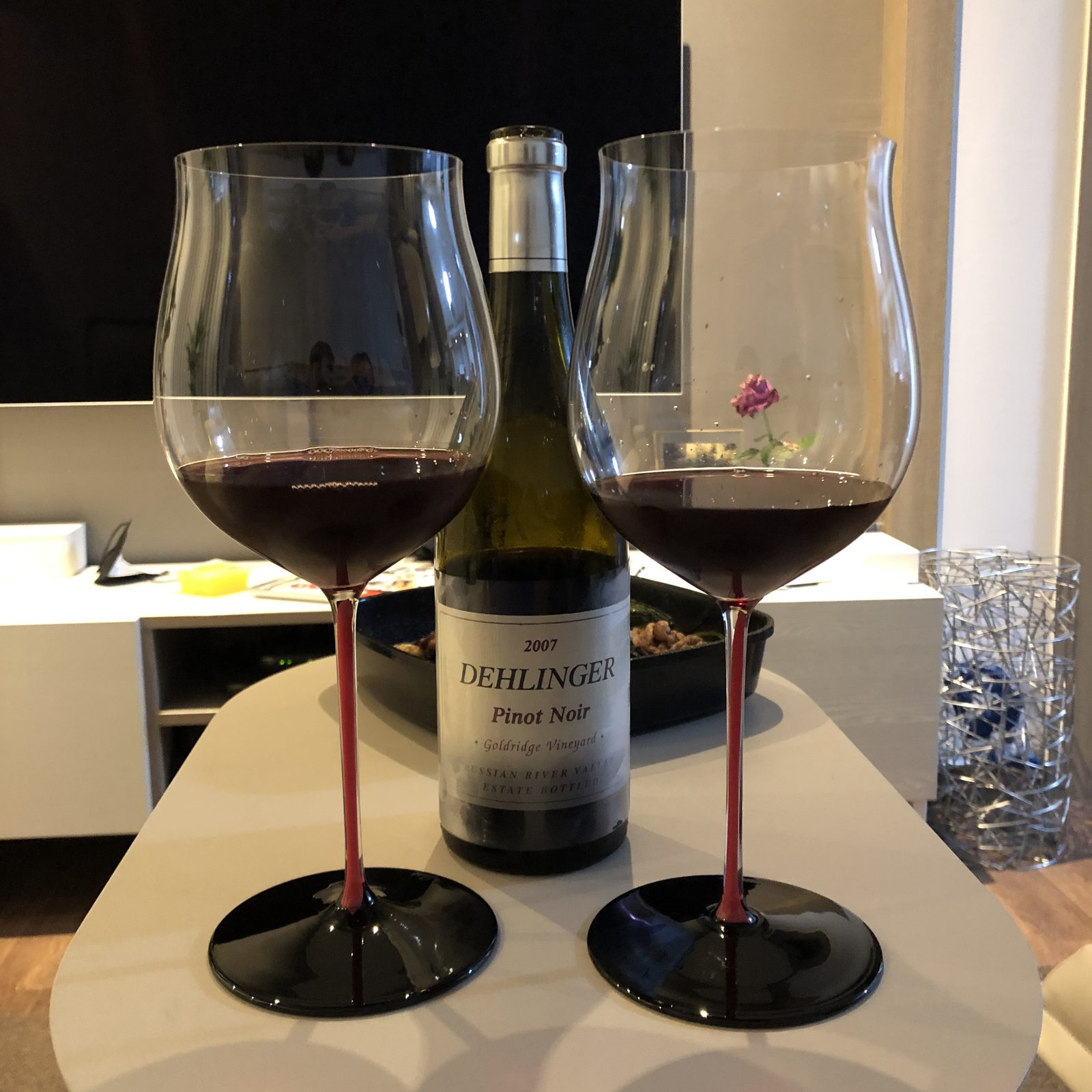
Tom Dehlinger studied biochemistry at Berkeley and winemaking at Davis, worked at Beringer, Hanzell and Dry Creek, and in 1975 bought an old apple orchard on the rolling ground between Sebastopol and Forestville and planted fourteen acres. There were around thirty-five wineries in all of Sonoma County then, and the Russian River Valley would not become an appellation for another eight years. The estate has grown to about forty-five planted acres on eighty contiguous ones, everything dry-farmed and everything estate-grown; the winery has never bought fruit. His daughters Carmen and Eva joined in 2008 and now run it.
The land is about thirteen miles from the Pacific, in the fog until midday, and it sits on two soils. Goldridge is a fine sandy loam, deep and moderately vigorous, laid down as marine sediment; it gives red-fruited, approachable Pinot Noir. The hillside blocks are on Altamont, a red gravelly soil that gives something firmer and darker. Dehlinger was among the first in California to bottle by soil type, and the Goldridge Pinot has come from the same sandy-loam blocks for more than thirty years. The label’s Goldridge Vineyard is, in that sense, a geology lesson rather than a place name.
Famine After Feast
2007 in the Russian River Valley followed a large 2006 crop with a small one — the growers called it famine after feast. A dry winter brought early budbreak; the spring was moderate and the summer even, with the heat spikes coming before véraison rather than during it. A cool early September stretched the harvest out over three months, and it ended with rain in the middle of October. The result was concentrated, red-fruited Pinot with more tannin than the valley usually gives, from a year widely regarded as one of its best.
Dehlinger raised the wine in French oak, a little over a third of it new by the house’s usual practice, and bottled it unfined and unfiltered.
In the Glass
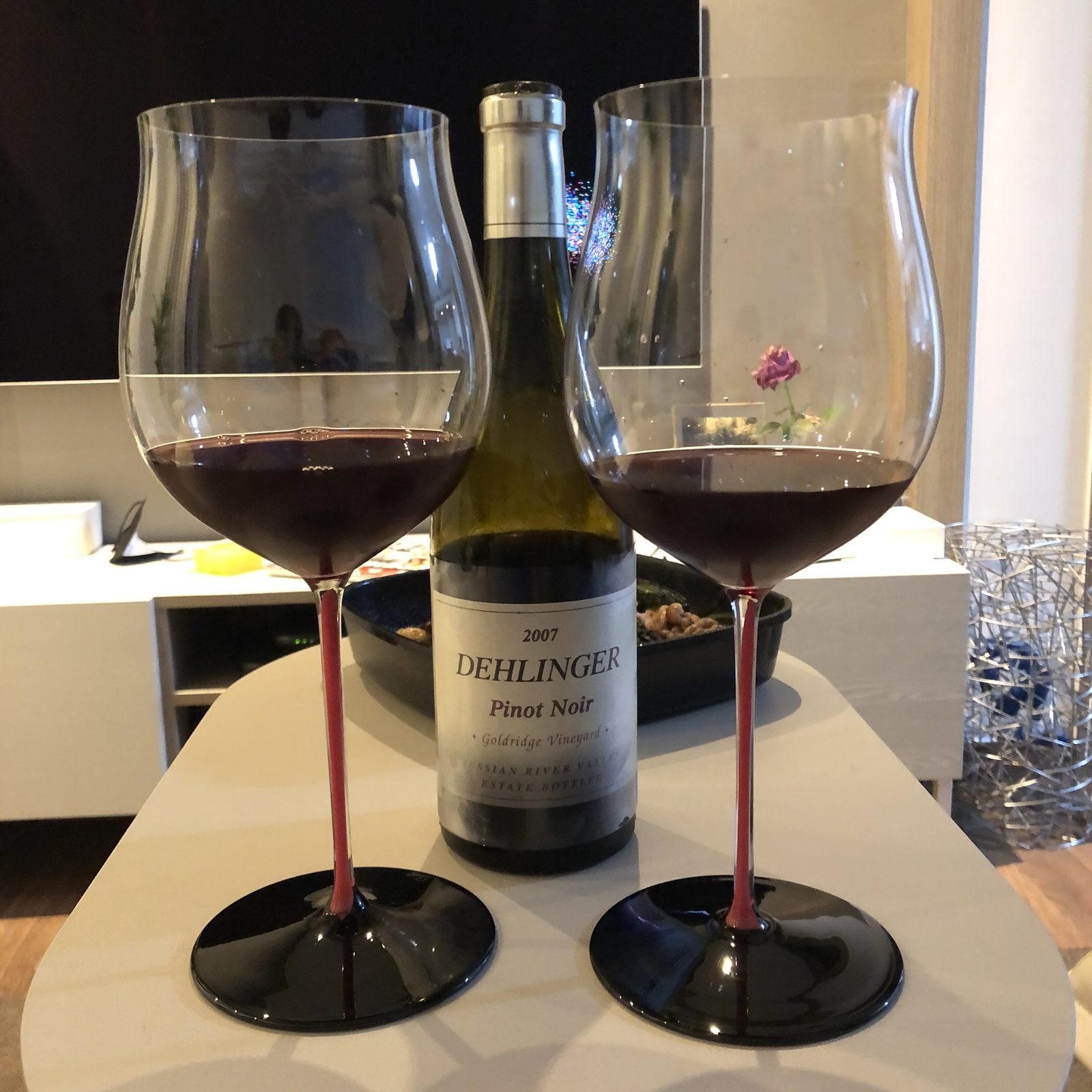
Opened at home, late, with a bowl of nuts and two Burgundy glasses, a little short of fourteen years from the harvest.
The colour had turned from ruby to something between garnet and brick at the rim, still bright. The nose was in its mature register but not tired: dried cherry and red currant, a sweet earthiness, cinnamon and cardamom from the oak now fully absorbed, a little forest floor. The palate was medium-bodied with the vintage’s structure still present — the tannins had softened to velvet but had not disappeared, and the acidity held everything in line. A savoury, spiced finish of moderate length, with the red fruit returning at the end.
A Pinot Noir from a producer who has never chased the valley’s fashion for weight, from a year that gave weight anyway, and the two had found a balance at fourteen. For the same grape and the same county on other terms, see the Rhys Alpine Vineyard 2006, the MacPhail ‘The Flyer’ 2011 from the same valley, and the Boars’ View 2012 from the coast beyond it.