The Railwayman's Vineyard
Château Haut-Marbuzet 1995
- Producer
- Château Haut-Marbuzet
- Appellation
- Saint-Estèphe
- Grapes
- Cabernet Sauvignon, Merlot, Cabernet Franc
- Tasted
- 4 June 2021
The land between Cos d’Estournel and Montrose, on the plateau of Marbuzet looking across to the Gironde, passed through Irish hands in the nineteenth century and then through several French ones before it reached a man with no money and no wine background at all. Hervé Duboscq had worked on the railways. In 1952 he bought seven hectares of run-down vines on a viager — a life annuity paid to the previous owner — and built the estate up parcel by parcel, selling the wine direct to customers when the trade would not take it. His son Henri joined in 1962 and made the reputation; Henri’s sons Hugues and Bruno run it now.
What Henri Duboscq did was unusual for Saint-Estèphe. He planted far more Merlot than his neighbours — somewhere around half the vineyard, depending on the source — picked it very ripe, fermented warm in wooden vats, and put every drop of every vintage into new oak. The result was a wine that was opulent, spicy and soft where the commune was famously hard, and a certain American critic spent two decades calling it the most sensual wine in Bordeaux. The estate has never been a classed growth; it was a Cru Bourgeois Exceptionnel, and when Liv-ex re-ranked the Médoc by price in 2009 it landed at fourth-growth level.
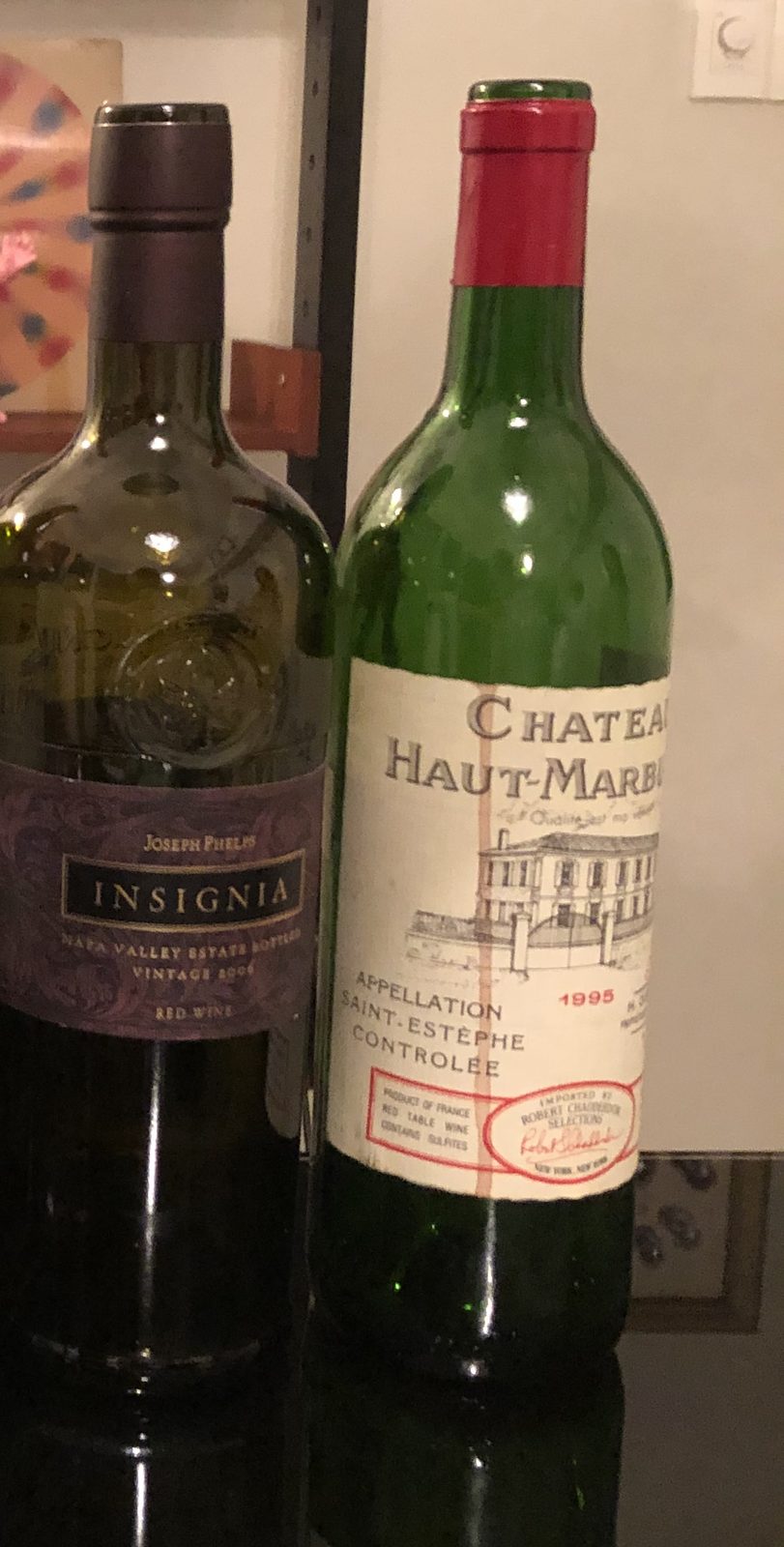
This bottle carries the strip of a New York importer, which means it reached the table by way of the United States.
The Year of the September Rain
1995 was the first properly good Bordeaux vintage in five years. June, July and August set forty-year records for heat and dryness, but the water table was high and the vines did not suffer. Then it rained for nearly two weeks in the middle of September, which hurt the Merlot most, and the Cabernet was picked into a dry October. The northern Médoc — Saint-Julien, Pauillac, Saint-Estèphe — came through best. The wines were tannic and classically built, and some of them stayed hard for a long time.
In the Glass
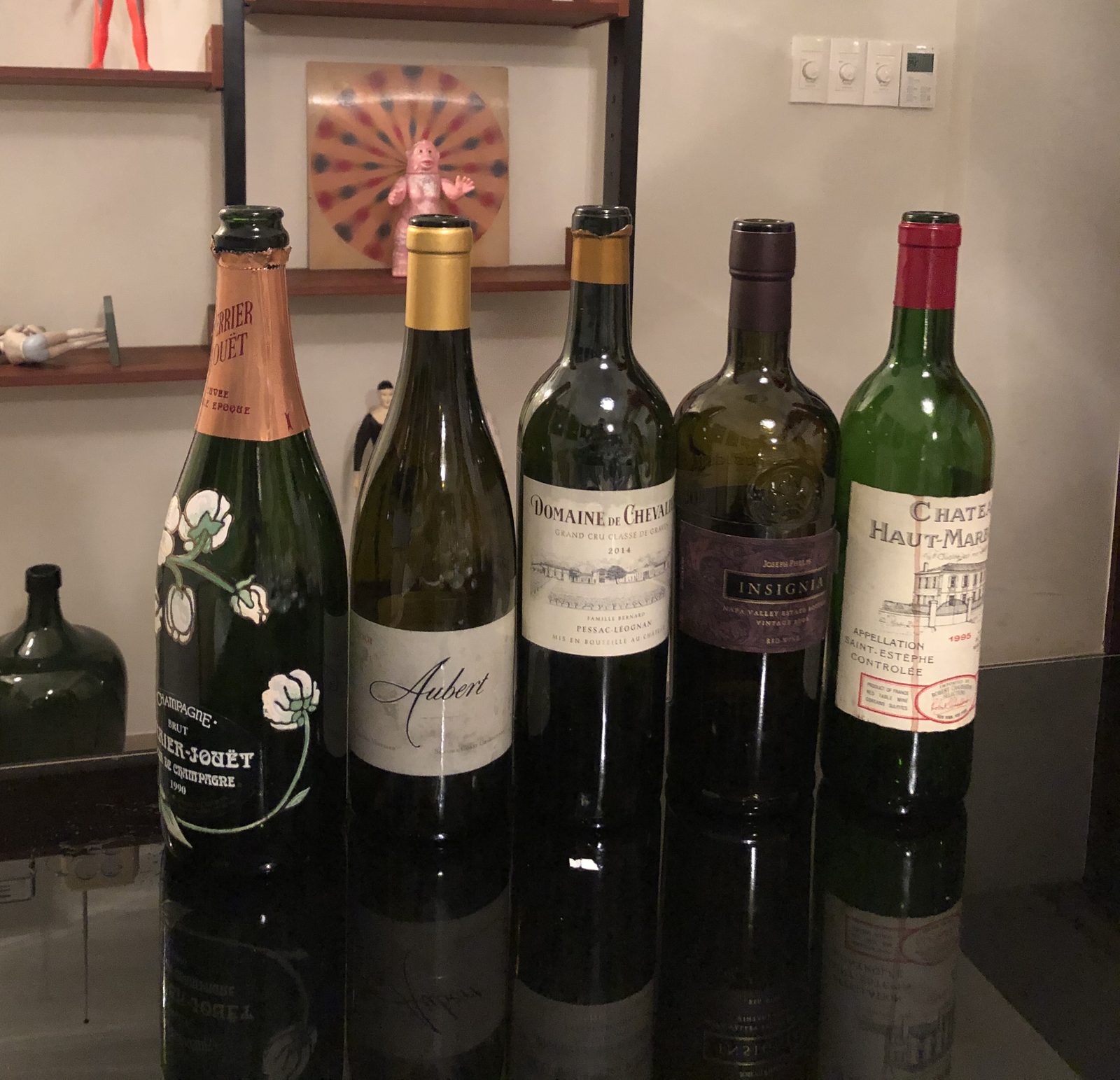
The last bottle of the evening, after Belle Epoque 1990, Domaine de Chevalier Blanc 2014, a 2008 Aubert Chardonnay and Insignia 2006. Twenty-five years from the harvest, and the oldest red on the table by more than a decade.
The colour had gone to garnet with a wide brick rim. The nose was fully tertiary and quite lovely: cedar, tobacco, dried plum, a leathery, meaty note from the ripe Merlot, and the last of the vanilla from all that new oak, now indistinguishable from the wine. The palate was soft and mellow at the front, but the Saint-Estèphe underneath had not gone away — a grip of tannin returned on the finish, drier than the fruit, and gave the wine its shape. Moderate length, savoury, a little thinning at the very end.
A wine made to be seductive young, which at twenty-five had settled into something more like the commune it comes from. The two Cos d’Estournel bottles elsewhere in this archive — the 1975 and the 1994 — are the neighbour’s answer to the same ground, and the Mouton Rothschild 1995 is the same vintage a few kilometres south.