The Wooden Sword
Rudius Chardonnay Hyde Vineyard 2011
- Producer
- Rudius Wines
- Appellation
- Carneros, Napa Valley
- Grapes
- Chardonnay
- Tasted
- 11 June 2021
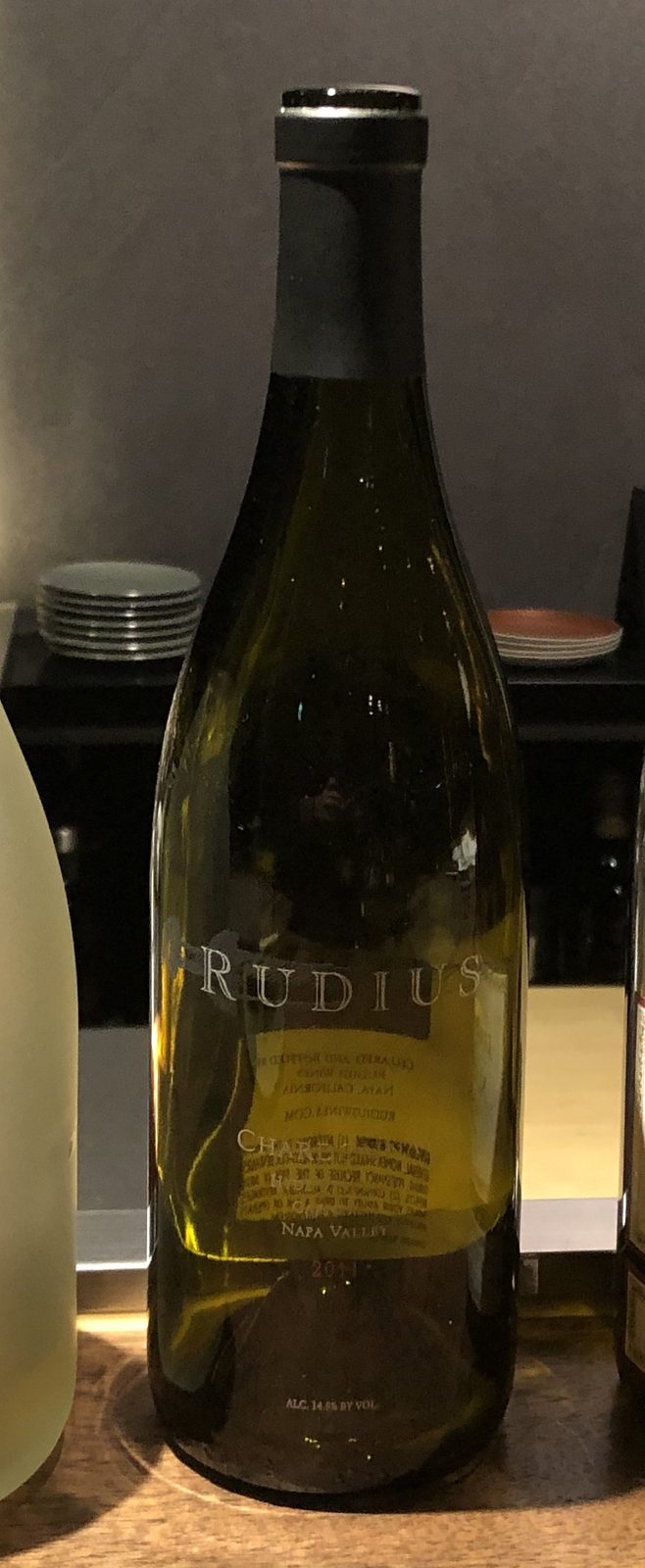
When a gladiator was released from the arena, he was handed a rudius — a wooden training sword, useless as a weapon and priceless as a document, because it meant he would never have to fight again. Jeff Ames chose it as the name for his own label, started in 2005 while he was still, and remains, the winemaker at TOR Kenward. The freedom it stood for was modest and specific: a handful of barrels a year, bought from growers he admired, made the way he wanted without anyone else’s brief.
Ames came to Napa from Alabama in 1999 with no training in oenology and a history degree, worked harvests wherever he could, and spent 2001 as assistant to Thomas Rivers Brown before taking over TOR’s cellar in 2003. Rudius stayed small by design — fifty to two hundred cases of anything — and in 2021, after a run of drought, fire and one pandemic, he announced it would stop. The Hyde Chardonnay is therefore a closed series now, which was not something anyone was thinking about when this bottle was opened.
Hyde, and a Year Nobody Wanted
The Hyde family bought their land on the Napa side of Carneros in 1979, and Larry Hyde has farmed it ever since — heavy Haire clay over a hardpan, old riverbed stones, low vigour, rolling ground a hundred feet up with the fog and wind coming through from San Pablo Bay. It is one of the most-cited Chardonnay addresses in California, sold in small parcels to a long list of houses, and the Hyde name on a label has come to signal a particular kind of fruit: small-clustered Wente-derived selections that give tension rather than fat. Ames used a Robert Young selection from the site, put the wine through full malolactic, and kept new oak almost entirely out of it — a Chardonnay meant to taste of the clay, not of the barrel.
2011 was the year that tested that idea. The winter was wet and the rain ran into June; bloom was late and the set was poor; the summer never got hot, and harvest ran two to three weeks behind. Then, in early October, storms brought botrytis to the valley floor and a large share of Napa’s Chardonnay was lost within days. What survived was picked late, sorted hard, and came in with the lowest alcohols the valley had seen in a generation. The vintage was dismissed at the time and reappraised later, for exactly the reasons it was dismissed. This bottle’s label says fourteen and a half percent, which is high for the year and suggests Ames waited for ripeness and got it.
In the Glass
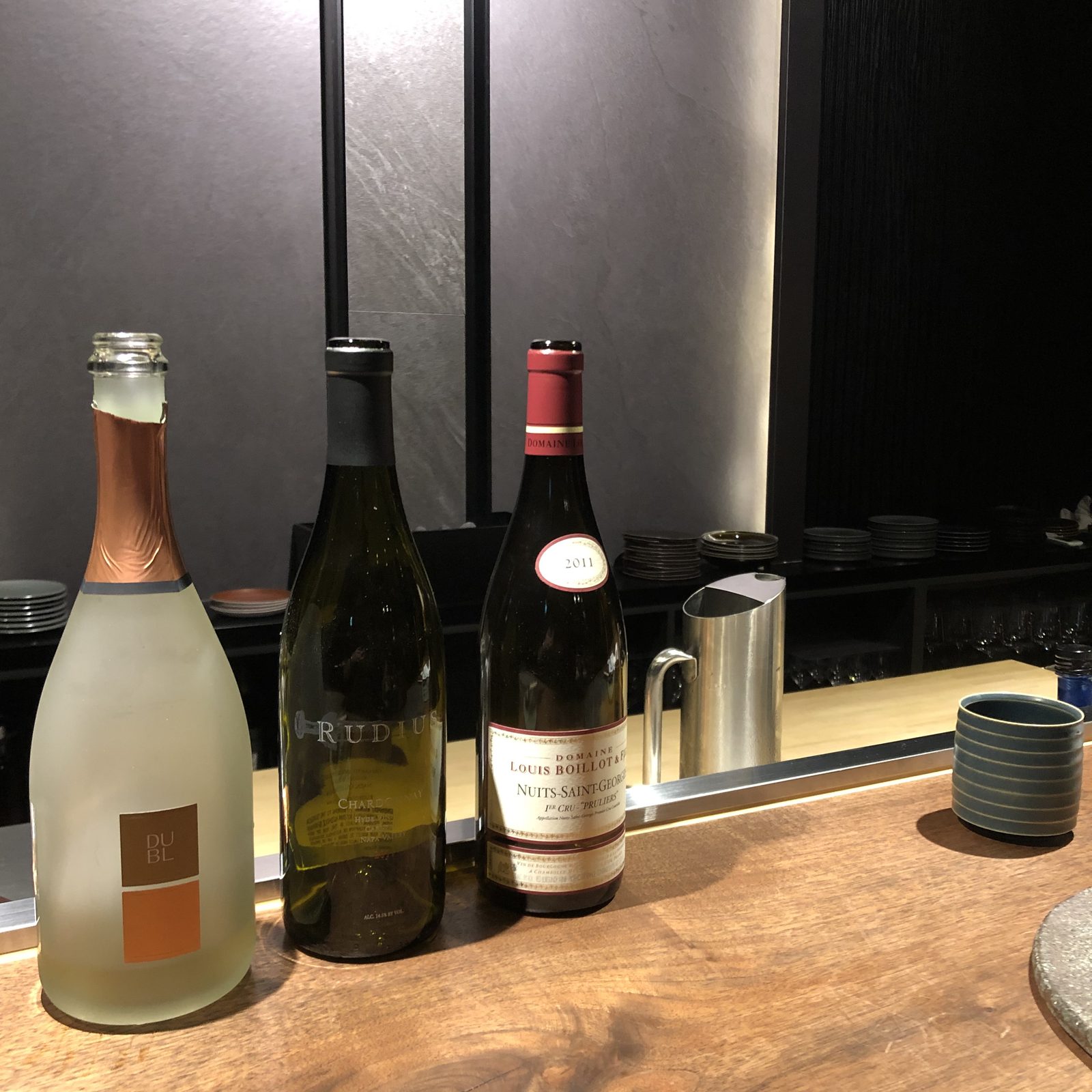
The middle of three at a counter, after a Campanian sparkling wine and before a Nuits-Saint-Georges from the same difficult year. Nearly ten years from the harvest.
The colour had deepened to full gold. The nose was where the malolactic and the vintage met: ripe yellow apple and a little baked peach on one side, and on the other a lemon-oil sharpness and a wet-stone note that had nothing to do with the barrel, because there had hardly been any barrel. Honeysuckle behind, and the faint smoky, matchstick edge that Hyde fruit tends to carry. The palate was fuller than the year would suggest — that is the fourteen and a half percent, and the malolactic — but the acidity of 2011 ran straight through it and kept the whole thing upright. Medium-long, with a slightly bitter citrus-pith finish that seemed more like the site than the winemaking.
A Carneros Chardonnay from a grower who normally sells everything, in a year when there was very little to sell. For the same corner of Napa seen through other hands, the Hudson Chardonnay 2018 and 2017 are elsewhere in this archive; for the richer end of the state’s Chardonnay, the Kongsgaard Judge 2009.