Old Wente on the Ranch
Sojourn Cellars Chardonnay Durell Vineyard Sonoma Coast 2014
- Producer
- Sojourn Cellars
- Appellation
- Sonoma Coast
- Grapes
- Chardonnay
- Tasted
- 10 July 2021
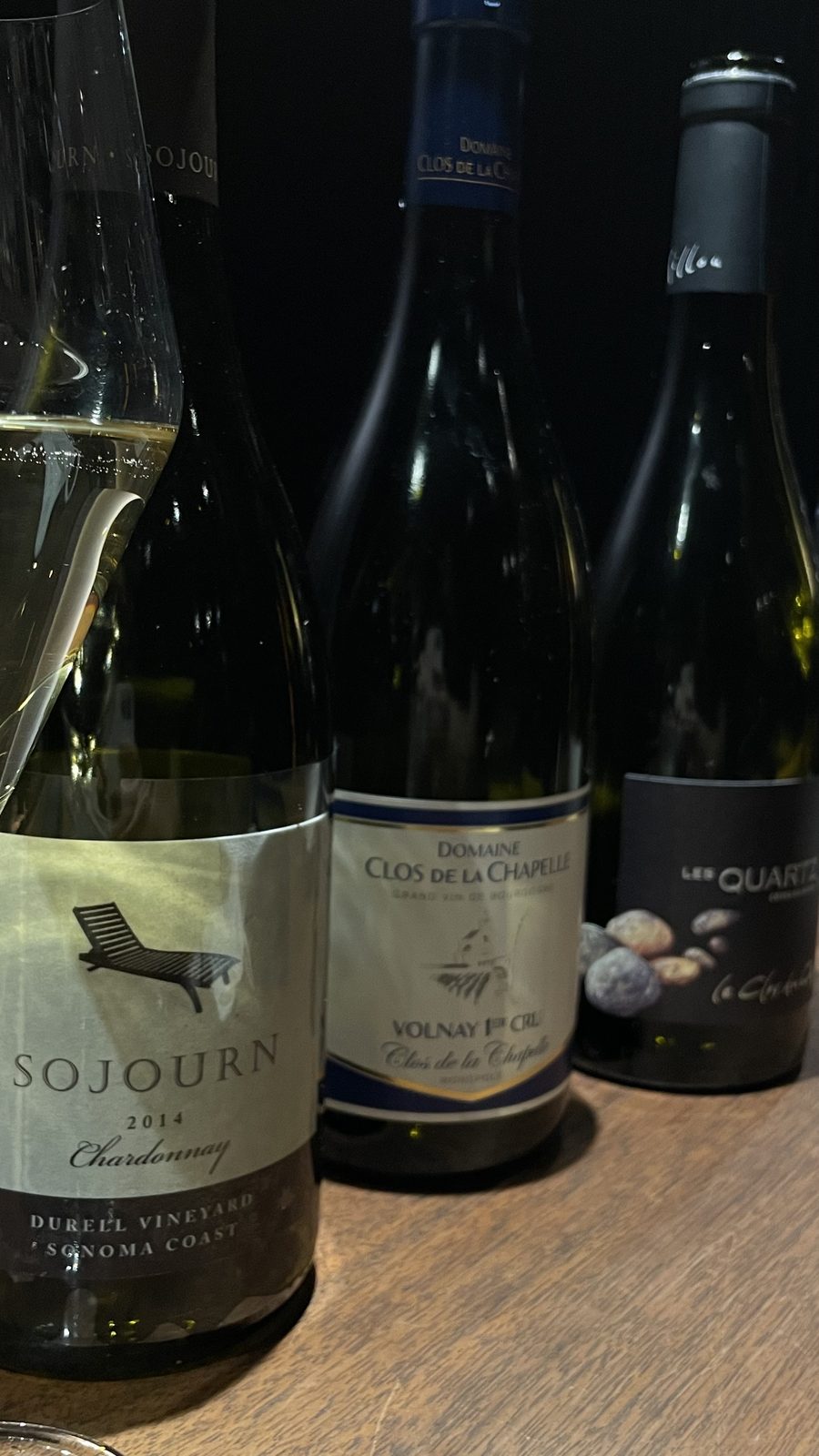
The Durell Vineyard began as a cattle ranch. Ed Durell, a San Francisco food broker, bought four hundred acres in the south-western foothills of the Sonoma Valley in 1977, and put in his first vines two years later because the neighbouring property, Les Pierres, was doing well with Chardonnay. Steve Hill managed the planting and then the vineyard for decades; Kenwood was the first buyer; and by the time Bill Price acquired the ranch in the late 1990s, the name had become one of those that winemakers put on the front of the label rather than the back. Today it runs to over seven hundred acres with about a hundred and thirty planted, roughly half to Chardonnay and half to Pinot Noir, and the fruit is sold in blocks to a long list of houses.
The site is a strange one on a map. It sits at the western edge of the town of Sonoma where three appellations meet — Sonoma Coast, Sonoma Valley and Carneros — about thirty miles from the Pacific and ten from San Pablo Bay, and every afternoon the wind comes through the Petaluma Gap and the fog comes up from the bay. The soils are rocky volcanic clay loams, low in vigour, that give small clusters and small berries. It is not a cool site so much as a site that is repeatedly cooled.
Two Blocks, One Clone
Sojourn was started in 2001 by two tennis partners, Craig Haserot and Erich Bradley — the one a software salesman and collector, the other a former teacher who had been assistant winemaker at Arrowood under Richard Arrowood and had learned from David Ramey. The name is Plato’s, from the idea of a life as a sojourn. The approach was small lots, single vineyards, and as little as possible done in the cellar.
Their Durell Chardonnay is entirely the Old Wente selection — the heritage California clone with its tiny, uneven hen-and-chicken clusters — drawn from two blocks: the Hill block, planted in the 1990s, and the younger Barn block, planted in 2009 in the rocky bed of an old creek and valued for the freshness it brings. The lots are picked separately at night, pressed whole-cluster, and fermented in French oak with something like forty percent of it new. The 2014 came in at fourteen and a third percent, and there were four hundred cases.
2014 was the third year of the drought, with barely eighteen inches of rain, though a few February storms fell at the right moment. Budbreak came in mid-March, the spring was fast and warm, the summer dry and even, and the harvest was the earliest on record — the Chardonnay was coming in during the first days of September, a week after the earthquake that shook Napa. A generous year, in the end, and a balanced one.
In the Glass
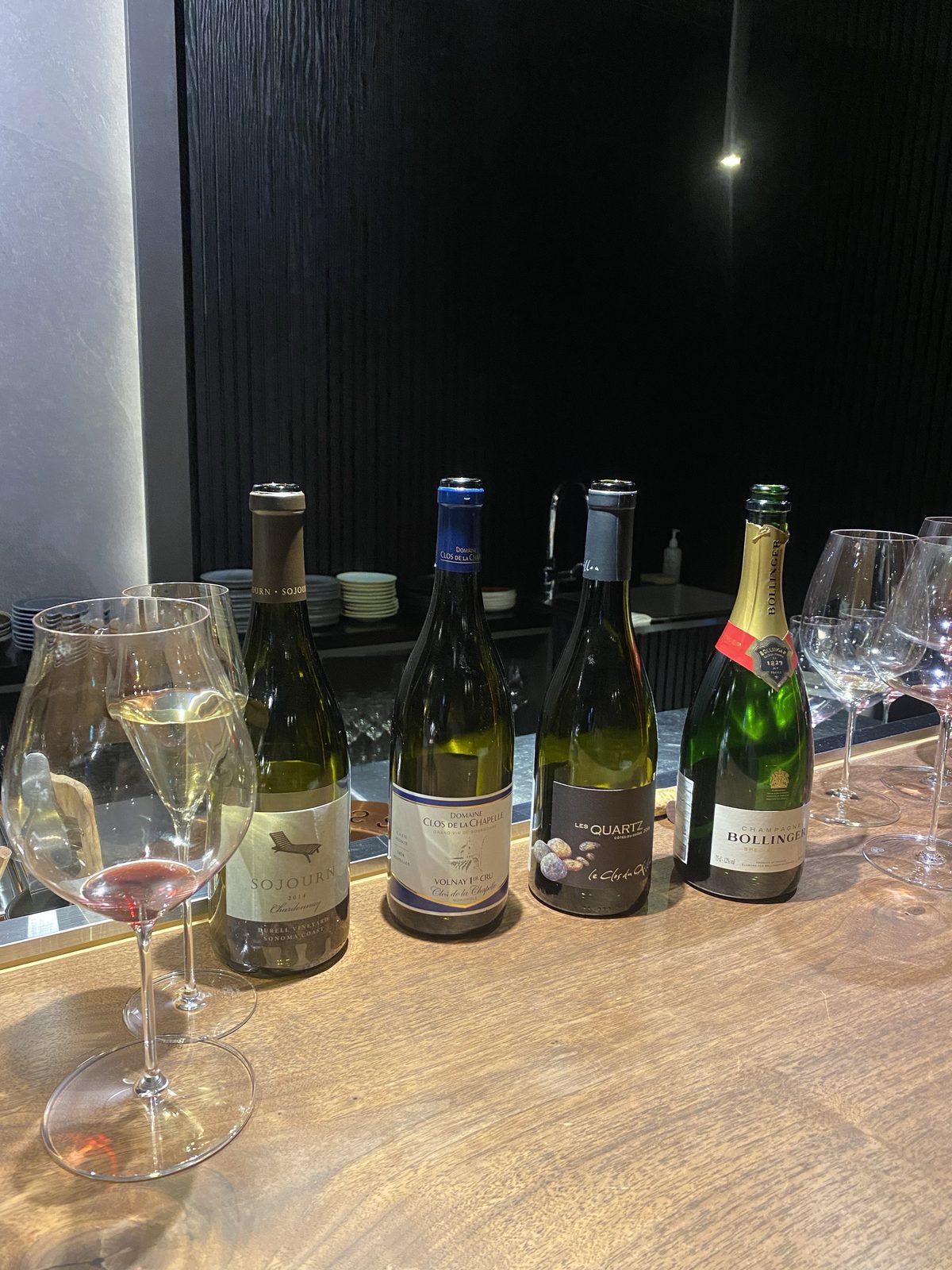
The first pour on a counter of four, ahead of a Volnay premier cru and a Côtes-du-Rhône from inside the walls of Châteauneuf, with a Bollinger alongside. Nearly seven years from the harvest.
Medium gold. The nose led with quince and white currant, tangerine oil, lemon blossom, and a toasted, nutty note from the oak that had by now folded into the fruit rather than sitting on top of it. The palate was medium-full and creamy in texture — this is a Durell Chardonnay, and it was never going to be thin — but the acidity that the afternoon wind puts into the fruit was still there, and the wine finished stony and fairly long, with a lift of citrus at the end. Rich, but not at all tired.
A Sonoma Coast Chardonnay at the age where the barrel has stopped talking and the vineyard has started. For the cooler, leaner end of the same appellation, the Ferren 2017 is elsewhere in this archive; for the neighbouring appellation, the Hudson Chardonnay 2018 from Carneros.