Vines from 1937
Domaine de Bellene Vosne-Romanée 1er Cru Les Suchots 2012
- Producer
- Domaine de Bellene
- Appellation
- Vosne-Romanée 1er Cru
- Grapes
- Pinot Noir
- Tasted
- 13 July 2021
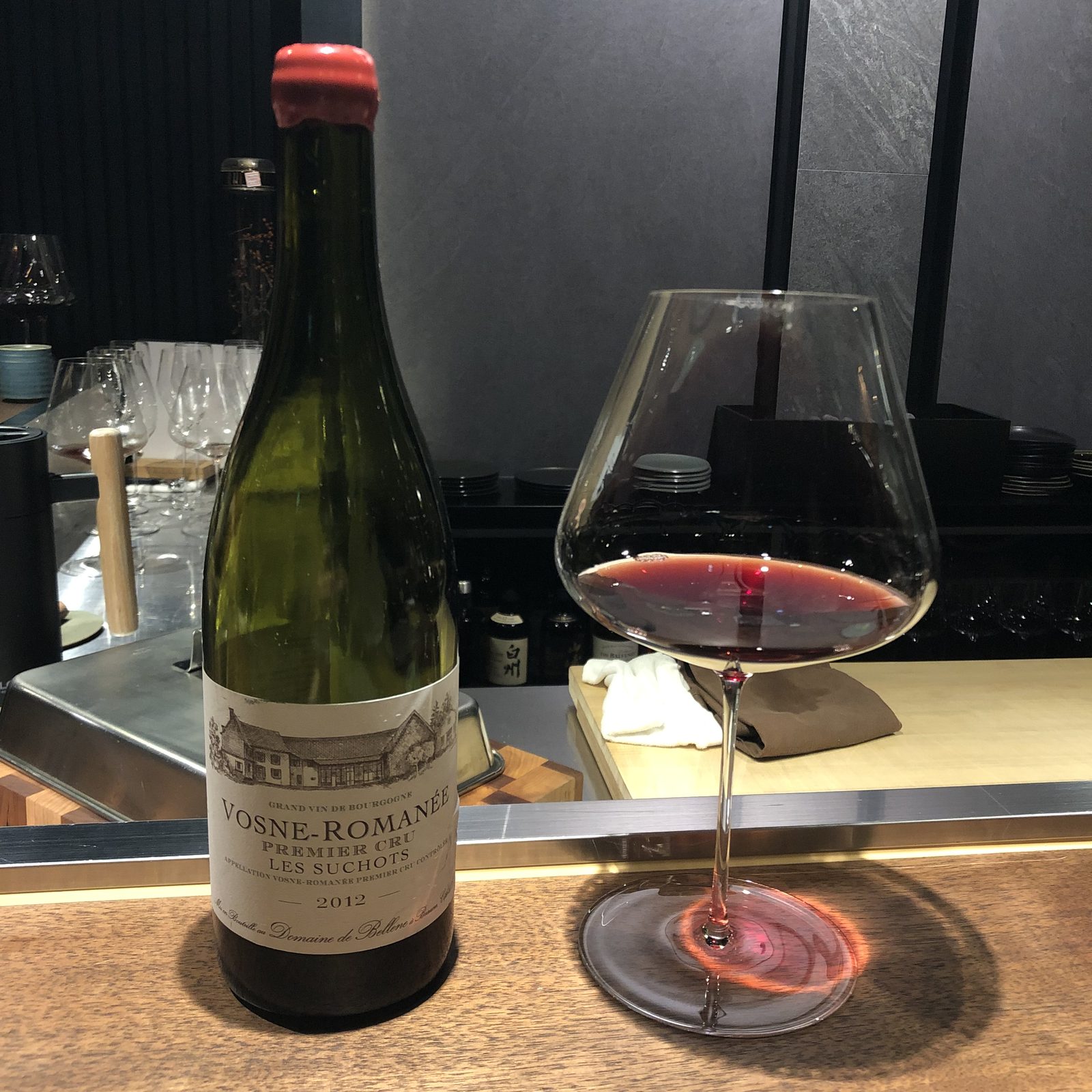
Bellene is the old name for Beaune — the town’s Gallo-Roman ancestor, or near enough — and Nicolas Potel chose it in 2005 for the domaine he began assembling after selling the négociant business that carried his own name. The story of that name, and of the second négociant label he launched from scratch in 2009, is told alongside his Roche de Bellene Chambertin in these pages. The domaine was the other half of the plan: instead of buying wine, own old vines, and farm them organically from a base in Beaune.
The parcels he found were chosen for the age of their vines, and the Suchots is the clearest example. Les Suchots is the biggest premier cru in Vosne-Romanée, a long band that runs between Romanée-Saint-Vivant on one side and Échezeaux on the other, and quality within it varies with position. Bellene’s vines are in the upper, southern part, toward Romanée-Saint-Vivant, and were planted in 1937 — which made them seventy-five years old when this wine was made.
A Year That Fought Back
2012 was a year of everything going wrong at once in Burgundy — a wet spring, a poor flowering, mildew pressure through the summer, and hail that cut the Côte de Beaune’s crop to pieces. The Côte de Nuits escaped the worst of the hail, but the bunches were small and few everywhere, and what remained ripened in a late, sunny September into wines of unexpected concentration. It is one of those vintages where old vines, with their deep roots and their natural restraint, had an advantage that no amount of technique could buy.
In the Glass
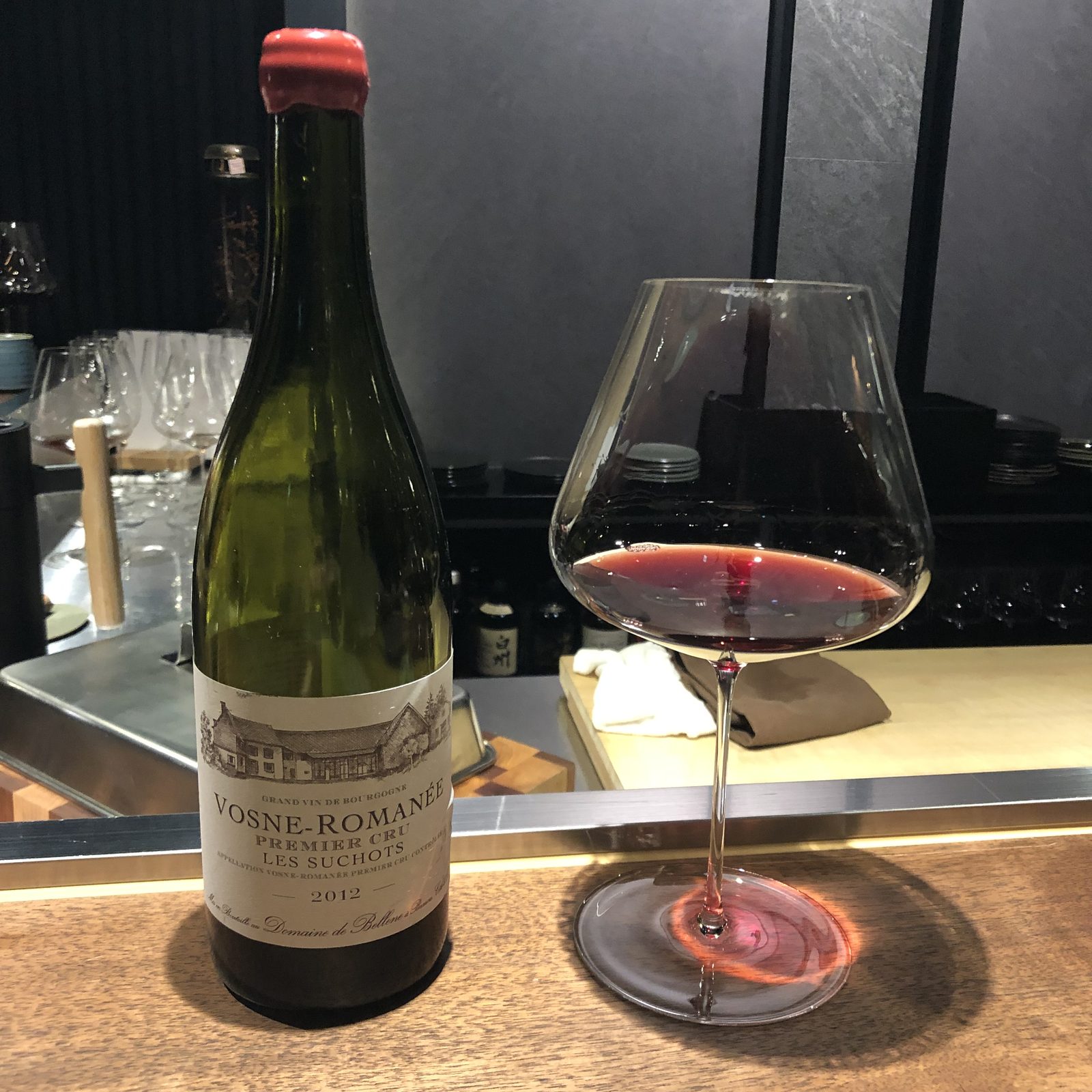
Opened third at a counter dinner, directly after a Leroy Nuits-Saint-Georges from the Vosne side of that commune, at nine years from the vintage.
The colour was deep ruby, still with purple at the core. The nose was Vosne in its classic register: dark cherry and blackberry, violets, a spiced, faintly oriental note, and behind it a stony, iron-tinged minerality that the vintage seems to have amplified. Some oak still showed, as a gentle toast rather than as a flavour.
The palate had more weight than the Leroy before it and less perfume — a wine built on concentrated black fruit and a fine, slightly chalky tannin, with the acidity keeping the whole thing upright. It was intense and still young, the structure not yet dissolved into the fruit, and the finish was long and mineral with a return of the violet note at the end.
Nine years was early for it. What the old vines had given was density without weight, and the vintage had given it a frame that would take another decade to soften. A premier cru drinking like a wine with grand cru ambitions, from a domaine built on the idea that the age of the vine matters more than the name on the door. For the same commune at the top of the hierarchy, see the DRC Romanée-Saint-Vivant 2014, Suchots’ neighbour on the upper side.