The High Gravel
Château Grand-Puy-Lacoste 1990
- Producer
- Château Grand-Puy-Lacoste
- Appellation
- Pauillac
- Grapes
- Cabernet Sauvignon, Merlot, Cabernet Franc
- Tasted
- 13 July 2021
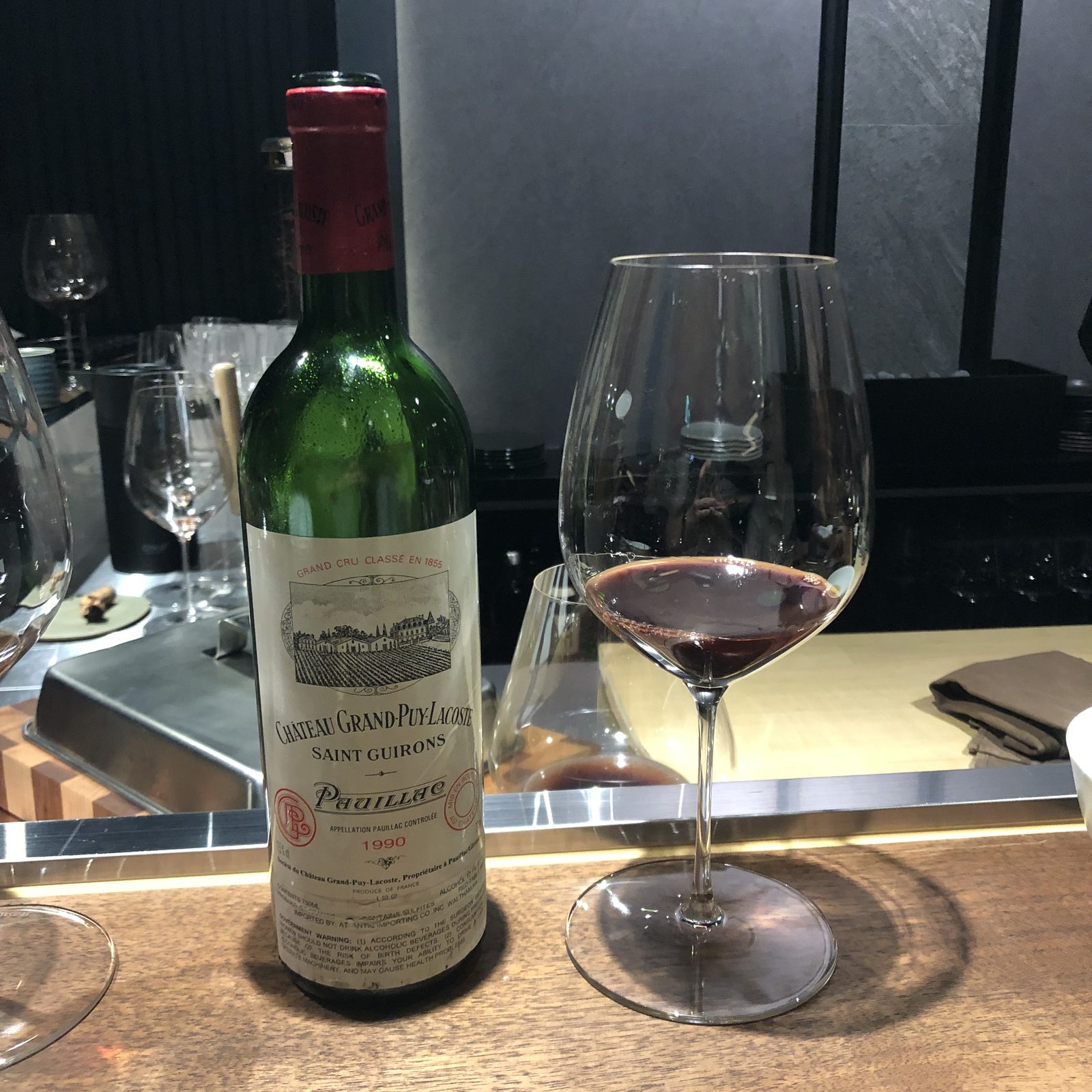
Most of Pauillac’s famous names sit close to the Gironde, on the gravel banks that face the river. Grand-Puy-Lacoste lies further back, inland and higher, on the plateau that gives it its name — puy being an old word for a hill or a rise — in a single block of vineyard around the château. The Lacoste part came from a nineteenth-century owning family; the label still carries the name of the Saint-Guirons, who held the estate after them, as a kind of subtitle nobody has removed.
The modern history begins in 1978, when Jean-Eugène Borie of Ducru-Beaucaillou bought the property. His son François-Xavier took it on in the following years and has run it since, replanting and rebuilding without ever pushing the style toward the plush, oaky end of Pauillac. The wine has remained what it was — Cabernet Sauvignon well above two-thirds of the blend, Merlot behind it and a little Cabernet Franc, made for structure and length rather than for early charm — and it is one of the classified growths most often named when people talk about value in the Médoc, which is a compliment with a faint edge.
The Heat of 1990
1990 was the last of three consecutive fine Bordeaux vintages and the warmest of them. A hot, dry summer with a heatwave in August and a large, ripe crop produced wines of unusual sweetness of fruit and softness of tannin for the region — a vintage often described as the most immediately seductive of its era, and one that has aged more gracefully than the word seductive usually implies. On a Cabernet-dominated estate in Pauillac, the warmth filled in the frame without breaking it, and the 1990 has long been counted among the best wines the property made in the twentieth century.
In the Glass
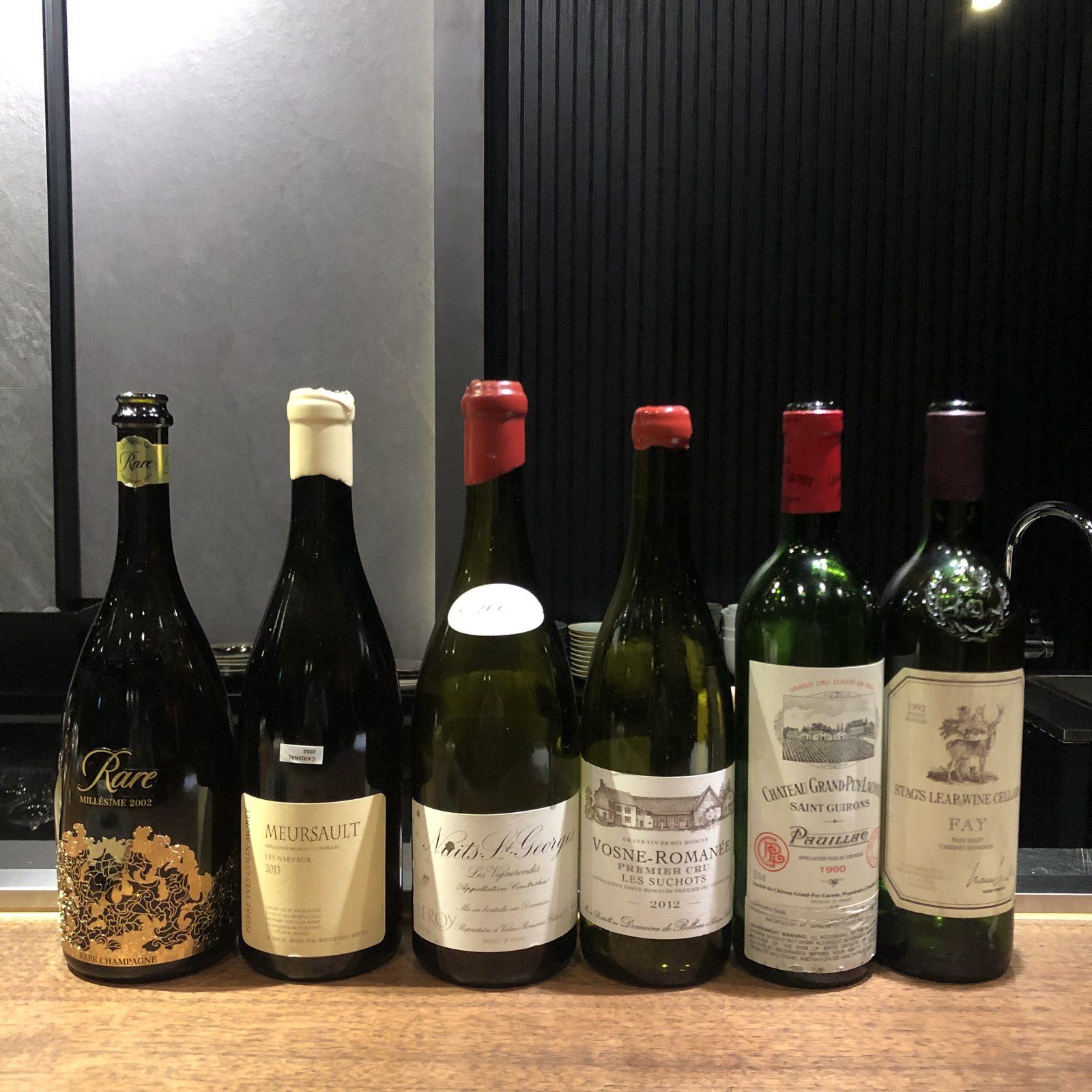
Opened at thirty-one years, the fourth bottle at a counter dinner that had begun in Burgundy — a Colin-Morey Narvaux, a Leroy Nuits-Saint-Georges, a Bellene Suchots — and poured alongside a Napa Cabernet of nearly the same age, Stag’s Leap Wine Cellars Fay 1992. Two Cabernets, two years apart, from two continents.
The colour was still deep, a dark garnet with only a modest brick rim for its age. The nose was pure Pauillac: cassis with the sweetness of the year still in it, then cedar, cigar box, graphite and a leafy, tobacco note, with a warm earthiness underneath. It did not smell old. It smelled resolved.
The palate was full-bodied without being heavy, the tannins melted into something fine and slightly dusty, the acidity moderate and the fruit still sweet in the middle. The finish was long and savoury, cedar and dried currant and a faint mintiness, and it kept its shape all the way through rather than fading out.
Thirty-one years had brought this wine to a plateau, not to a decline; there is no hurry with it. Pauillac at its most classical, from a year that was anything but, on ground that made the warmth into a virtue. The appellation’s other faces in this archive: Lynch-Bages 1986, from a cooler, harder year, and Mouton Rothschild 1995, at the grand end of the commune.