Above the Premiers Crus
Pierre-Yves Colin-Morey Meursault Les Narvaux 2013
- Producer
- Pierre-Yves Colin-Morey
- Appellation
- Meursault
- Grapes
- Chardonnay
- Tasted
- 13 July 2021
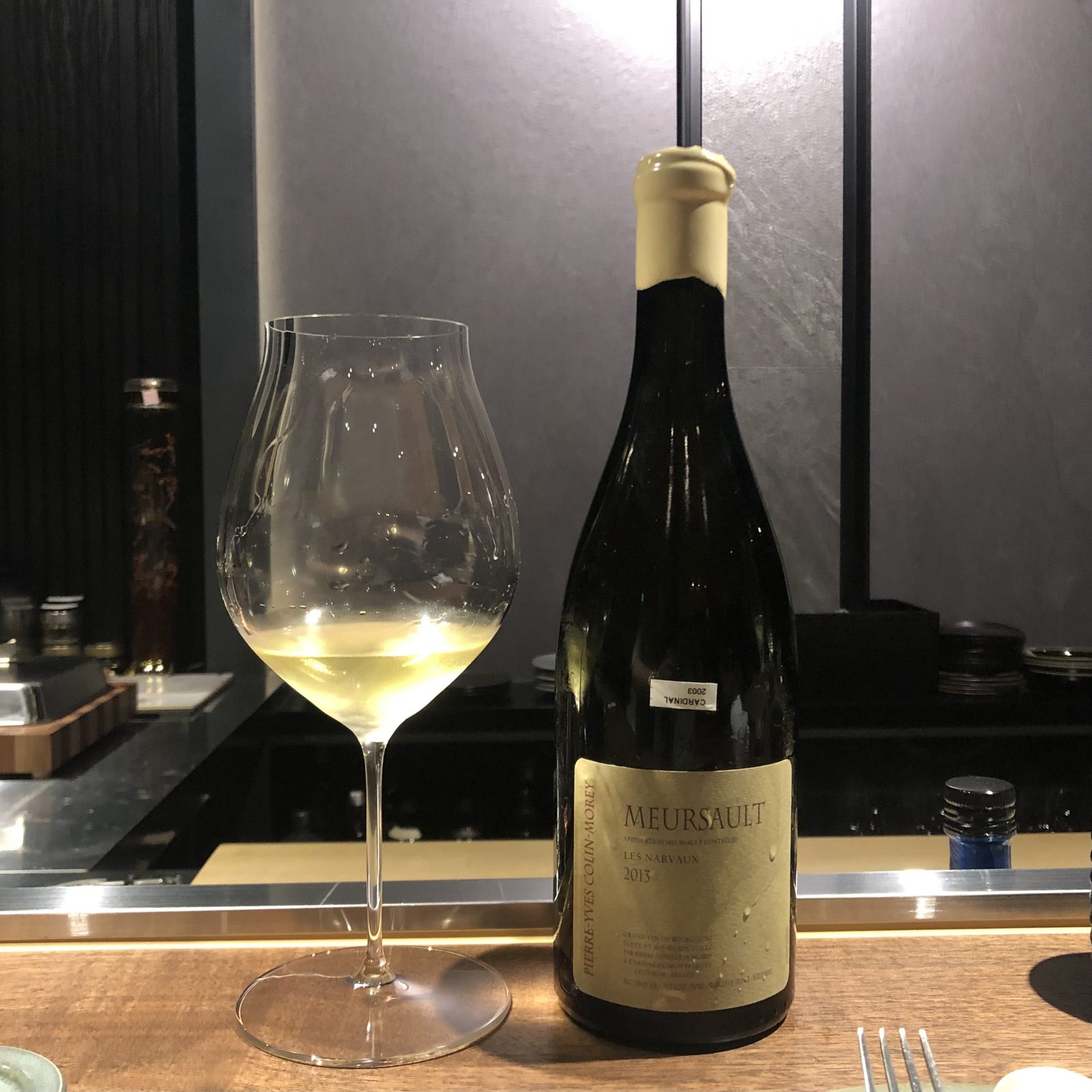
Meursault has no grand cru, and its reputation for opulence rests on the premiers crus in the middle of the slope — Perrières, Genevrières, Charmes. Above them, where the soil thins and the limestone comes closer to the surface, lie a handful of village-level lieux-dits that growers have long treated as something better than their classification. Les Narvaux is the best known of them: a strip of high ground where the wines trade Meursault’s usual breadth for cut and length.
Pierre-Yves Colin makes his Meursault range from bought fruit, as he does with much of what lies outside his family’s Chassagne and Saint-Aubin holdings, and the treatment does not change with the source. Whole-bunch pressing, a long slow fermentation, ageing in 350-litre barrels rather than the standard pièce, no stirring of the lees, minimal racking, and a wax seal over the cork. The method — described more fully alongside his regional Bourgogne from 2015 — was designed to keep reduction and tension in the wine, and Narvaux is the kind of site that rewards it.
The Year the Acidity Came Back
2013 was the third short crop in a row for the Côte de Beaune. A cold, wet spring delayed flowering into late June; a hailstorm on the twenty-third of July cut across Meursault, Volnay and Pommard; and the harvest did not begin in earnest until the first days of October, the latest in a generation. The whites that came out of it were lean, high in acid and slow to open — the opposite of the plush 2009s and 2015s that bracket them — and they have been the vintage that patient drinkers of white Burgundy quietly prefer.
In the Glass
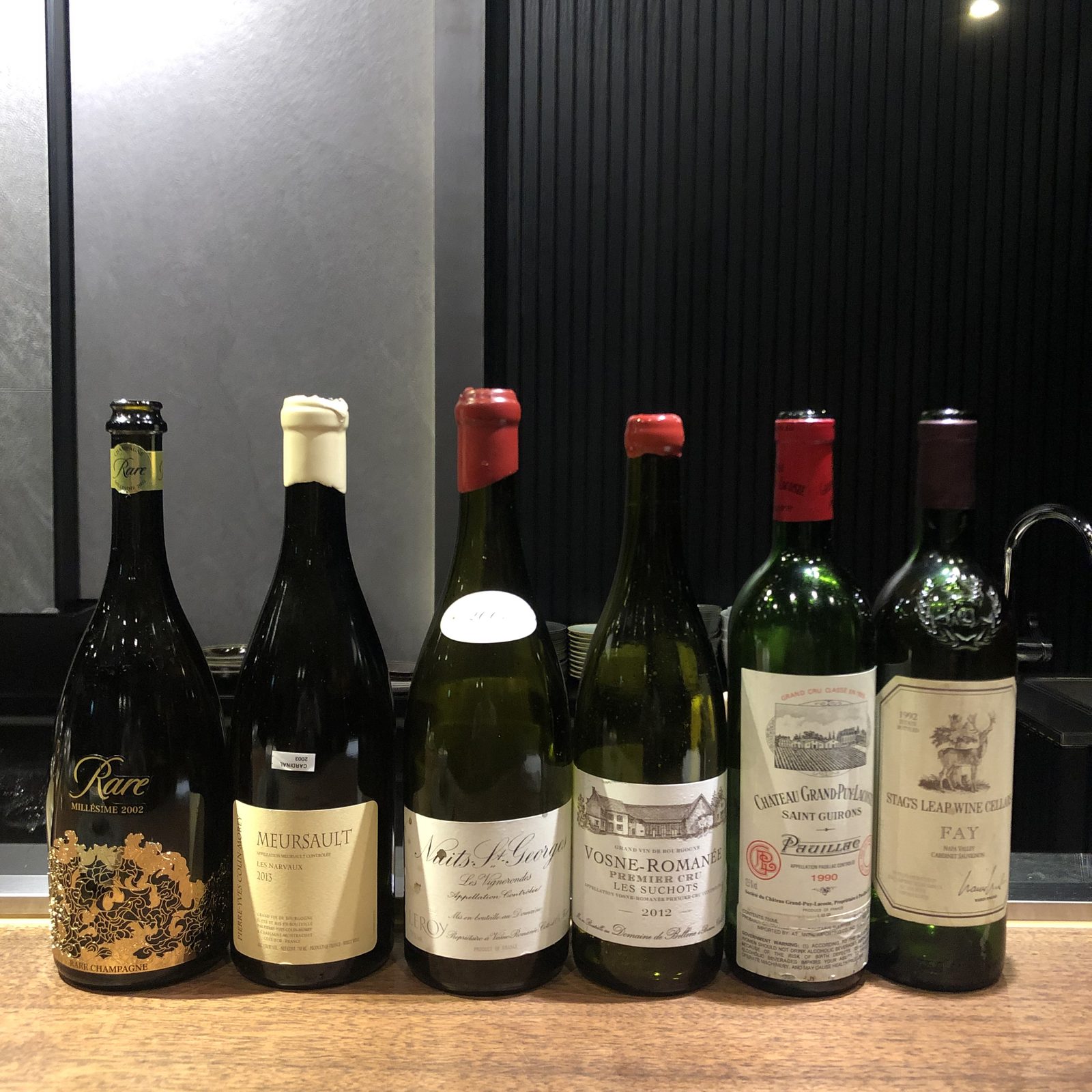
Opened first at a counter dinner where five others followed it — a Leroy Nuits-Saint-Georges, a Vosne-Romanée from Domaine de Bellene, two Cabernets from either side of the Atlantic in Grand-Puy-Lacoste 1990 and Stag’s Leap Fay 1992, and Rare 2002 — at eight years from the vintage.
The colour was pale straw with a green rim, remarkably young. The nose opened on the house signature of struck flint and a faint smokiness, then lemon and green apple, white flowers, and a chalky, wet-stone note behind them. Nothing buttery, nothing broad: this was Meursault with the volume turned down and the focus turned up.
On the palate it was tight and saline, medium-bodied, with an acidity that still felt like the leading edge of the wine rather than something the years had softened. The oak had disappeared into the texture. The finish went long on citrus pith and stone, with a faint bitterness at the end that read as minerality rather than as a flaw.
At eight years the wine had not so much aged as settled; the reduction had eased enough to let the fruit through, and the structure underneath had not moved at all. Narvaux from a cold year was never going to be generous. What it offered instead was precision, and a very long life ahead. For a richer expression of the same village, there is the Coche-Dury Meursault 2015 elsewhere in this archive.