Nathan Fay's Vineyard
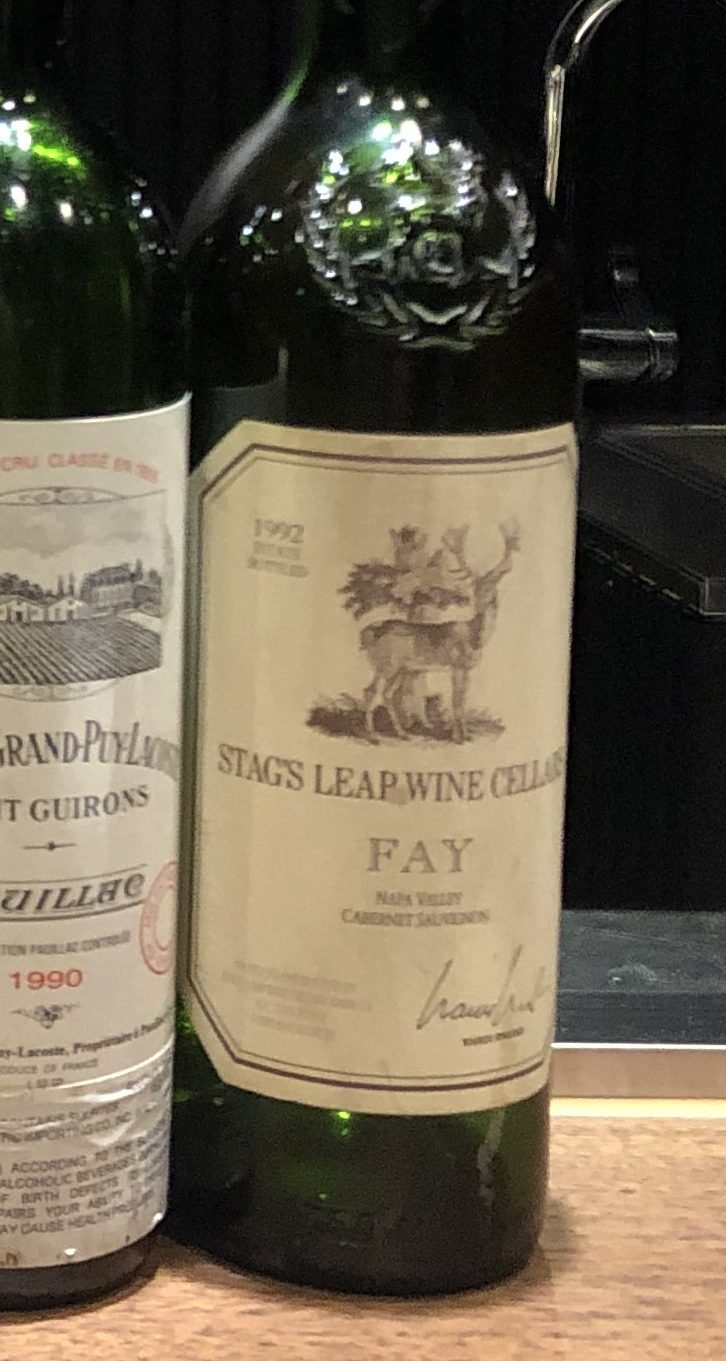
Stag's Leap Wine Cellars Fay Cabernet Sauvignon 1992
- Producer
- Stag's Leap Wine Cellars
- Appellation
- Stags Leap District
- Grapes
- Cabernet Sauvignon
- Tasted
- 13 July 2021
The Stags Leap District is a small pocket on the east side of the Napa Valley, beneath the bare rock palisades that give it its name, where the afternoon breeze off San Pablo Bay cools the vines and the volcanic soils produce Cabernet with a softer, more perfumed profile than the valley’s benchlands. In 1961 it was orchard and prune country, and the received wisdom was that the ground was too cool for Cabernet Sauvignon. Nathan Fay planted it anyway.
A few years later Warren Winiarski, a former university lecturer who had come to Napa to make wine, tasted a bottle of Fay’s home-made 1968 Cabernet and decided that this was the site he had been looking for. He bought the neighbouring parcel in 1970, planted it, and called the wine from it S.L.V. — Stag’s Leap Vineyard. Three years later the 1973 S.L.V. finished first among the reds at the 1976 Paris tasting, ahead of Mouton and Haut-Brion, and the district’s reputation was made. In 1986 Winiarski bought Fay’s original vineyard and put his neighbour’s name on it. The first single-vineyard FAY bottling was the 1990; this is the third.
A Drought Year
1992 was the sixth consecutive dry year in California. The vines carried a decent crop through a warm summer, and the harvest came early, in a season that produced Cabernets rather softer and more forward than the structured 1991s before them — wines made for their first fifteen years rather than their first thirty. Fay, with its lower tannin and its characteristic scent of black cherry and mint, was already the gentler of the estate’s two vineyards, and the vintage leaned in the same direction.
The label carries the estate’s stag beneath its tree, the words Estate Bottled, and Winiarski’s signature at the foot.
In the Glass
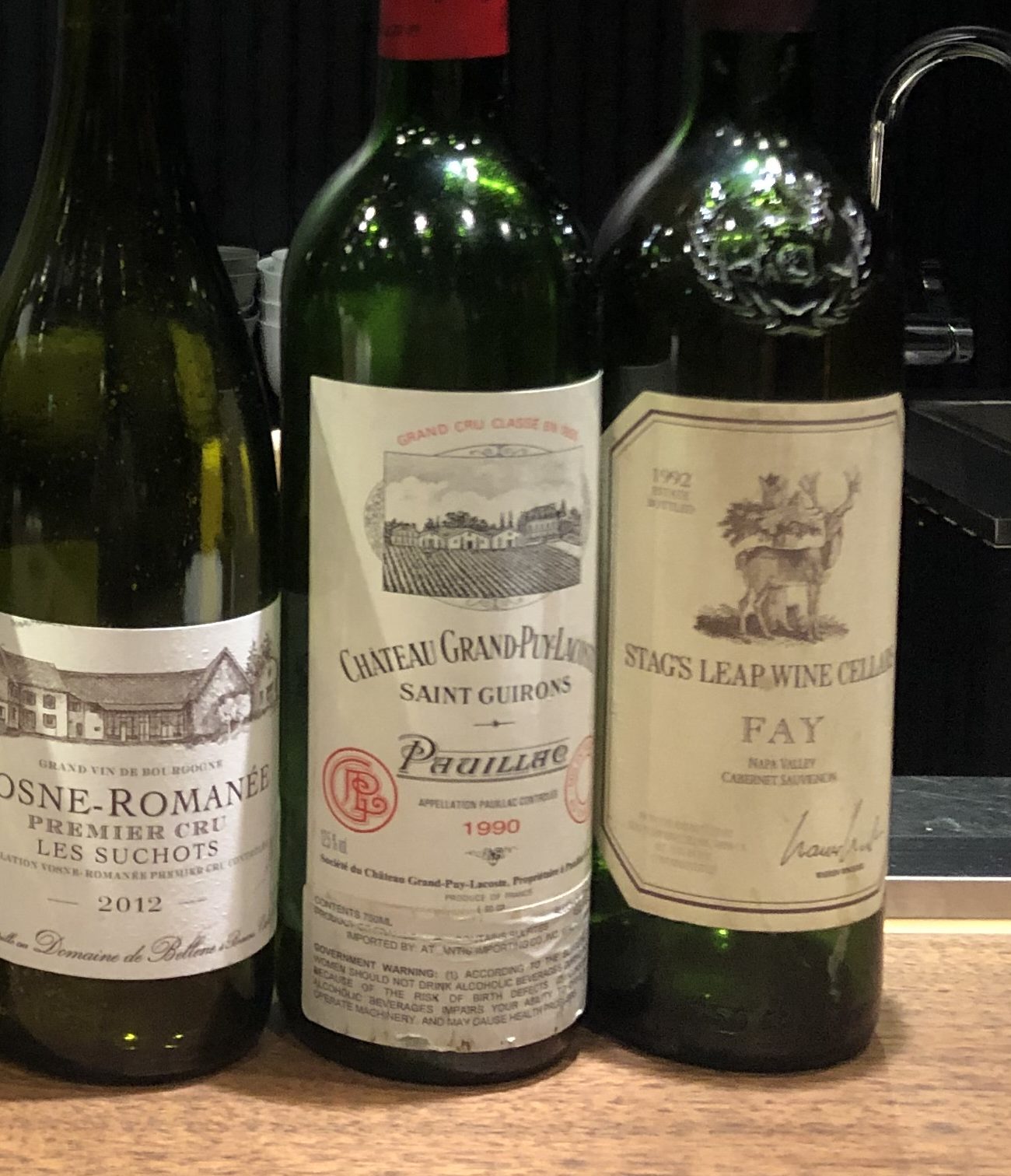
Poured at twenty-nine years, next to a Grand-Puy-Lacoste 1990 at a counter dinner that had opened with Burgundy and would close with Champagne. Two Cabernet Sauvignons of nearly the same age, one from Pauillac and one from Napa, drinking side by side — which is the sort of comparison the 1976 tasting made respectable.
The colour was garnet, paler than the Pauillac and browner at the edge. The nose had gone gently tertiary: dried cherry and plum, a mint and eucalyptus note that is Stags Leap’s fingerprint, cedar, dried herbs and a soft earthiness, with a sweetness of fruit still present behind it.
The palate was medium-bodied, supple and rounded, the tannins long since resolved into a silky texture, the acidity moderate. The wine was more about perfume and softness than about grip, and the finish was of medium length, warm and slightly sweet, ending on dried fruit and tobacco.
At nearly thirty it was fully mature and had probably been at this point for some years — a drought vintage from a soft-spoken vineyard was never going to be a wine for the very long haul. But it was intact, gentle and characterful, and beside the Pauillac it made the district’s case: not power, but a particular kind of grace. The same district from a different house is elsewhere in this archive, in Clos du Val’s Palisade Vineyard 1999.