The White That Outlives the Red
Château Musar White 1997
- Producer
- Château Musar
- Appellation
- Bekaa Valley
- Grapes
- Obaideh, Merwah
- Tasted
- 5 December 2024
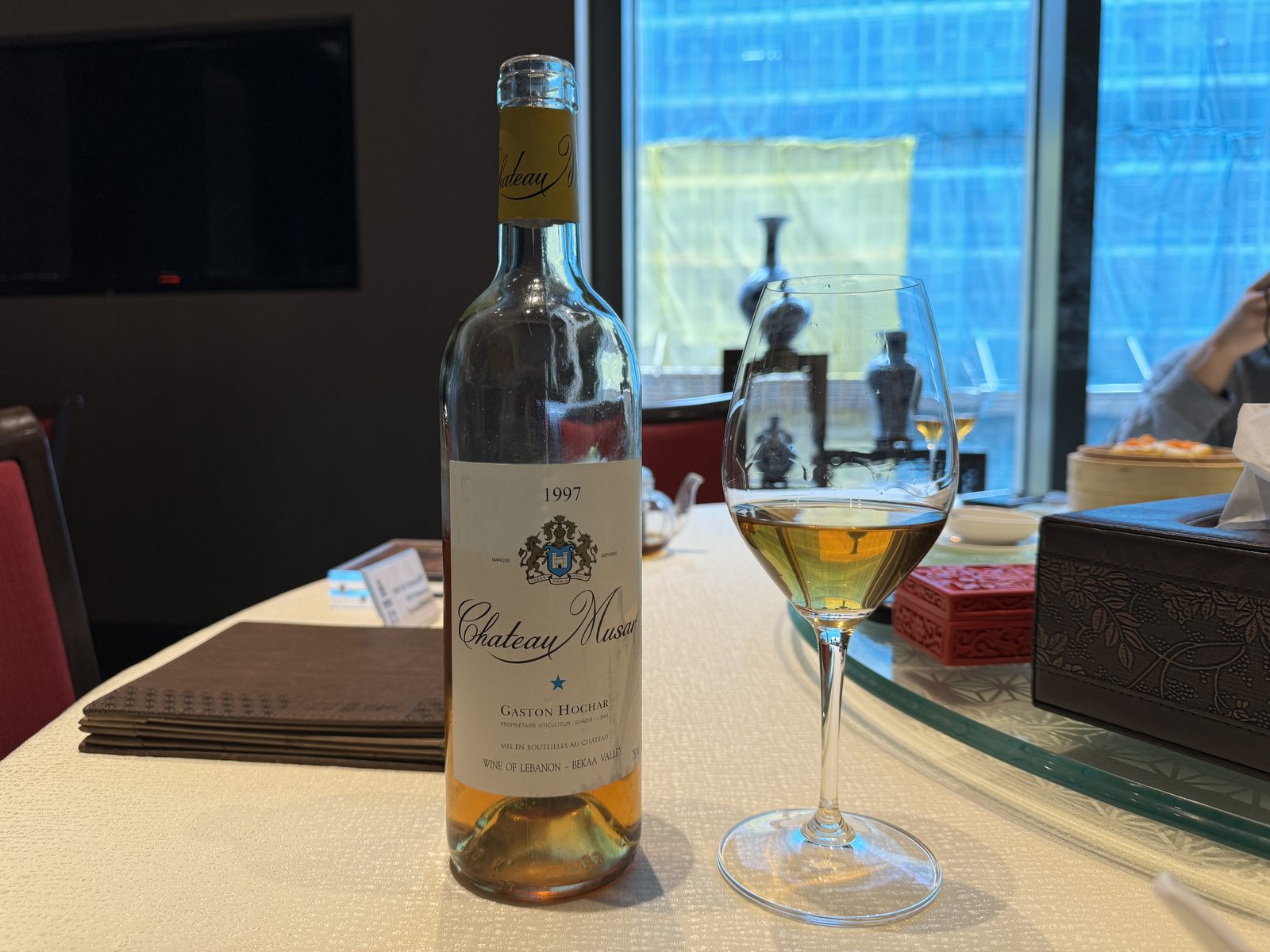
Musar arrives in most conversations as a red. The story attached to it is a red wine’s story: a Lebanese estate that kept making wine through a civil war, trucking fruit across a country at war with itself, and the phrase that follows the label around — the strangest, most compelling wine in the world, or some variation of it.
The white is the bottle that story tends to skip. It should not. It is by some distance the odder of the two.
Start with the grapes. Obaideh and Merwah are Lebanese natives, held on in the hill vineyards there and cultivated almost nowhere else on earth. A claim trails them about belonging to a very old lineage of vines, older than most of what Europe planted. It is a claim worth noting and not worth asserting; the ampelography is not settled. What can be said plainly is that almost no one else is making wine from these two names.
Then the method. The oxidative character here is not an accident of age or a fault crept in through a bad cork — it is the design. The 1997 spent six months in French oak, was blended and bottled, and then sat in the cellar another year or two before release. Which means a Musar white is already several years old on the day it first reaches anyone. The wine begins its public life late, on purpose.
In the Glass
The colour is the first surprise and the one people react to. This is not a white wine’s colour. It is amber, deep, with an orange cast running through the rim. Poured for someone who does not know the house, it reads as a bottle that has gone wrong.
The nose opens on nuts — almond and cashew ahead of everything else — and then honey, dried apricot, buttered toast behind them. Every one of those signals promises sweetness.
The palate refuses it. The wine is bone dry. Lemon and lime acidity carries the middle, dried apricot and orange peel run alongside, and the finish turns herbal and lightly spiced and holds on a long time. Sherry gets invoked in descriptions of this wine; the comparison undersells how much fruit is still present.
Twenty-seven years on from the harvest and nothing about it is tired. That is the ordinary condition for these bottles rather than a lucky one — Musar whites at forty and fifty years are regularly still standing. 1997 was a slow-ripening year, the kind this white tends to reward with more time rather than less.
The irony sits at the centre of the estate. The reds carry the name. The white outlives them.