Nineteen Years in the Cask
Bodega y Cavas de Weinert Malbec Estrella 1977
- Producer
- Bodega y Cavas de Weinert
- Appellation
- Luján de Cuyo
- Grapes
- Malbec
- Tasted
- 23 December 2024
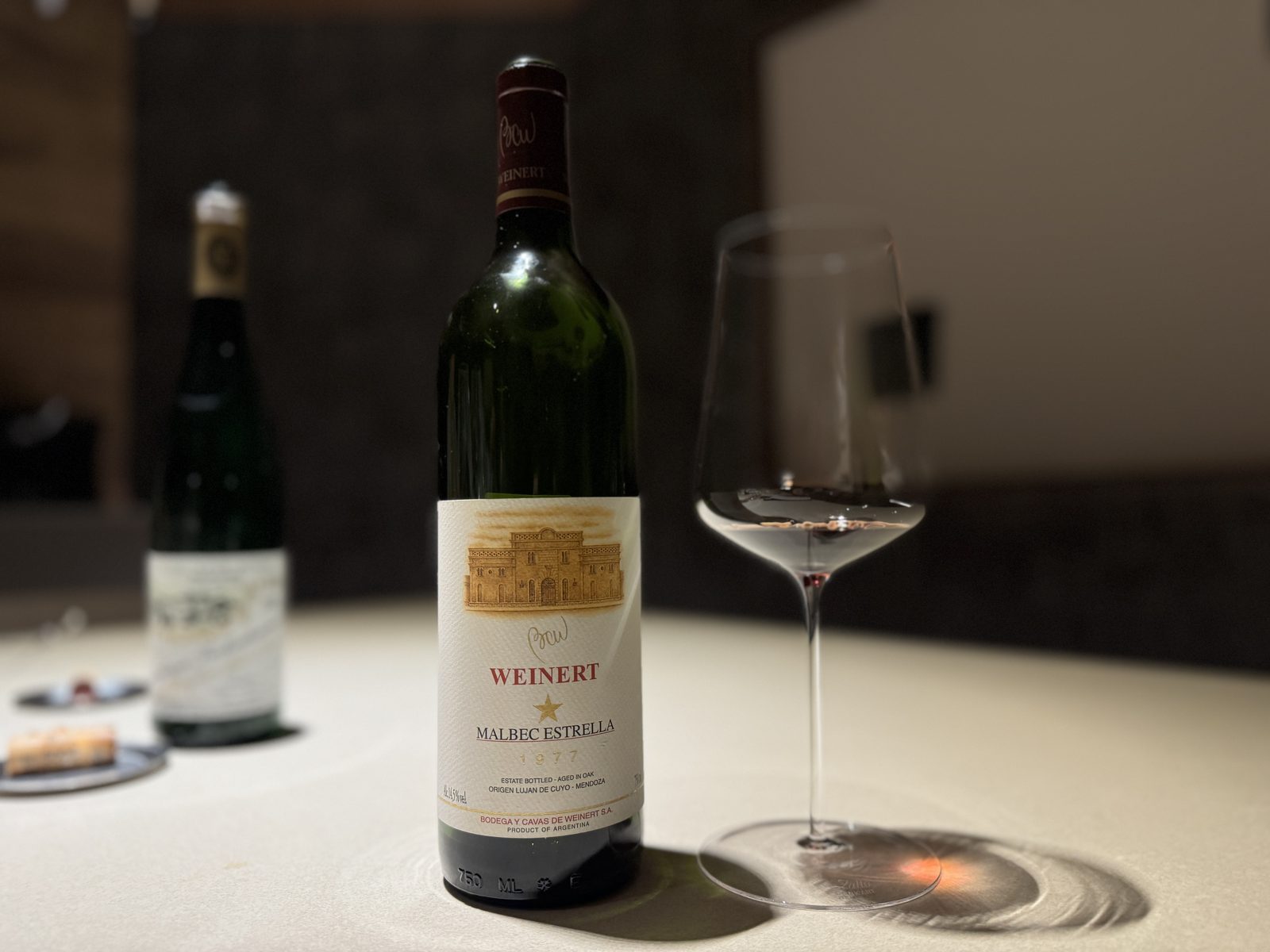
Seventies Argentine Malbec — the phrase alone usually earns a skeptical eyebrow: is that even still alive? This bottle has an unusual defense. It spent nineteen years in cask before it was ever bottled. Not a typo. Nineteen.
Bodega y Cavas de Weinert was founded in 1975, when the Brazilian businessman Bernardo Weinert bought an old cellar building in Luján de Cuyo and installed Raúl de la Mota — the godfather figure of modern Argentine winemaking — as his first winemaker. Estrella, “star,” is the house’s top selection, drawn only from the finest casks, and 1977 is among the estate’s very earliest vintages. The next Estrella would not appear until 1994 — a seventeen-year silence.
The Old Way of Growing Old
The élevage is the story. This wine matured not in small new barriques but in great old casks of 2,500 to 6,000 litres — vessels whose purpose is not to perfume a wine with oak but to age it, breath by breath, over decades. The casks were tasted one by one, blended, and only then bottled. By today’s standards it looks like madness; in the result, it looks like patience. The wine that emerged is counted among the first Malbecs ever presented to the international stage as a fine wine — one of the bottles behind the now-automatic equation of Argentina with Malbec.
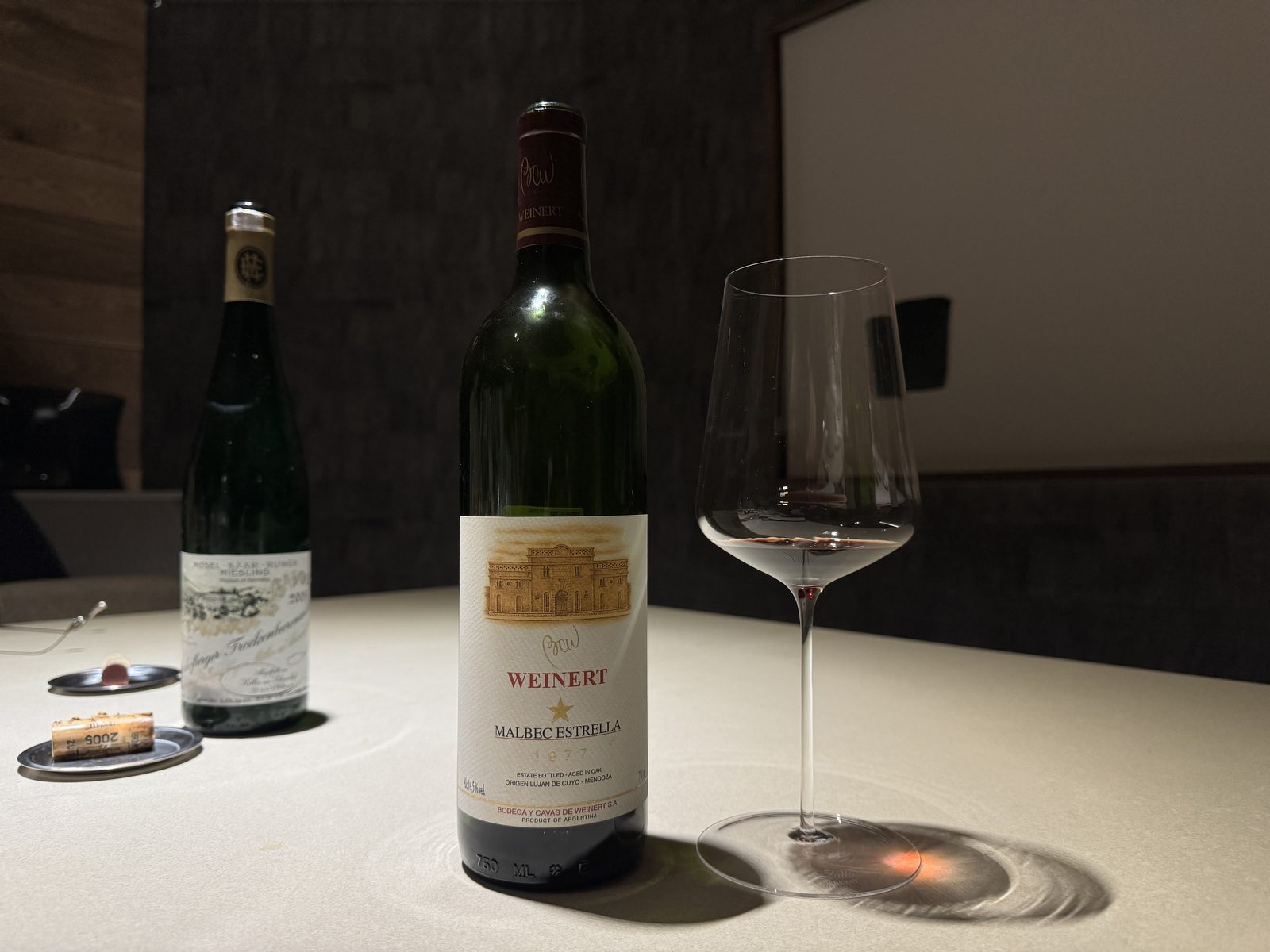
In the Glass
The first surprise was the colour: rims faded, as they must be, but the core still dark at nearly fifty years old. The nose was concentrated into dried plum and raisin, layered with chocolate, tobacco and licorice — and then a cooler current of mint and sage running through it, with the comfortable old-wood, nutty base note of a long cask life underneath. Nothing about it smelled tired; it smelled settled.
The palate was round and generous without slackness. The 14.5% never weighed on it, and enough acidity remained to dry the finish cleanly. This is a wine deep in its tertiary chapter — once opened, it asks to be followed through the evening, not held — but it has not fallen. The old winemakers weren’t simply leaving wine in casks and forgetting it. This bottle is the proof.