The Baton Pass
Henri Jayer & Emmanuel Rouget Vosne-Romanée Cros-Parantoux 1996
- Producer
- Henri Jayer / Emmanuel Rouget
- Appellation
- Vosne-Romanée 1er Cru Cros-Parantoux
- Grapes
- Pinot Noir
- Tasted
- 5 June 2025
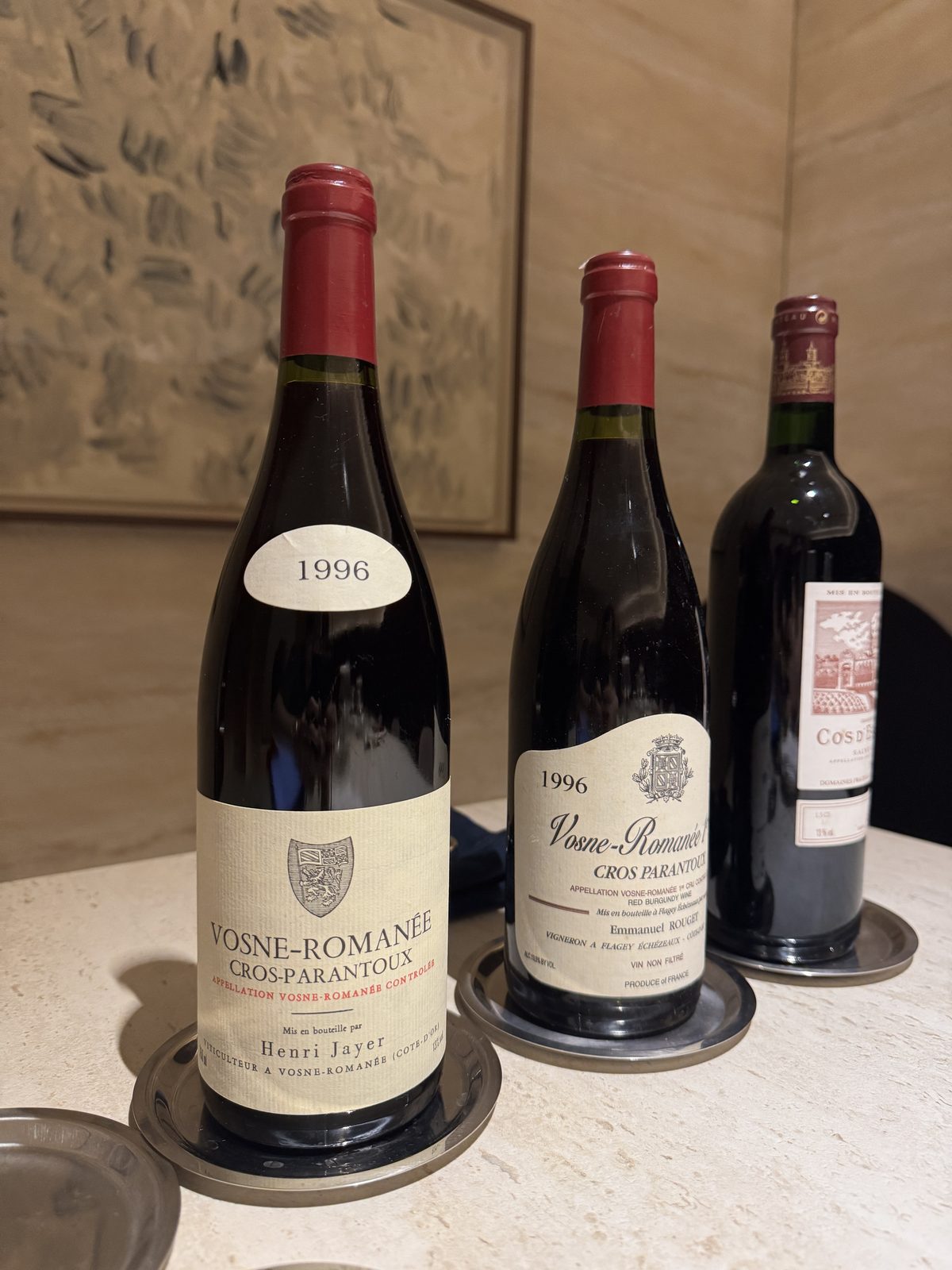
If Burgundy keeps one word in reserve for a single name, the word is legend and the name is Henri Jayer. And at the center of that legend sits Cros-Parantoux: a scrap of hillside above Richebourg that had gone feral through phylloxera and war — it grew Jerusalem artichokes during the Occupation — until Jayer began buying parcels in 1951, broke the hardpan with dynamite, and replanted. He did not bottle it under its own name until 1978. Barely a hectare of premier cru, and it now outprices most of the grands crus around it.
1996 is a peculiar hinge in the vineyard’s story. French pension rules were pushing Jayer to hand his vines to his nephew, Emmanuel Rouget, and for a stretch of years the same slope produced two labels in parallel — the master’s own bottling, and the student’s. Opening both 1996s side by side is a way of replaying the baton pass in the glass.
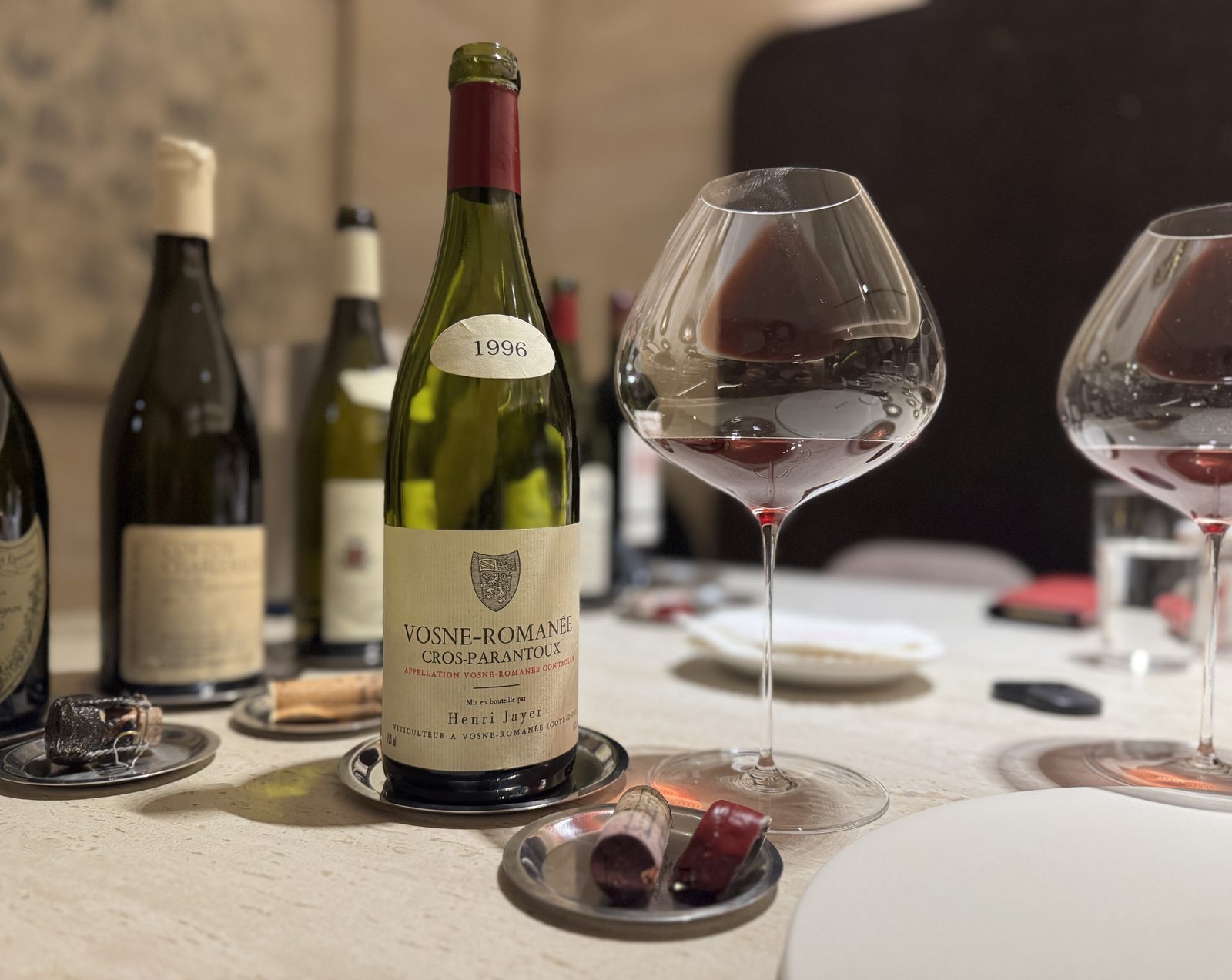
There is no way to talk about Jayer without talking about fakes. He is one of the most counterfeited producers on earth, the label archive is patchy enough that even genuine bottles get accused, and the forensics are beyond most of us. It is the main reason people hesitate to buy at all. This bottle sidestepped the problem: a wine club I belong to allocated a bottle that had come through Rouget’s own channel, so the provenance was never in doubt. That, I have come to think, is the only test that really means anything with Jayer — not the label under a loupe, but the chain of hands behind the bottle.
The wine itself was superb. Taut and upright on that 1996 acidity, yet elegant in the way the vintage rarely allowed — very much what the name promises. The Rouget alongside it spoke the same vineyard’s language honestly, and moving between the two glasses became a quiet game of guessing where the land ends and the person begins.
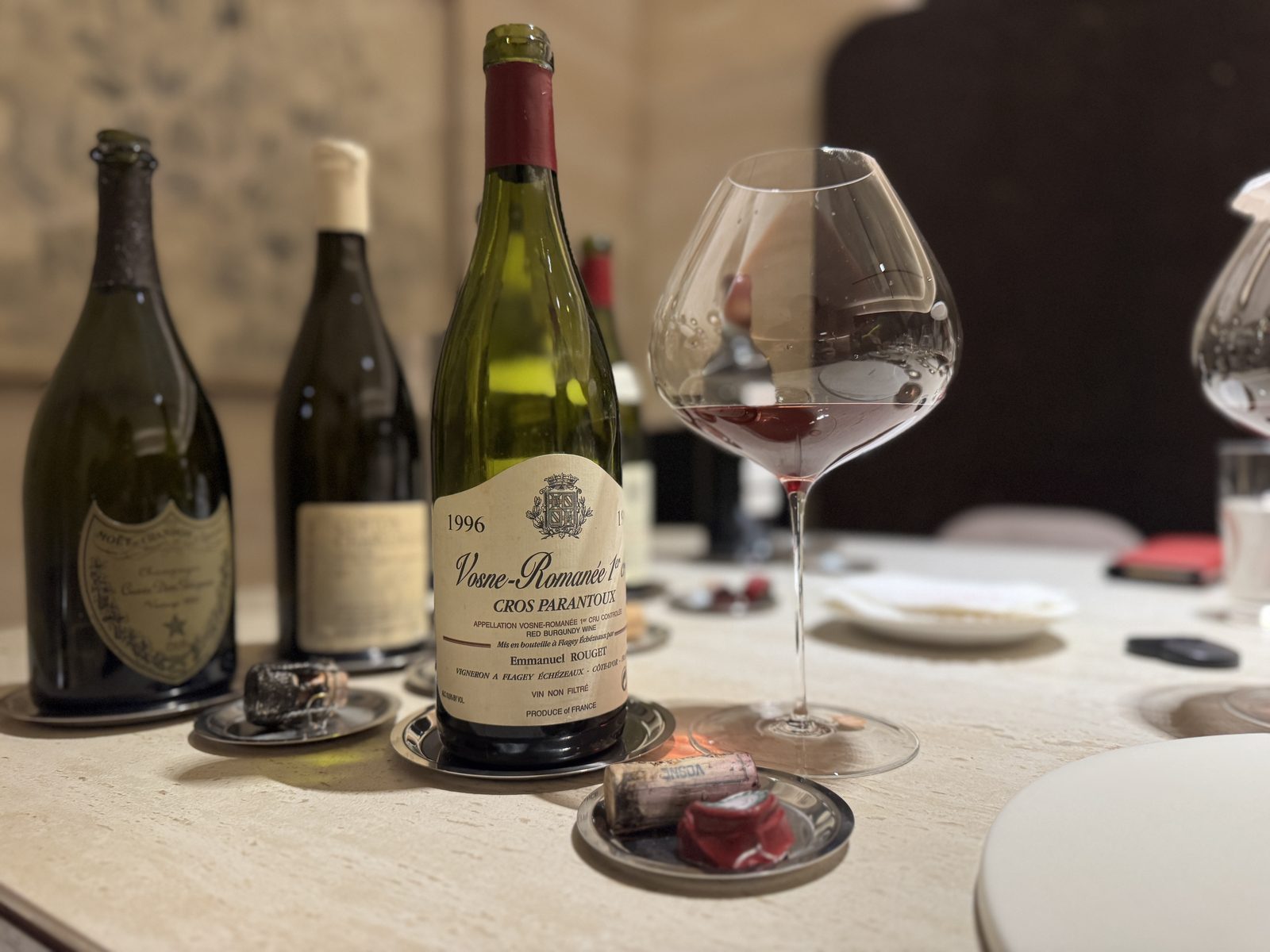
And yet, being honest: on taste alone, it is not so singular that the flavor fills the price. What you are paying for is scarcity and the experience itself. As the cost of an experience I can accept it — but add the real risk of buying a counterfeit, and the number becomes hard to justify. That is the sober conclusion.
Still — how many nights in a life do you get to set the master and the pupil side by side over the same dynamited hectare? This one will stay with me.