The Label Is the Witness
Vega Sicilia Único 1966 & 1976
- Producer
- Bodegas Vega Sicilia
- Appellation
- Ribera del Duero DO
- Grapes
- Tinto Fino, Cabernet Sauvignon, Merlot, Malbec
- Tasted
- 18 August 2025
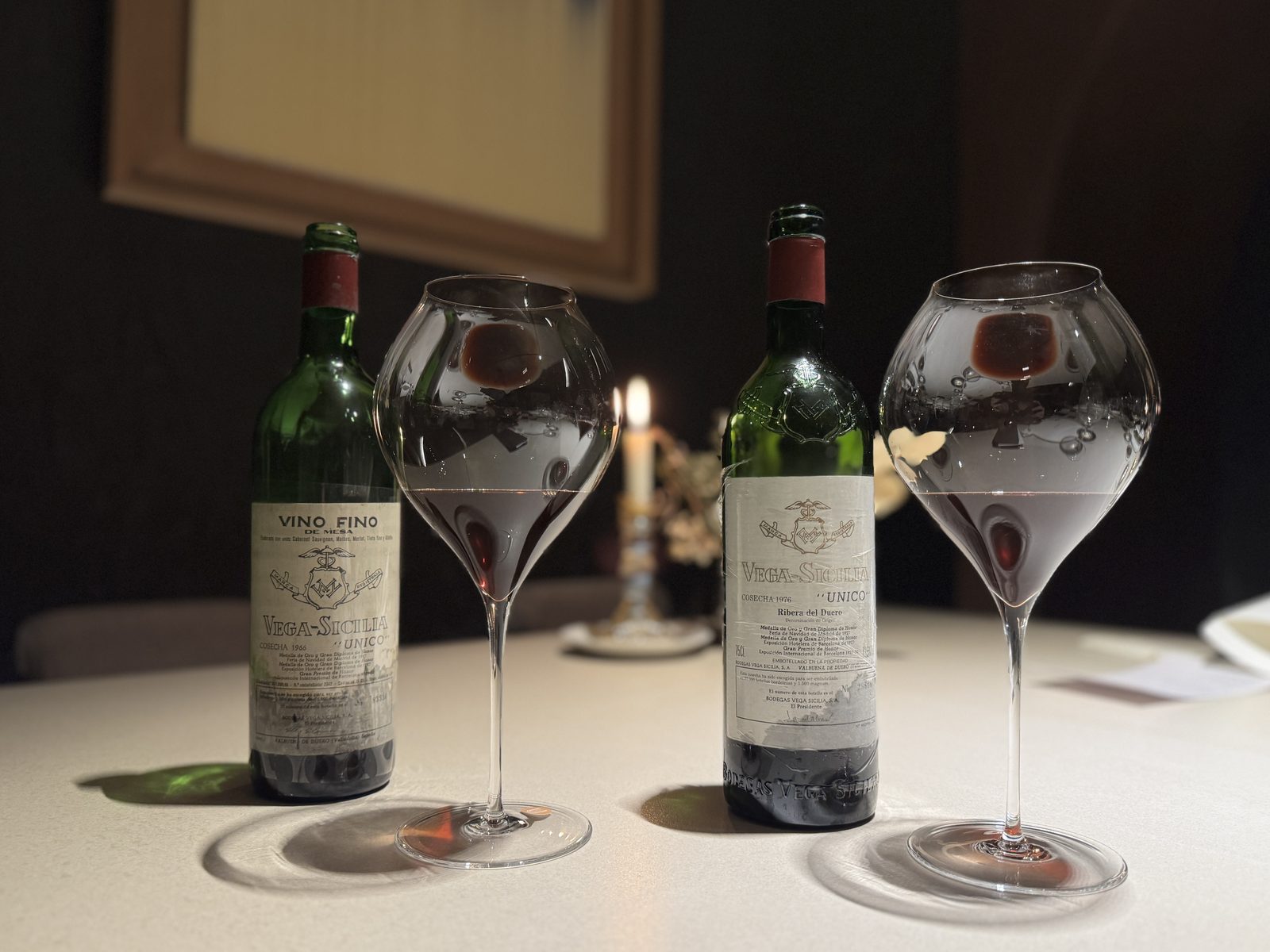
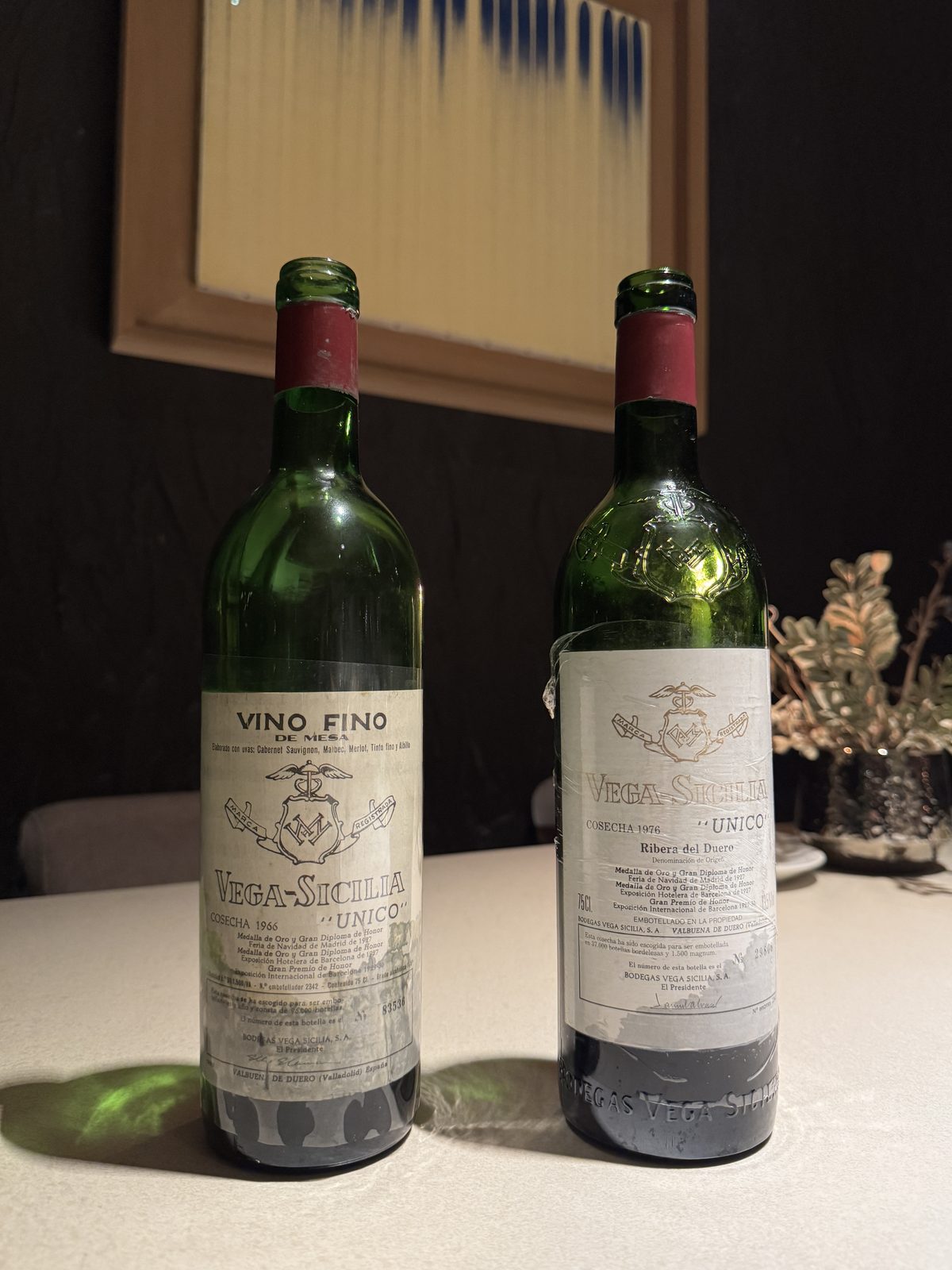
Set the two bottles side by side and read the labels. The 1966 announces itself only as VINO FINO DE MESA — fine table wine — because in 1966 there was no appellation to claim; Ribera del Duero would not exist as a Denominación de Origen until 1982. The 1976 bottle, by contrast, states it plainly: Ribera del Duero, Denominación de Origen. Somewhere between these two harvests — given that Único spends roughly a decade in the cellar before release — an entire wine region acquired its name. The labels are the witnesses.
Vega Sicilia itself predates the appellation by more than a century. Founded in 1864, when Don Eloy Lecanda y Chaves brought Cabernet Sauvignon, Merlot and Malbec cuttings from Bordeaux and planted them beside the native Tinto Fino, the house has kept essentially that blend as Único’s backbone ever since. The winemaking is an institution of patience: small barrels new and old, then vast old wooden vats, then bottle age — around ten years from harvest to release, an oxidative upbringing Vega Sicilia turned into a canon.
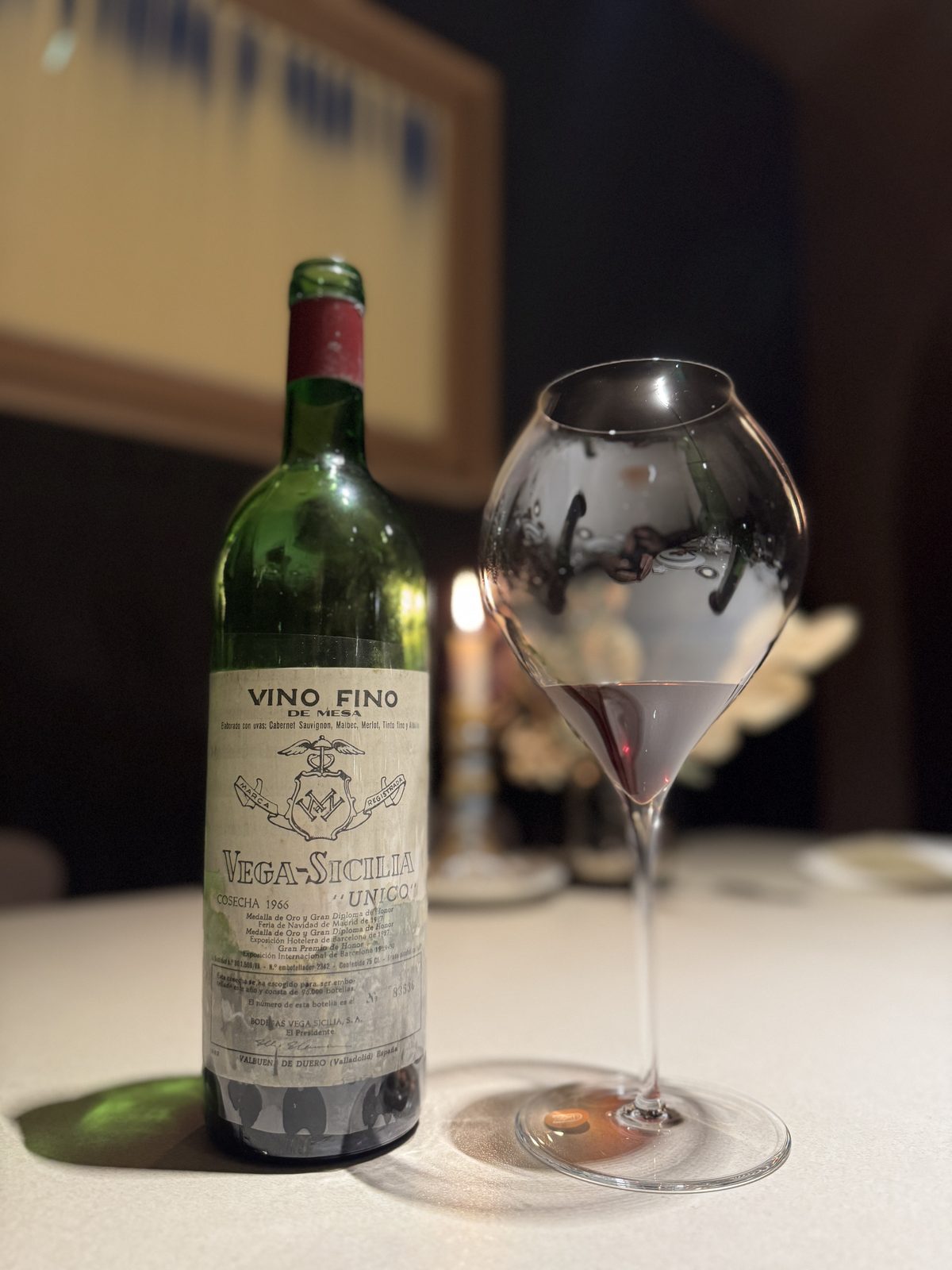
The 1966
Deep ruby fading to amber at the rim. Jammy black cherry opened first, backed by cedar, smoke and earth; dried red berries and fruitcake followed, with coffee on the finish. The body was full but velvet in texture — and the striking thing, at nearly sixty years, was the acidity still holding the line. This is the cooler, longer wine of the pair: cedar, earth and coffee, a fine drawn-out thread. Ninety-six thousand bottles were filled that year; this was number 83,536.
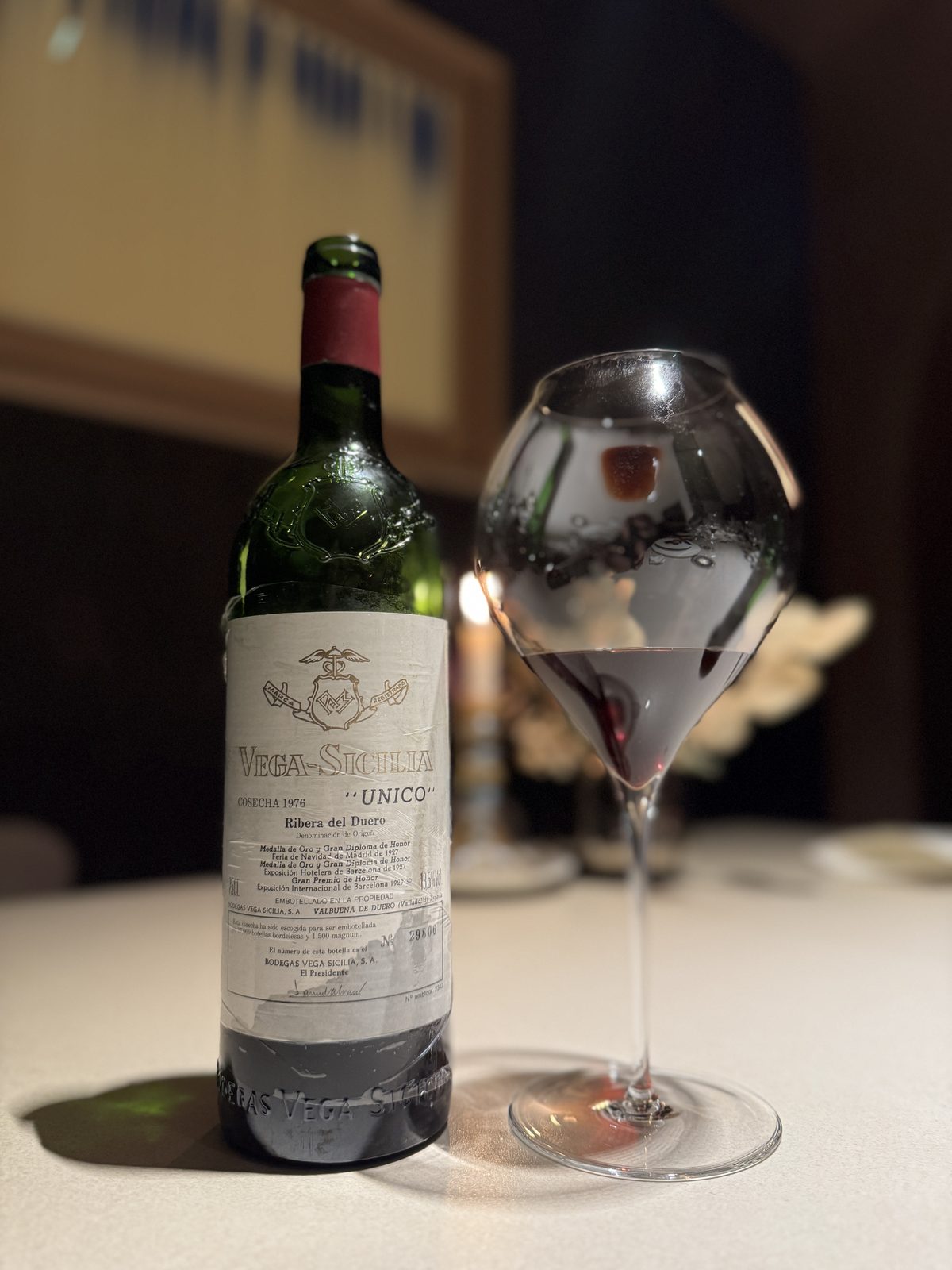
The 1976
Medium ruby-garnet with a bright brick rim. A hot year, and it says so: smoke and roast over jammy black cherry, vanilla oak, then anise, cinnamon, leather and dried flowers. In the mouth it is glycerol-rich and low in acid, layered and concentrated, the tannins dried to a fine powder. Where the 1966 stretches, the 1976 spreads — sweet, broad, warm.
Side by Side
What they share: the roasted, spiced signature of long oak, and a persistence of fruit that has no business surviving six decades. What divides them is temperament — the 1966 for a quiet table where the wine gets the evening to itself; the 1976 for food, ideally something roasted and Iberian, that can meet its width. Both are fully mature, in no hurry to collapse, but past the point where waiting buys anything. Ten years apart in age; a whole naming of a region between them.