Pinot from an Old Orchard
Domaine Takahiko Nana-Tsu-Mori Pinot Noir 2018
- Producer
- Domaine Takahiko
- Appellation
- Yoichi
- Grapes
- Pinot Noir
- Tasted
- 10 November 2025
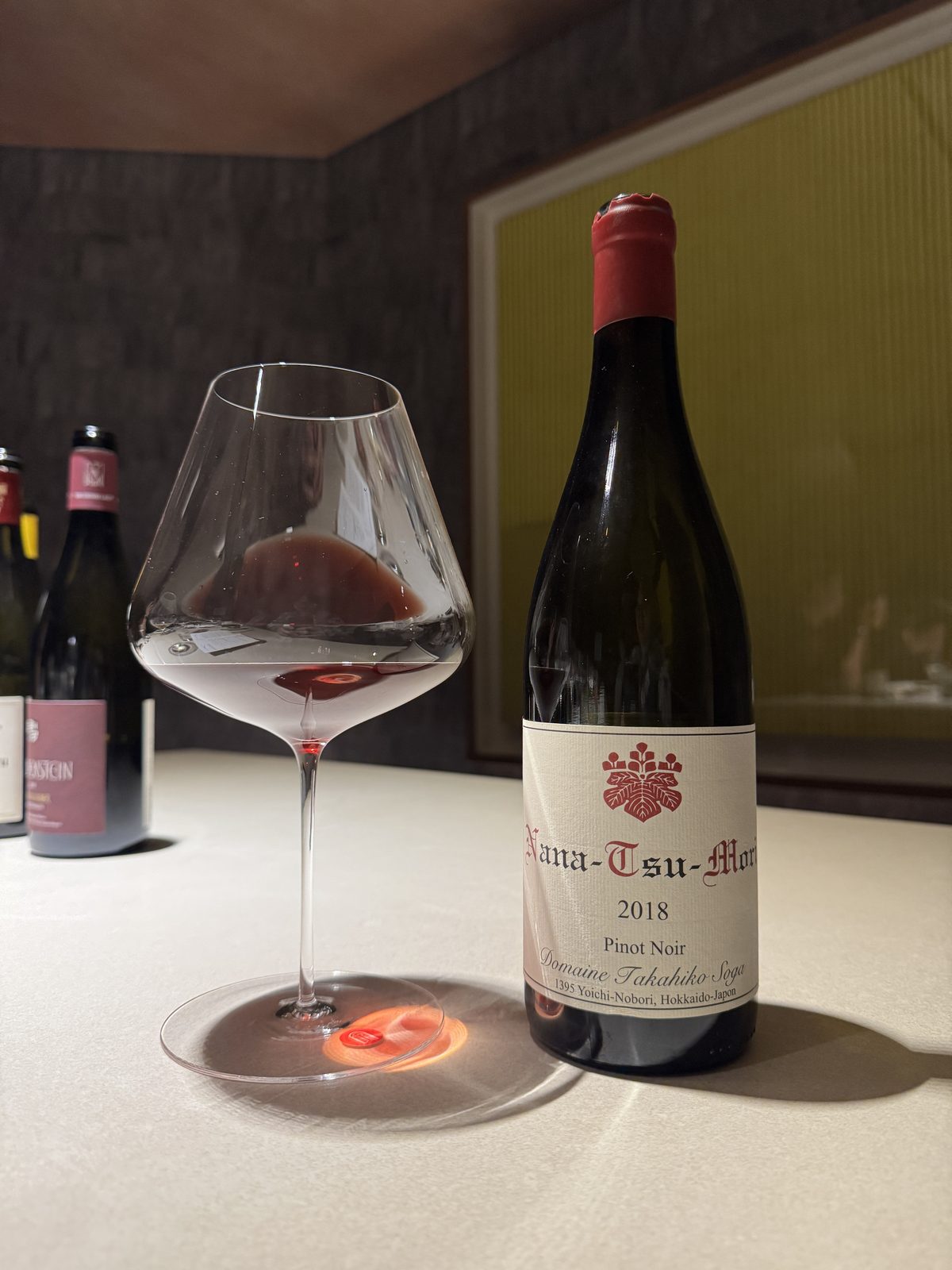
The vineyard’s name remembers what the land used to be. Nana-Tsu-Mori — “seven forests” — was once planted with seven kinds of fruit trees, apples and cherries among them, on the hills of Yoichi in Hokkaido. Where the orchard stood, about five hectares of Pinot Noir now grow.
Takahiko Soga came to this land by a long road: second son of the Obuse winery family in Nagano, trained in oenology in Tokyo, then ten years managing the farm at Coco Farm & Winery in Tochigi, where he saw through a goal of working entirely with Japanese-grown fruit before striking out on his own in 2010. Yoichi’s cool climate and long growing season have made it the most convincing address in Japan for Pinot Noir, and Soga farms it organically, ferments with wild yeasts, and intervenes as little as he can. His stated ambition is disarming in its clarity: not a big red, but a red that can sit at a Japanese table — a wine aimed at umami and mineral rather than at power.
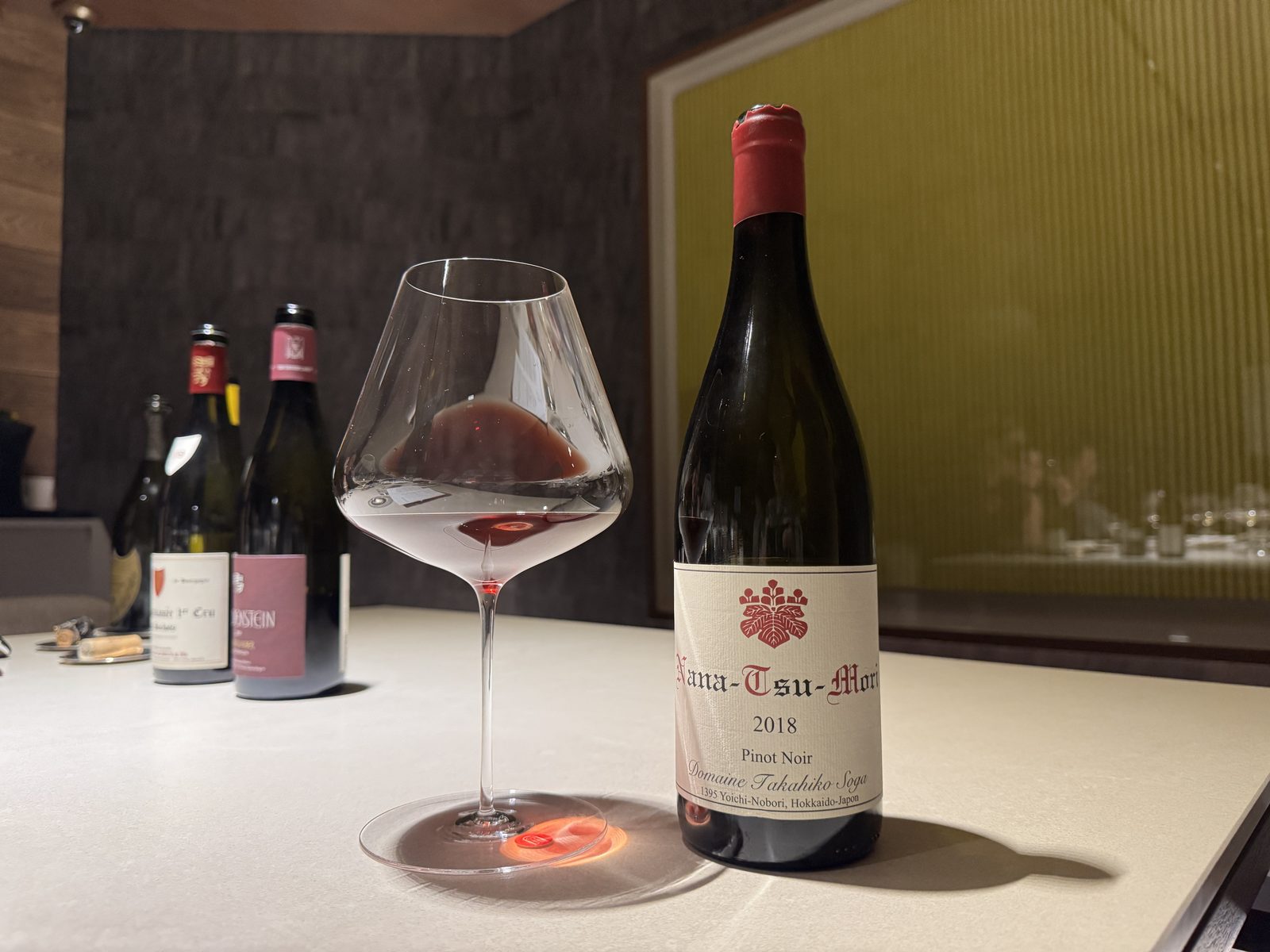
In the Glass
The 2018 opens on flowers — immediately, insistently floral — over a pale, luminous ruby that announces from the first glance that weight is not on the menu. The tannins are soft, the acidity high and bright, and beneath the fruit runs that promised seam of umami and mineral savour.
Honest notes from the table, in order. First: genuine surprise that Japan produces Pinot Noir at this level. Second: the wine kept calling Prieuré Roch to mind — that pale, perfumed, whole-bunch spirit — while at the same time tasting remarkably, unmistakably like Gamay. Third: it is not, in the end, my style of wine. But greatness and personal taste are different questions, and this is unarguably a serious, singular wine.
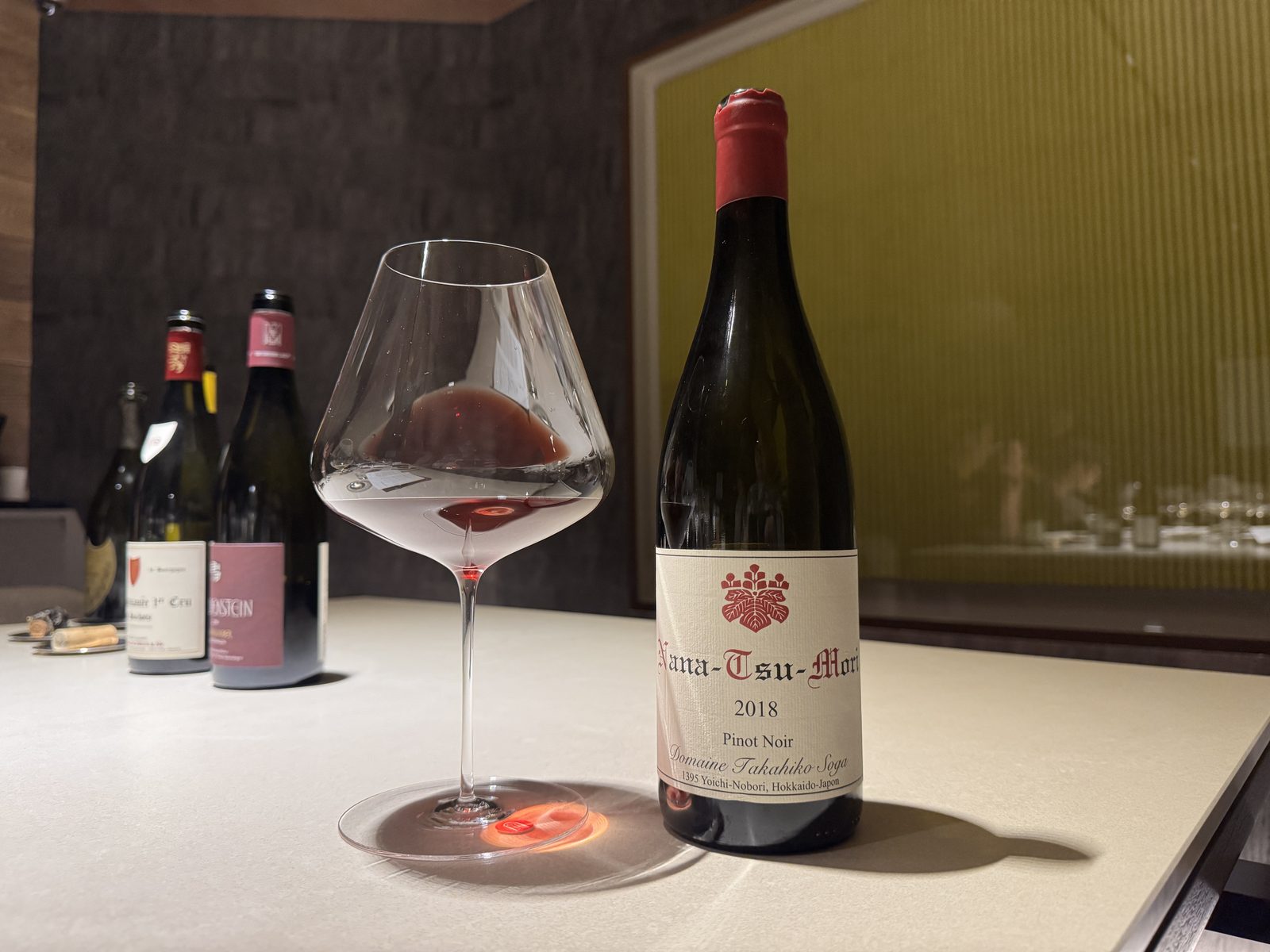
Production is small and demand from both inside and outside Japan makes bottles genuinely hard to find. The 2018 drinks well now; whether it wants years more is a question I’d rather leave open than force. What is certain is that a former orchard in Hokkaido is now growing a wine the rest of the Pinot world has to reckon with — on its own terms, in its own accent.