The Year the North Wind Saved
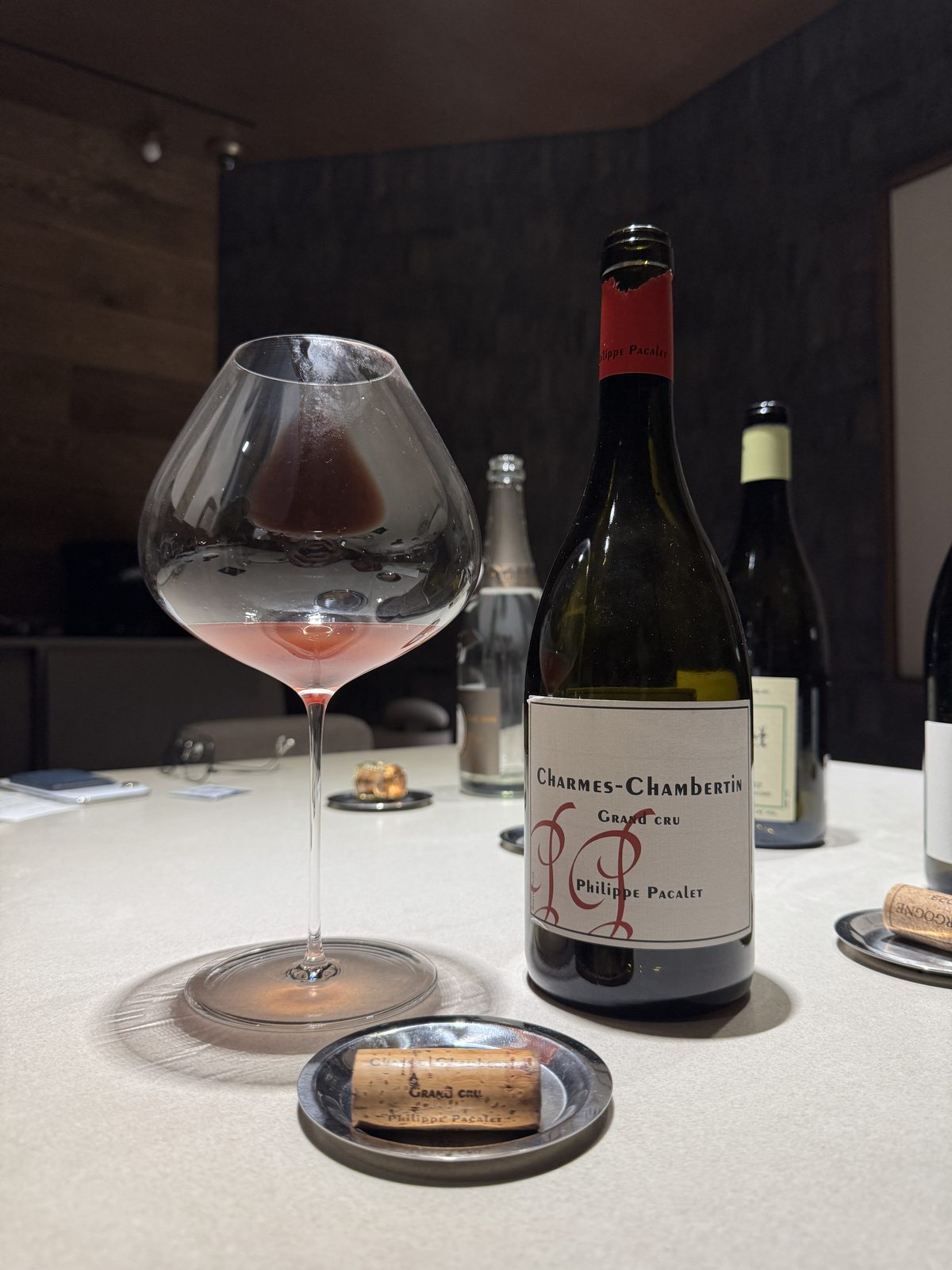
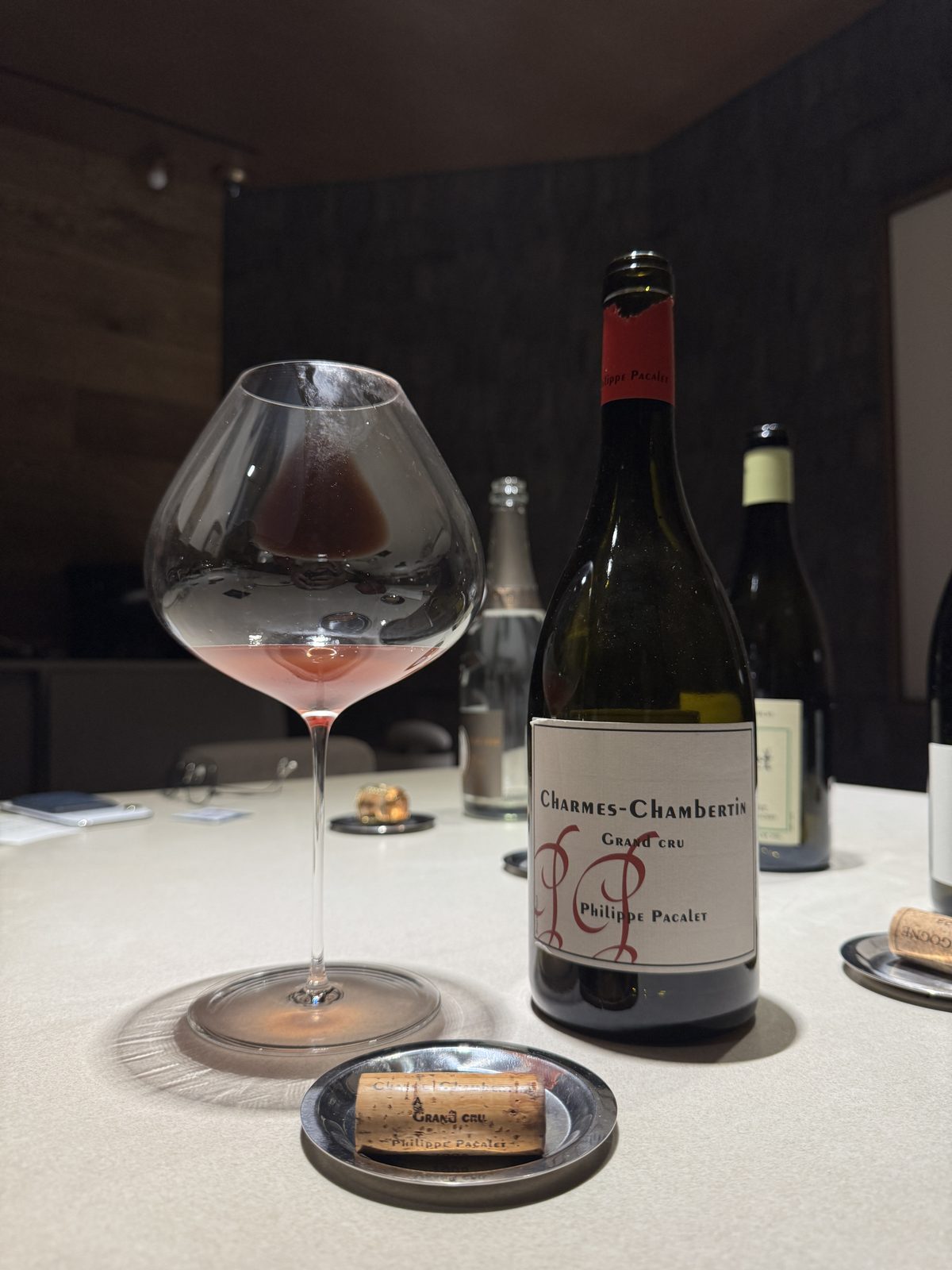
Philippe Pacalet Charmes-Chambertin Grand Cru 2008
- Producer
- Philippe Pacalet
- Appellation
- Charmes-Chambertin Grand Cru
- Grapes
- Pinot Noir
- Tasted
- 22 June 2026
Philippe Pacalet’s biography reads like a genealogy of natural wine. Born into a Beaujolais family that has made wine since the eighteenth century, nephew of Marcel Lapierre, he spent three years researching wild yeasts with Jules Chauvet — the movement’s intellectual godfather — before stints at Domaine Leroy and Château Rayas. Then, from 1991, came the decade that shaped him: estate manager and winemaker at Domaine Prieuré-Roch in Nuits-Saint-Georges, pushing organic farming, whole-cluster fermentation, native yeasts and sulphur-free winemaking when Burgundy still considered all of it heresy.
In 2001 he founded his own house on an unusual premise: buy no vineyards. Instead of chasing Côte d’Or land prices, Pacalet leases parcels on medium-term contracts and buys the fruit he farms — a négociant’s structure with a grower’s hands. Whole bunches, wild yeasts, three to four weeks in wooden vats trodden by foot, sulphur avoided wherever possible. Charmes-Chambertin sits alongside Corton-Charlemagne, Échezeaux and Ruchottes-Chambertin at the top of his range.
The Miracle Vintage, With an Asterisk
2008 is remembered as the year the wind saved. A cold, damp summer brought coulure, millerandage and creeping rot — and then, from the second week of September, a dry north wind blew at up to sixty kilometres an hour, halting disease and drying the grapes on the vine. Growers who held their nerve into late September and October were rewarded.
But it remains a divisive year. The concentration came from wind, not full physiological ripeness, so acid runs high while phenolics in many bottles stayed lean and angular. The settled verdict: in 2008, judge the producer, not the vintage. And for a producer who never pushes extraction — who builds wine on aroma and texture rather than muscle — that high acid stops being a flaw and becomes the spine.
In the Glass
The colour told you whose cellar this came from before the first sniff: very pale ruby, almost rosé-toned — the natural complexion of whole-cluster, low-extraction Pinot. The wine moved on perfume and texture, red berries threaded with the herbal, spiced lift of stems, the 2008 acidity running straight and bright underneath to a clean, linear finish. A slender, upright wine in a vineyard better known for flesh.
At eighteen years, this was a bottle in its drinking window, not its waiting room — 2008 was never a year for long cellars. It closed a dinner that had opened with Ramonet’s Montrachet and Cristal Rosé Vinothèque: a quiet, wind-thin grand cru after two monuments, and no less memorable for it.