The Widow and the Newcomer
Pétrus 1959 vs Château Le Pin 1986
- Producer
- Pétrus / Château Le Pin
- Appellation
- Pomerol
- Grapes
- Merlot
- Tasted
- 16 July 2026
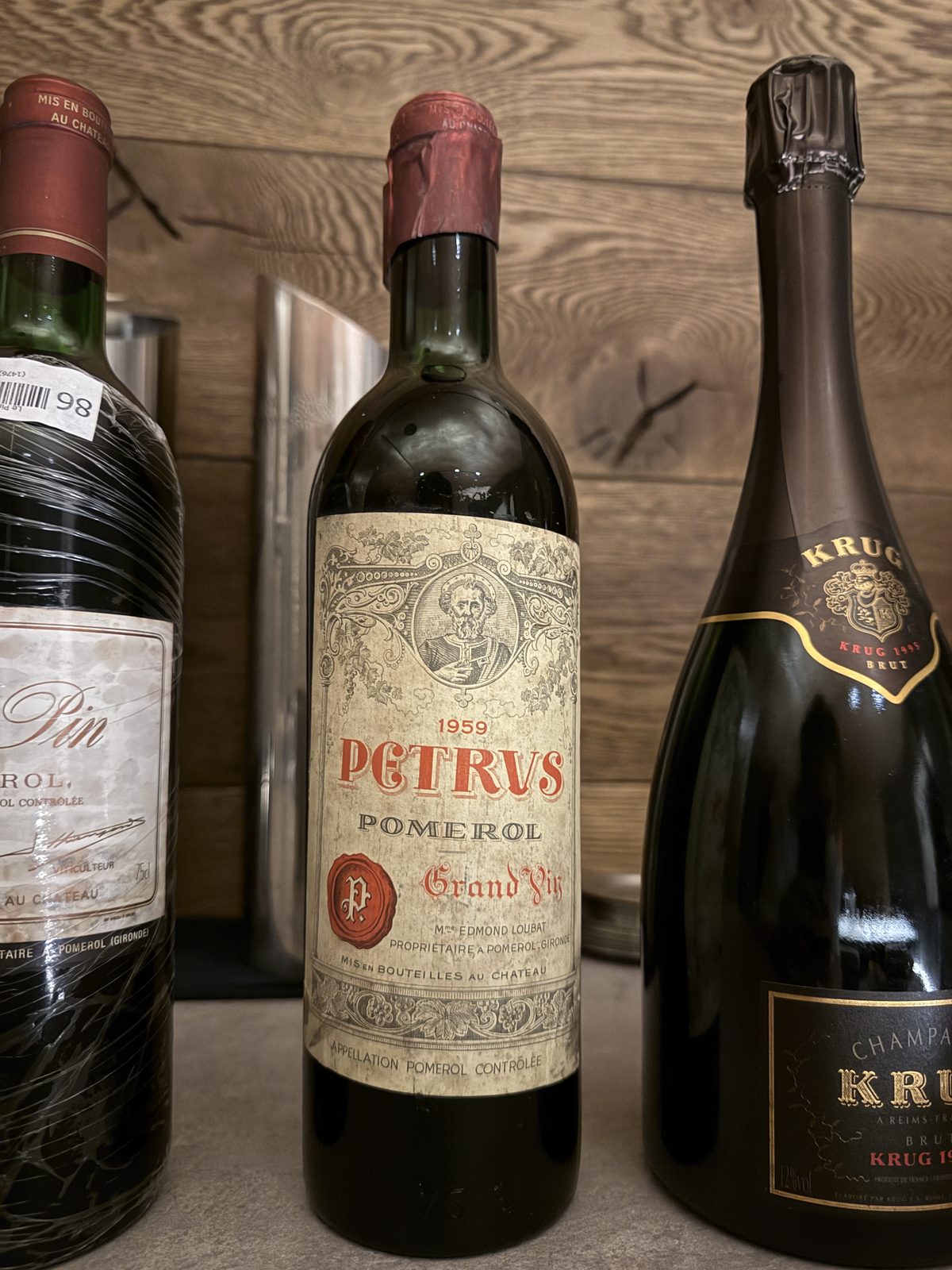
Pomerol has never had a classification. No 1855 ladder, no grand cru paperwork — the pecking order was written entirely by people, and for most of a century the top line has read Pétrus, with Le Pin arriving in the 1980s as the only wine ever to talk its way onto the same shelf. Getting both on one table is rare enough. Getting them as the 1959 and the 1986 felt like being handed the whole history of the appellation in two glasses.
Her Name on the Label
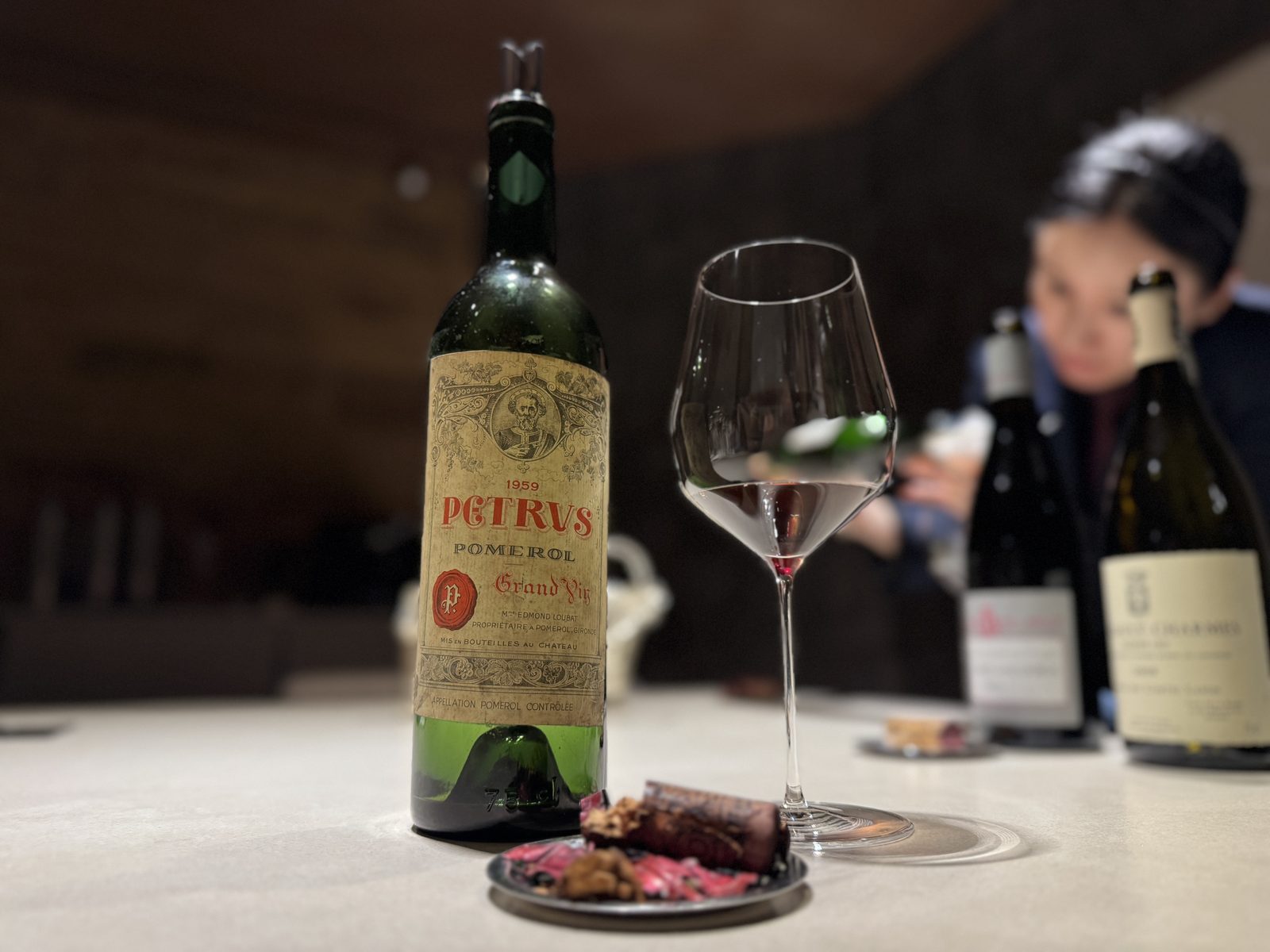
The Pétrus label carries a name you will not find on any modern bottle: Mme Edmond Loubat, propriétaire à Pomerol. Madame Loubat, a hotelier from Libourne, spent decades assembling the estate and ran it alone until her death in 1961 — before the Moueix family, who had handled the selling since the forties, came to own it. She priced Pétrus level with the Médoc first growths at a time when Pomerol was still considered the countryside, and carried her bottles into Paris and London society to make the point in person. Much of what Pétrus is today began as her stubbornness.
The 1959 has a second story folded inside it. In February 1956, a catastrophic frost killed most of Pomerol’s vines. The textbook response was to rip out the dead wood and replant young. Madame Loubat instead had her old vines cut back to the stump, gambling that the ancient roots would push again. They did. Three years later came one of the legendary warm vintages of the century, and this bottle.
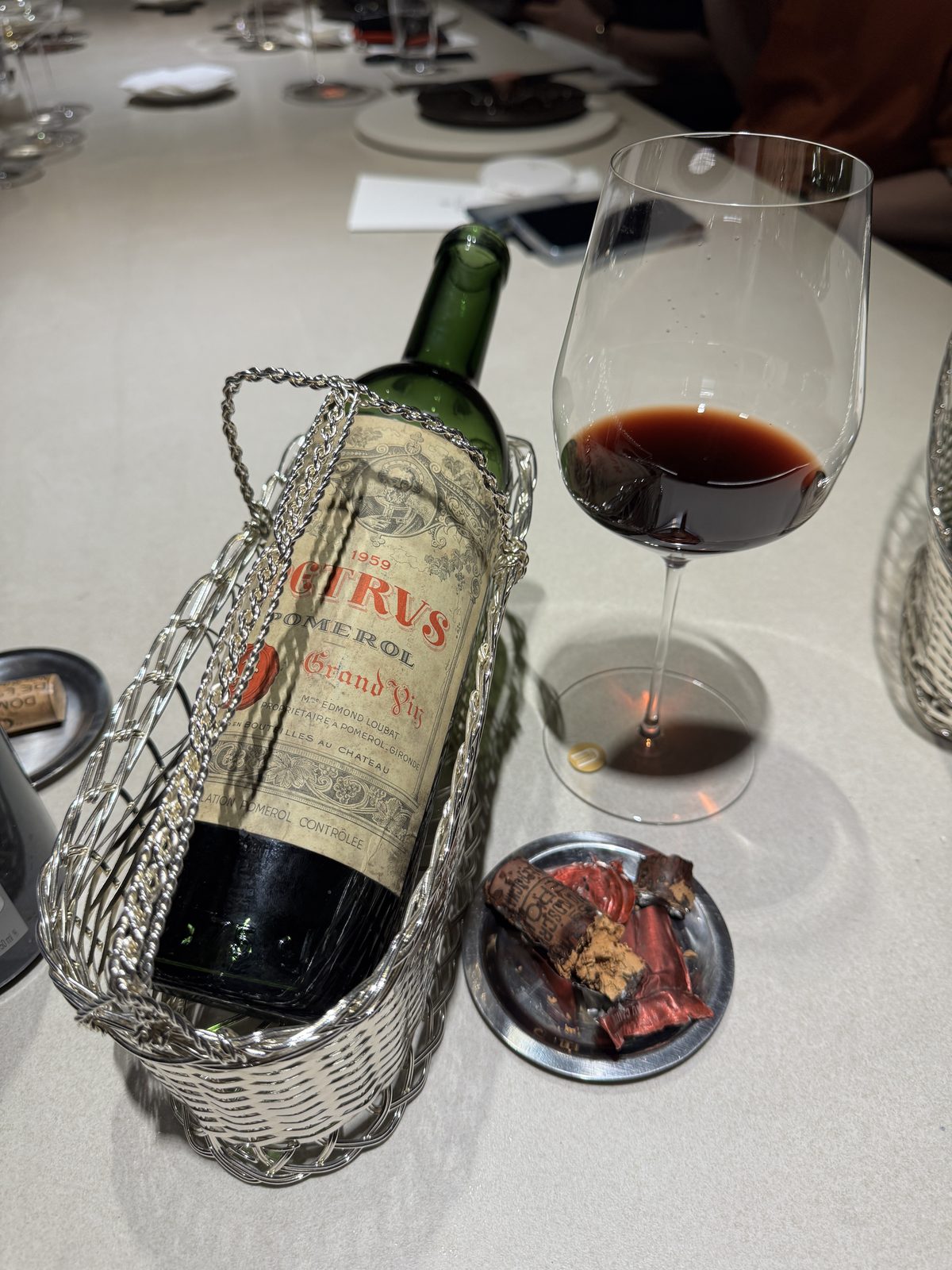
A sixty-six-year-old wine is always half a gamble, and this one made the gamble look foolish. The rim showed brick; the core was still a healthy garnet. Ripe plum and fig sat in front — in front, at that age — with truffle, cedar, tobacco leaf and dark chocolate layered behind. The tannin had dissolved into pure texture, and the acidity still held the spine straight through the last glass. Nothing about it was fading; it was simply finished, in the way a long sentence finally lands.
The Farmhouse Across the Plateau
Le Pin is the counter-narrative. In 1979 Jacques Thienpont, from a Belgian family of wine merchants, bought a hectare or so of vines around a single pine tree, with a farmhouse too modest to call a château. A few hundred cases a year, essentially all Merlot, no classification and no history — and within a decade the critics’ enthusiasm had pushed its price alongside Pétrus. Every garage wine and micro-cuvée that followed, on either side of the Atlantic, walks a road this property paved.
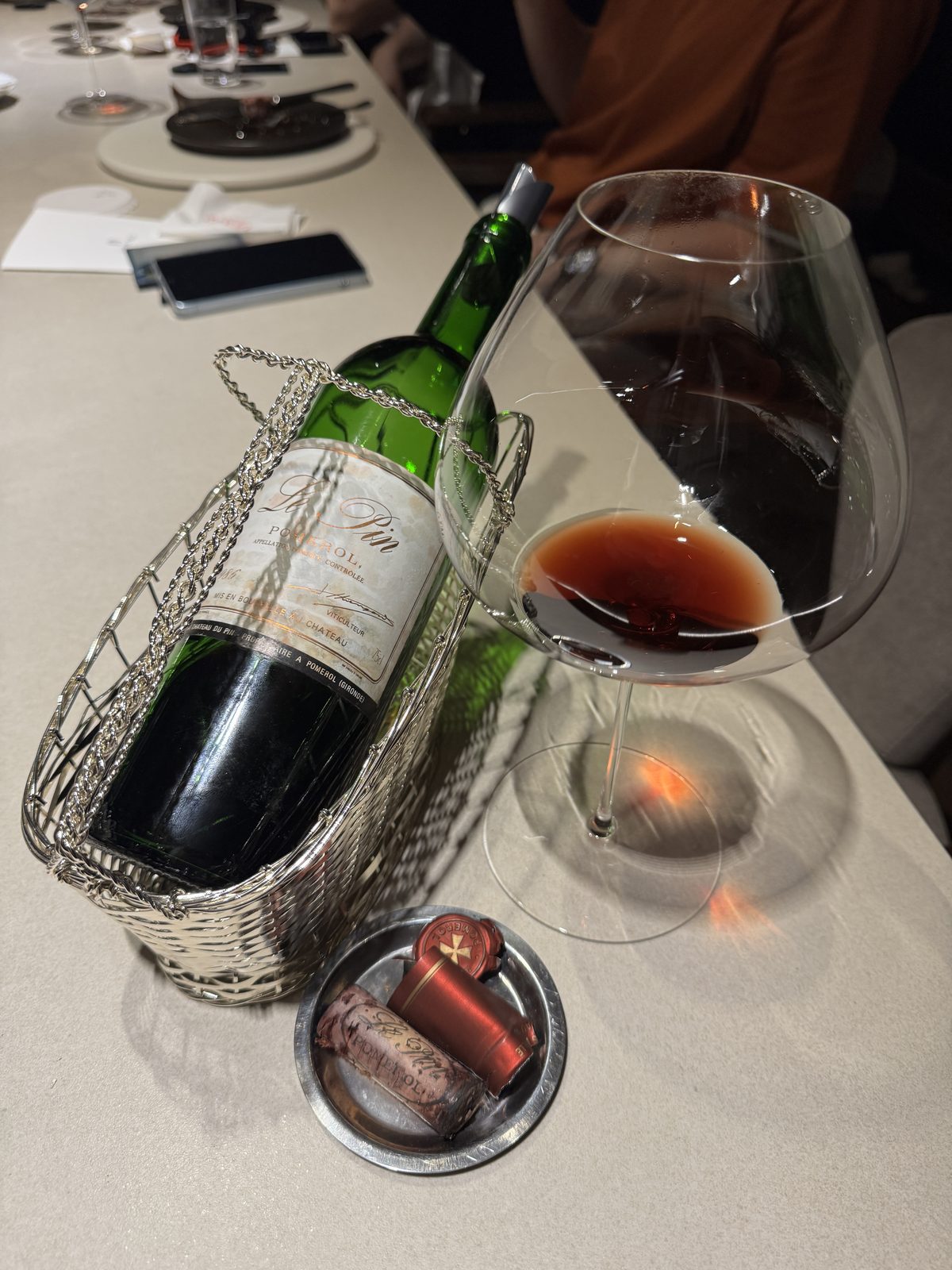
The 1986 was only the eighth vintage ever made here. It is remembered as a Cabernet year, a structured year, and the wine wears that character openly: licorice, damp earth and black cherry over truffle and vanilla, with the frame standing ahead of the flesh. This is not the opulent, exotic Le Pin of the ripe vintages — it is a Le Pin standing at attention, and there is something quietly precious about meeting it in that posture.
The Reversal
The comparison ran exactly backwards from expectation. The sixty-six-year-old wore velvet; the thirty-nine-year-old stood the straighter of the two. Age in wine is not the number on the label — it is the temperament of the year, and the two bottles made the argument better than any book. Neither was a minute too old. The Pétrus, if anything, was precisely on time.
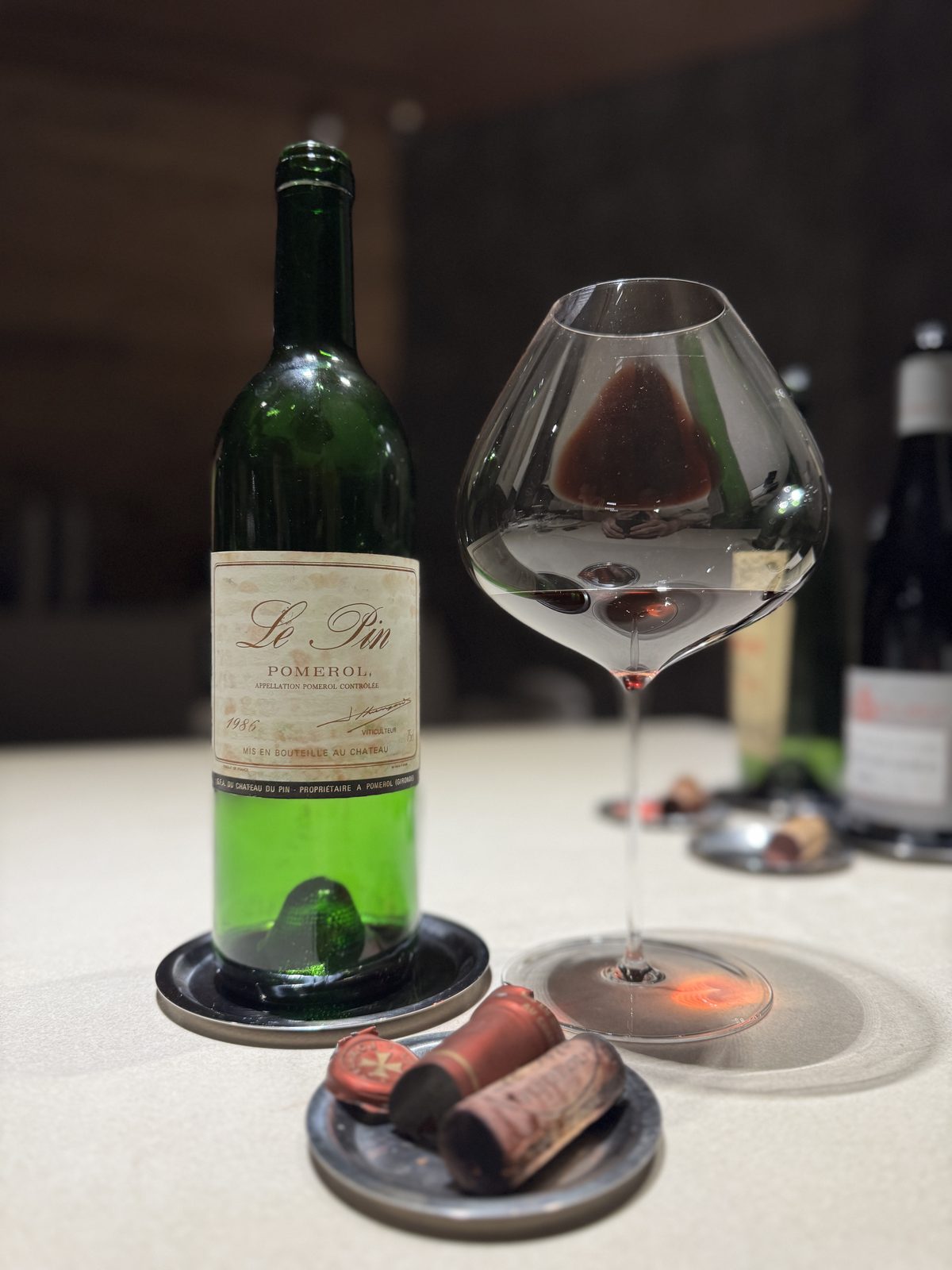
There were Champagnes and a white Burgundy on the table that evening — good company, other stories. But the night belonged to Pomerol: from the widow who refused to sell her wine cheap, to the newcomer who proved her point a generation later.