The Bonnes-Mares from the Morey Side
Domaine Dujac Bonnes-Mares Grand Cru 2007
- Producer
- Domaine Dujac
- Appellation
- Bonnes-Mares Grand Cru
- Grapes
- Pinot Noir
- Tasted
- 5 August 2026
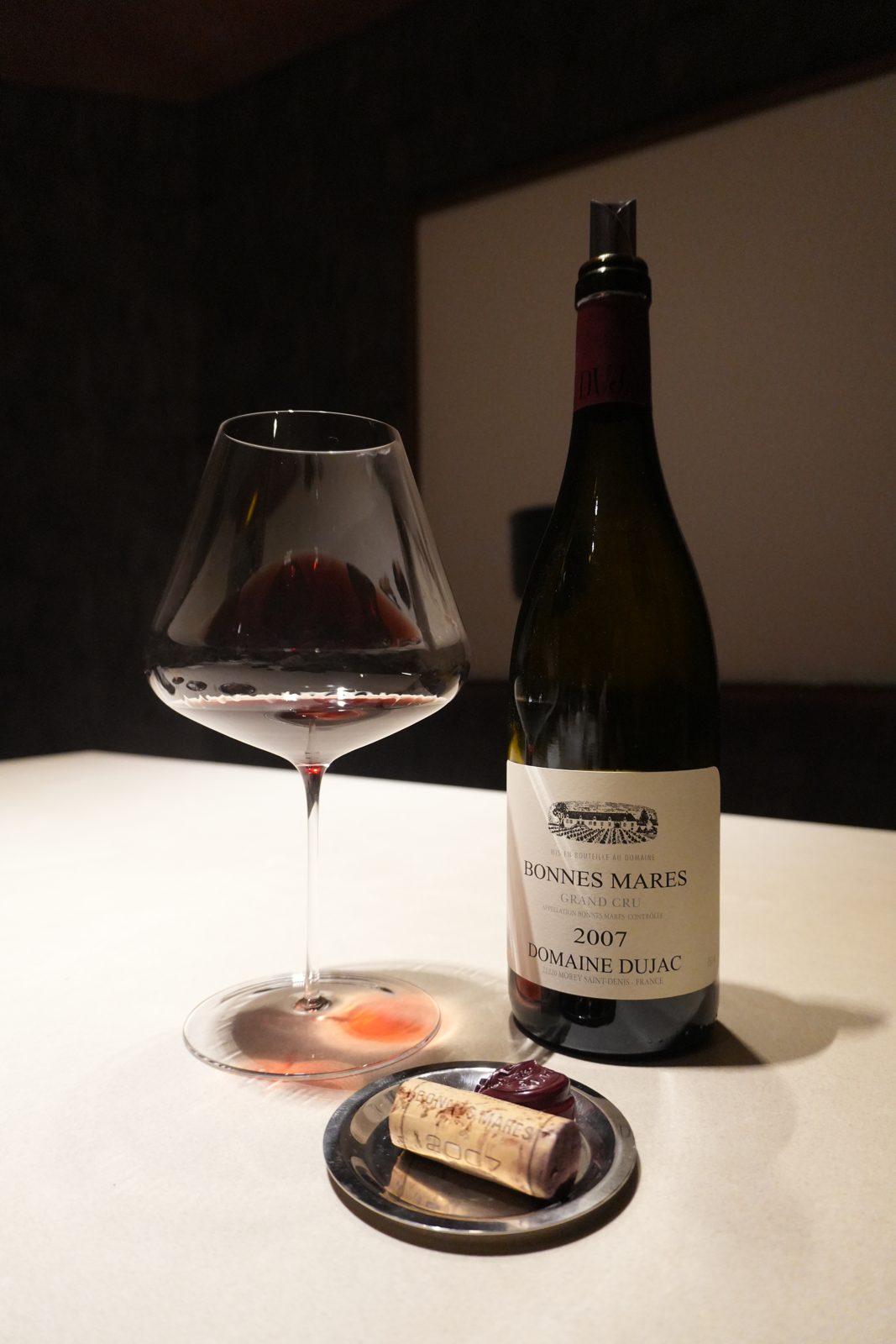
Bonnes-Mares is usually spoken of as a Chambolle-Musigny wine, and for the most part it is: of the grand cru’s fifteen hectares, more than thirteen lie in Chambolle. But the vineyard doesn’t stop at the commune line. A last strip of about a hectare and a half runs over into Morey-Saint-Denis, and that is exactly where Domaine Dujac’s parcel sits — just south of Clos de Tart, a fact the label never tells you.
It suits the house. Jacques Seysses founded Dujac in 1967 by taking over a small Morey-Saint-Denis estate, and the domaine has been anchored in that village ever since. A Morey domaine making the Morey end of Bonnes-Mares feels less like a coincidence than a homecoming. Growers have long observed that the closer you get to the Morey side, the more muscle the wine picks up.
The Stems, and a Family Signature
Under Jacques, Dujac was famous for fully whole-cluster fermentation and generous new oak. From the late 1990s his son Jeremy began to dial the stems back, cuvée by cuvée — not out of fashion, but because he wanted the vineyard to speak before the family style did. The house signature is still there, that perfumed, gently wild aromatic lift, but it now sits on top of the terroir rather than in front of it.
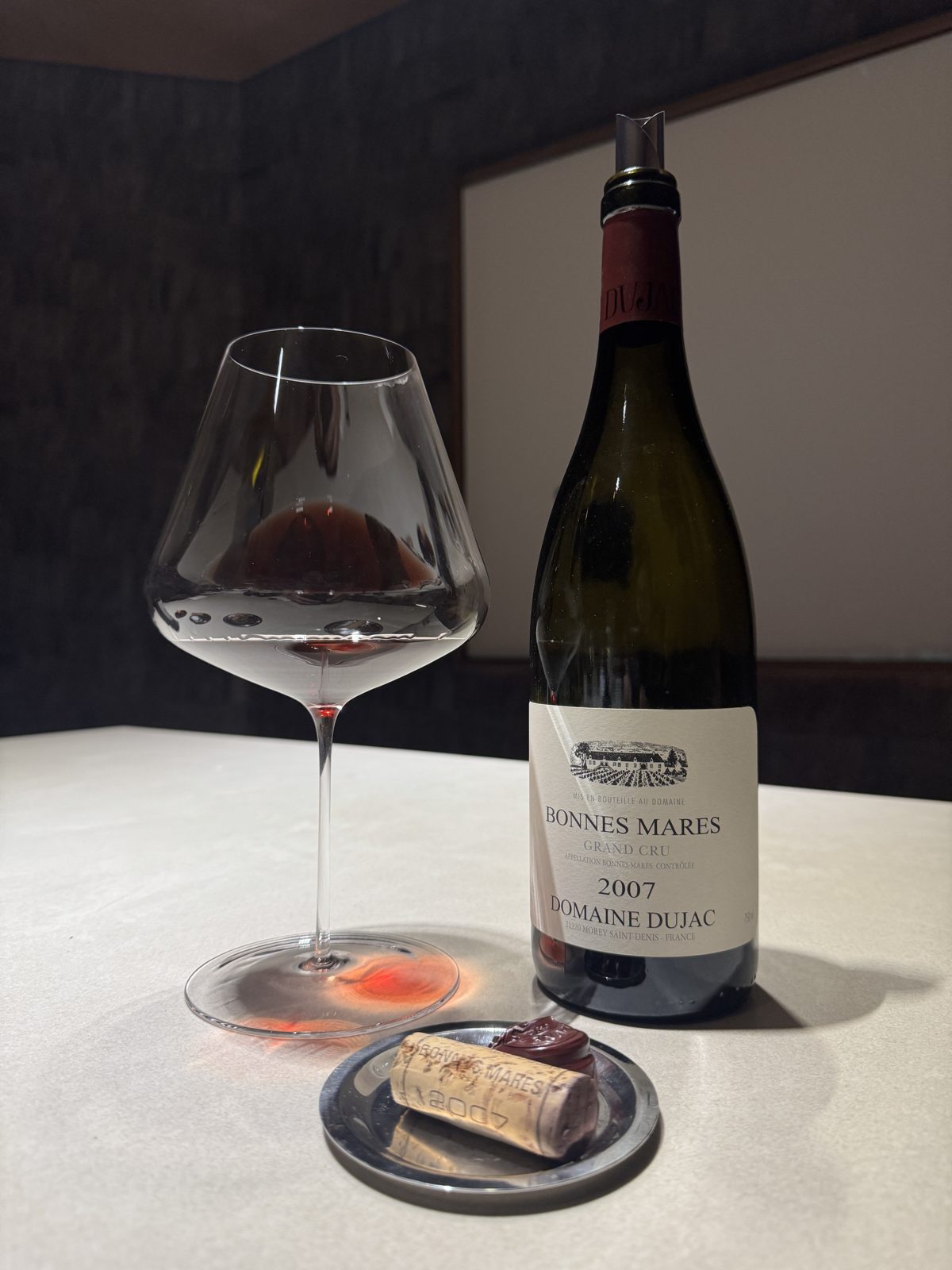
2007 was a nervous vintage in Burgundy: a warm April, then a grey, cool summer that had everyone worried, rescued late by a dry north wind in the final stretch. Harvest came unusually early, and the reds of the Côte de Nuits turned out aromatic, light-framed, and approachable young — a vintage most people drank early rather than cellared.
In the Glass
At nineteen years, this bottle made a quiet case for patience. The nose opened on dark wild berries wrapped in a resinous, herbal edge, then unfolded with air into sous-bois and a faint gamey warmth — mature Burgundy in full voice, but with no fatigue in it. The palate is not built on weight at all: fine-grained tannin, neat red cherry and strawberry fruit, a brush of blueberry, and then — the surprise — a stony, mineral grip that tightens the finish more firmly than the vintage’s easy reputation would suggest.
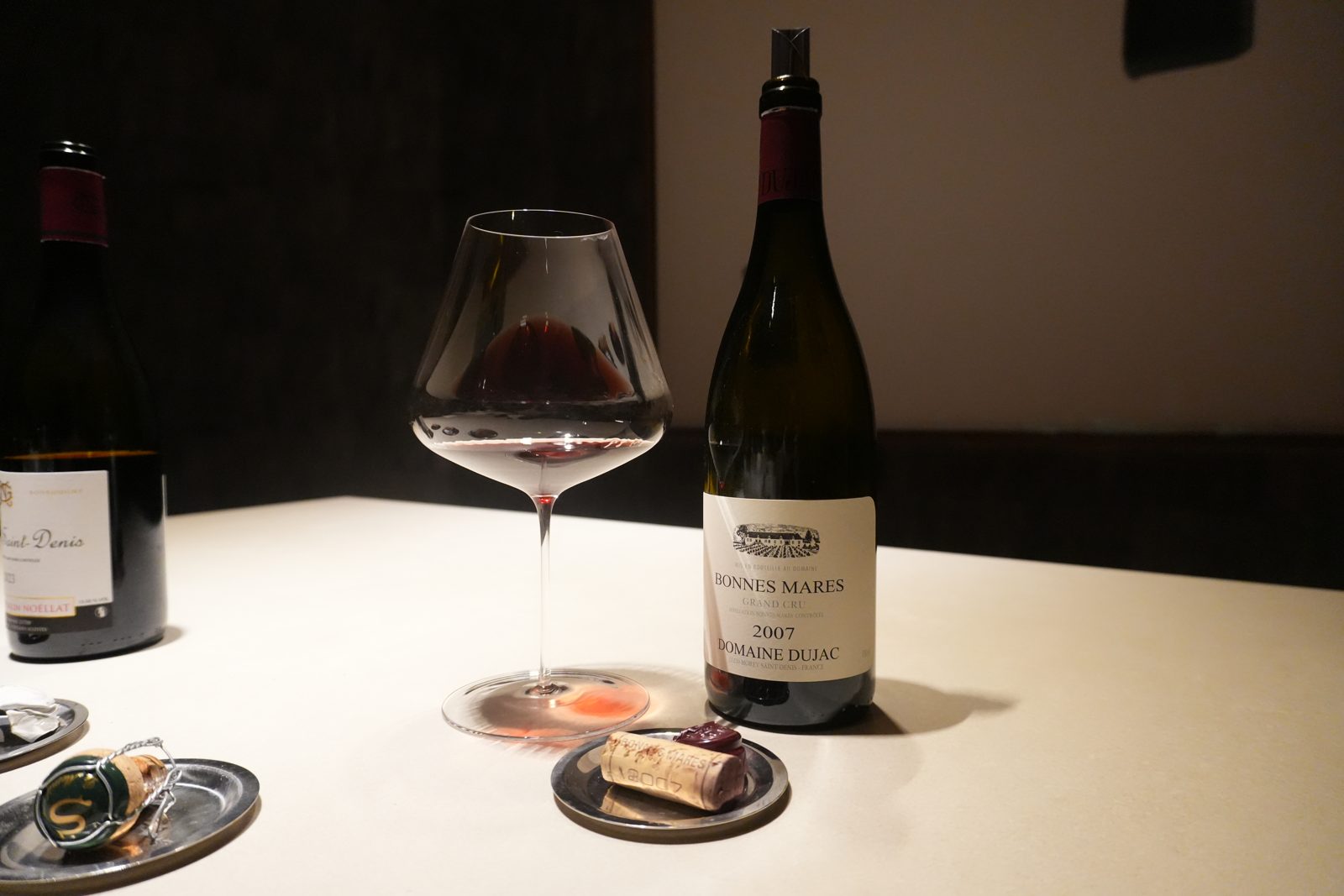
2007 was billed as an early drinker, but the serious bottles asked for eight to ten years, which put the opening of the window around the mid-2010s. In 2026 the wine is squarely in its drinking plateau, open and expressive, with the reserve of a true grand cru still held in the mineral spine. No rush — but no reason to wait, either.