The First White
Ornellaia Bianco 2013 (Toscana Bianco IGT)
- Producer
- Tenuta dell'Ornellaia
- Appellation
- Bolgheri
- Grapes
- Sauvignon Blanc, Viognier
- Tasted
- 12 August 2026
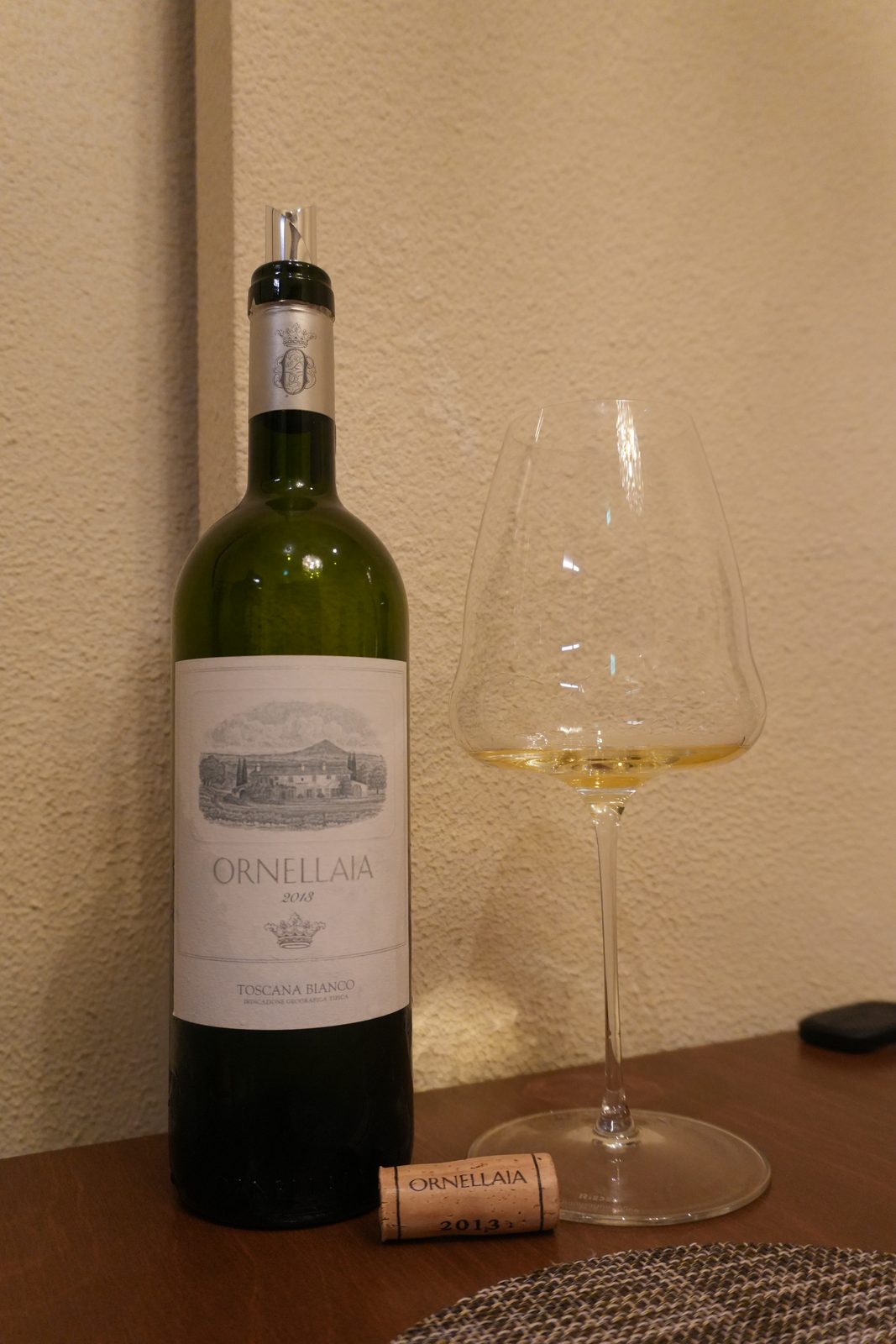
Say Ornellaia and people think of red. The Bolgheri Superiore is the reason the estate exists in the public mind, and for a long time everything else it made was a footnote to that one wine.
But the house has a white history of its own. For years it grew Sauvignon Blanc for a wine called Poggio alle Gazze, and that experience is the root from which the Bianco eventually grew. Ornellaia Bianco was not a white conjured out of nowhere; it was the estate’s existing white lineage rebuilt at the top level.
Four Thousand Bottles
2013 is the first commercial vintage of the cuvée. The blend is 70 percent Sauvignon Blanc and 30 percent Viognier, and roughly 4,000 bottles were made. For an estate of Ornellaia’s scale, that is a trial run — a number that says “let’s see” rather than “here is our new flagship.”
The winemaking does not read like a trial run at all. Each variety was fermented separately in barrique, about 30 percent of it new. There was no malolactic fermentation. The wine then sat on its lees for up to eighteen months with occasional bâtonnage, moved to stainless steel for a final three months, and was blended and bottled.
The detail that matters is the absence of malolactic. Skipping it keeps the sharp malic acidity intact; the long lees contact adds texture without softening that spine. This is not how you make a white to be drunk within a few years. It is how you make a white you expect to open a decade later and still find standing.
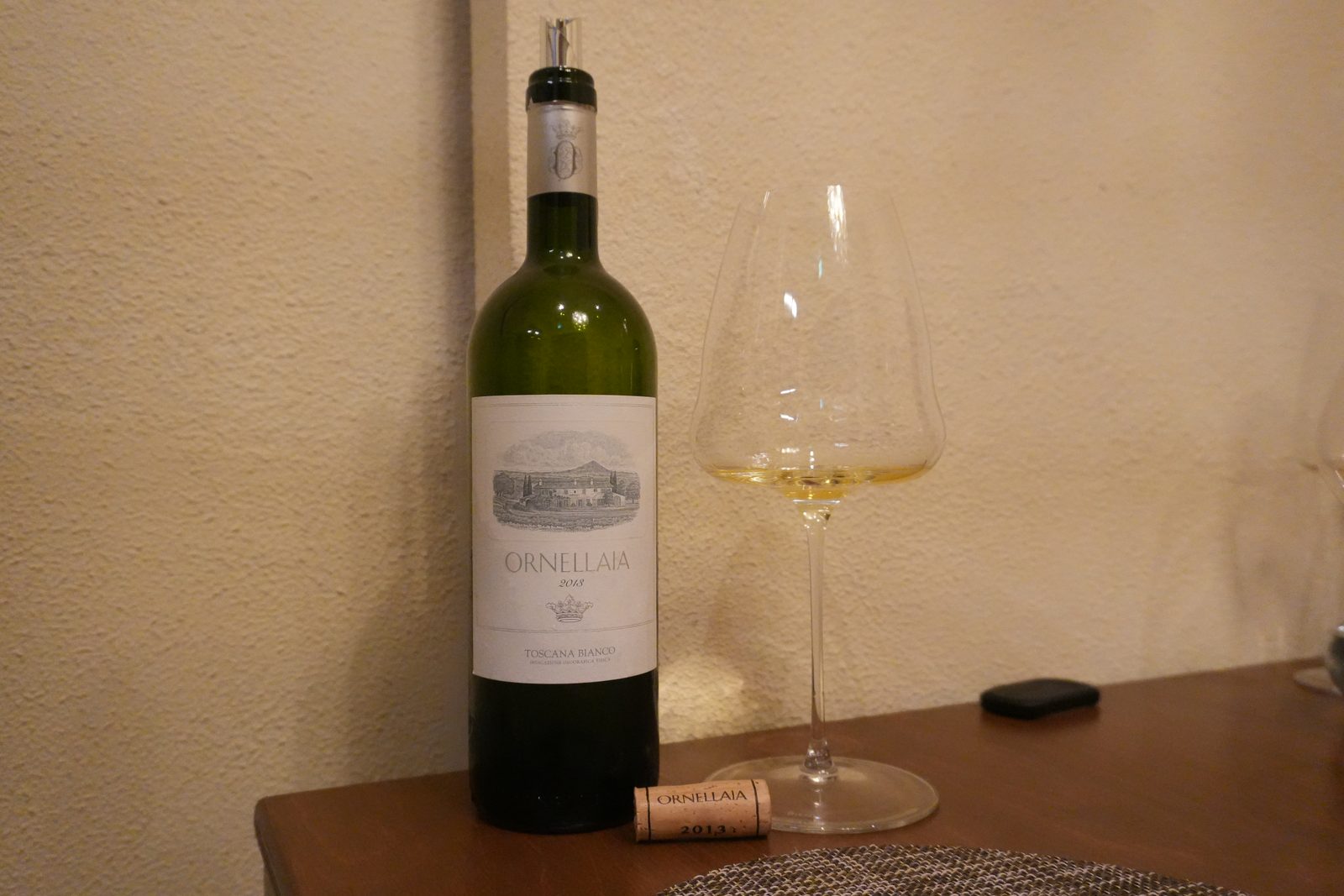
Thirteen Years On
The colour had already moved to a deep gold, with only a faint green edge remaining. The nose was creamy at first — melon and papaya, ripe rather than green — with a toasted layer over the top and a stony, mineral base underneath that never quite went away.
On the palate the wine was broad. Ripe fruit, sweet enough to register as such, spread across the whole width, and then the acidity cut straight through the middle of it. Preserved lemon and roasted nuts followed. The finish carried toast and minerals a long way, and a phenolic tension held all the way to the end. For a thirteen-year-old white it was still taut.
That was the point of the evening’s opening question: would a Bolgheri white hold this long? This one did, and it did so in a way that made the winemaking decisions legible. The first vintage was an experiment in volume; opened thirteen years later, the design had been proven right.
One caveat is worth keeping. A debut vintage of 4,000 bottles leaves room for bottle variation, and this was a single bottle. It was a good one.
It was the white in an Italian evening that had opened with the Rare 1988 and moved on to old Piedmont — the Roagna Crichët Pajé 1982 among them. Between those bottles it did not feel out of place.