Table Wine, It Says
Roagna Barbaresco Crichët Pajé 1982 (Vino da Tavola)
- Producer
- Roagna (i Paglieri)
- Appellation
- Barbaresco
- Grapes
- Nebbiolo
- Tasted
- 12 August 2026
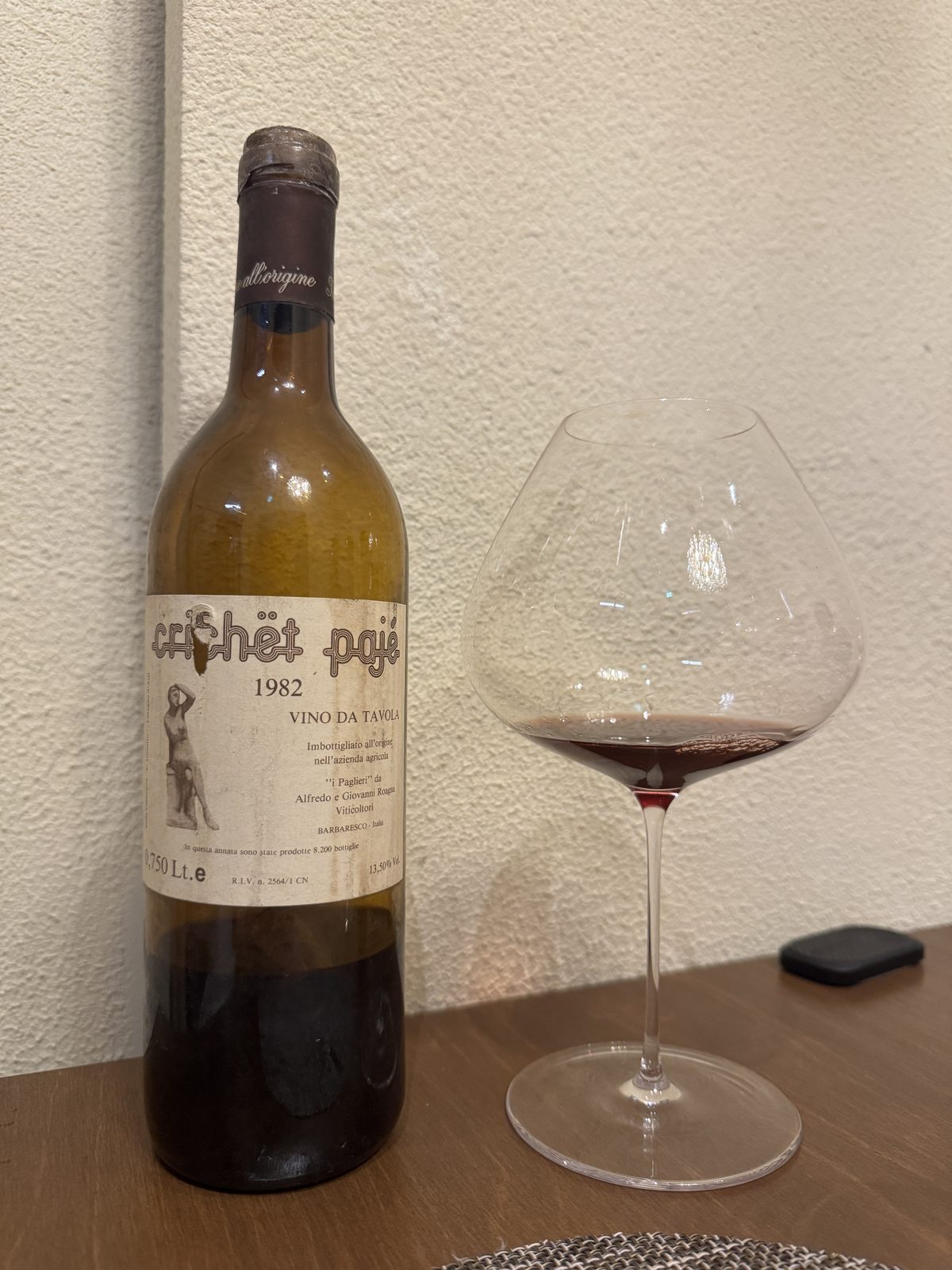
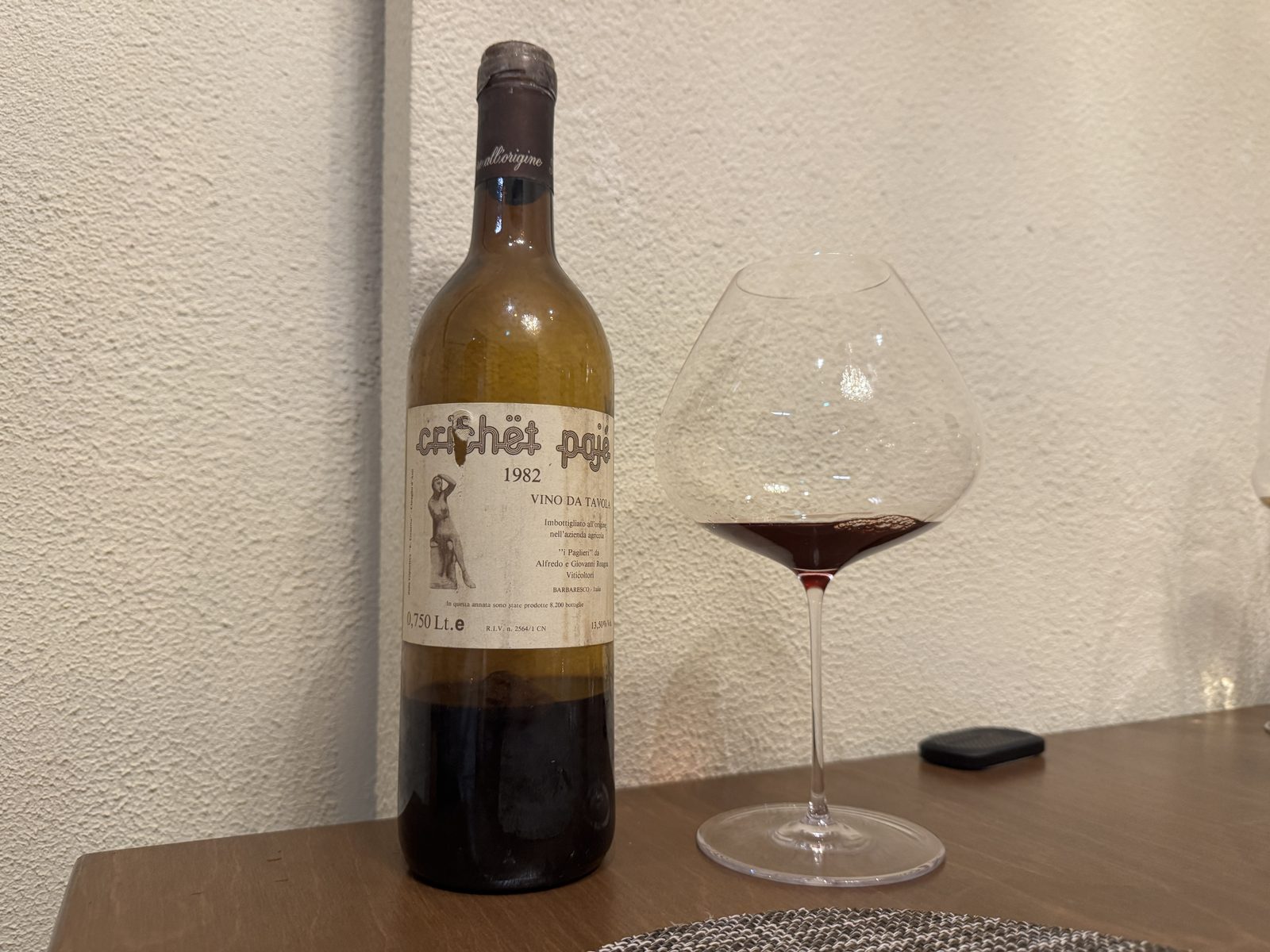
The label is the first thing to talk about, because it is wrong — or rather, it is accurate in a way that tells you nothing. Vino da Tavola, it says: table wine, the bottom category of Italian wine law, the designation for anything that does not claim a place of origin. Underneath that, in smaller type, it explains that the wine was bottled at the estate by Alfredo and Giovanni Roagna in Barbaresco, and that 8,200 bottles were made that year.
This is Crichët Pajé 1982. Nobody who knows the name would mistake it for table wine, and nobody at the time did either. The explanation usually given is bureaucratic rather than romantic: the paperwork for the appellation was not filed in time, and so the wine went out under the lowest legal category it could use. It kept going out that way for years. Every Crichët Pajé before the 1996 vintage carries the same words. A modern marketing department would have turned that into a story about rebellion. The Roagnas seem simply to have missed a form.
The Vineyard Within the Vineyard
Pajé is the cru — i Paglieri in Italian, the family’s home vineyard in the village of Barbaresco. Crichët Pajé is a selection from within it, a particular parcel that Giovanni Roagna, the grandfather, had been singling out for the family’s own cellar long before anyone thought of selling it. Alfredo Roagna, his son, put the first commercial vintage on the market in 1978. Until then it was a private reserve, the bottle the family opened when something was worth marking.
The way it is made has changed very little since. The maceration is long — on the order of three months, far beyond what most of Piedmont considered sensible then or now — followed by years in large, old, neutral oak. In some vintages it is not made at all. In the ones where it is, there is never much of it. The 8,200 bottles on this label are, for this wine, a generous year.
1982 in Piedmont
1982 was a hot year in the Langhe. September in particular ran well above the norm, and the grapes came in early, healthy, and in quantity. The wines were ripe and round from the start — generous fruit, softer acidity than the region usually gives — and that combination has had a predictable consequence over four decades. Bottles that were stored well can still be very much alive. Bottles that were not have often gone. It is a vintage of wide variance, and the producers who macerated longest and bottled latest have generally fared best in it. Roagna is the textbook case.
In the Glass
The colour had done what forty-four years does to Nebbiolo: mid-ruby at the centre, orange and brick at the rim. The nose came up balsamic first — that aged, slightly sweet vinegar-and-wood note — then dried rose petal, black tea leaf, tar, and a faint metallic edge, like a coin held in the hand.
The palate was the surprise. Behind that mature aromatic set, the fruit was still there, and it was still defined: not a ghost of fruit but an actual core, sitting on the round, fleshy frame that 1982 gave it. Over the top of that, Roagna’s tannins — fine-grained, dense, still slightly grippy — kept the whole thing upright. The finish went long on balsamic and dried herb and ended somewhere near earth and liquorice.
This is a wine in its full maturity, and I would not argue for holding it further; if there is another bottle, the case for opening it is stronger than the case for waiting. That comes with the standard caveat for this vintage — the bottle matters more than the year. Ours was a good one.
It was the first red of an Italian evening that had opened with a Champagne — the Rare 1988 — and it set the tone for what followed: old bottles, slow producers, and labels that undersold what was inside.