The Variety That Got In Early
Duckhorn Vineyards Napa Valley Merlot 2017
- Producer
- Duckhorn Vineyards
- Appellation
- Napa Valley
- Grapes
- Merlot
- Tasted
- 6 November 2020
Dan and Margaret Duckhorn founded the winery in 1976 with an argument rather than an estate. Merlot in California at that point was a blending grape — useful for softening Cabernet, not considered capable of carrying a bottle by itself. The first harvest came in 1978 and amounted to sixteen hundred cases in two bottlings: eight hundred of Cabernet Sauvignon, and eight hundred of Merlot from the Three Palms vineyard.
That Three Palms bottling was among the first single-vineyard Merlots made in California, and it did more than any other wine to establish that the variety could stand on its own terms. The argument was eventually won so completely that it is now hard to remember it was ever an argument.
The Wine That Carries the Idea
The Napa Valley Merlot is not the wine that made the name — that remains the vineyard-designate. It is the wine that carries the idea at volume: the house’s standing position on what Merlot from this valley ought to taste like, produced every year in quantities that put it on ordinary tables rather than in cellars. The bottle here wears a small gold roundel on the front label marking the winery’s fortieth year.

2017, and a Question of Timing
Napa remembers 2017 for what happened in October. The wildfires that broke out on the eighth of that month are the fact attached to the vintage, and the shorthand — that 2017 is a smoke year — has stuck to it since.
The shorthand is mostly wrong, and where it is right, it is right about Cabernet. The season had opened with heavy winter rain that broke a four-year drought, then run warm to hot through spring and summer, with a severe heat spell around the start of September that pushed temperatures to extremes and moved picking forward. By the time the fires started, something close to nine tenths of the Napa and Sonoma crop was already off the vine and in the cellars.
The grapes still hanging on 8 October were the late ripeners, and in Napa that means Cabernet Sauvignon above all. Merlot ripens earlier. It came in ahead of the smoke with good colour, extraction and flavour, which is the unglamorous reason a 2017 Napa Merlot has little to do with the story the vintage is known for. A few weeks of phenology decided which wines spent the following years being questioned.
In the Glass
At three years the wine was frankly young, and there was no pretending otherwise. Deep and opaque in the glass, a nose of dark plum and black cherry with cocoa and sweet oak still sitting distinctly on top rather than folded in, and a palate that was soft-shouldered and generous — low-slung tannin, ripe fruit, warmth on the finish. Nothing tertiary anywhere near it.
It was doing exactly what it was made to do, at exactly the point in its life it was made for.
The Table
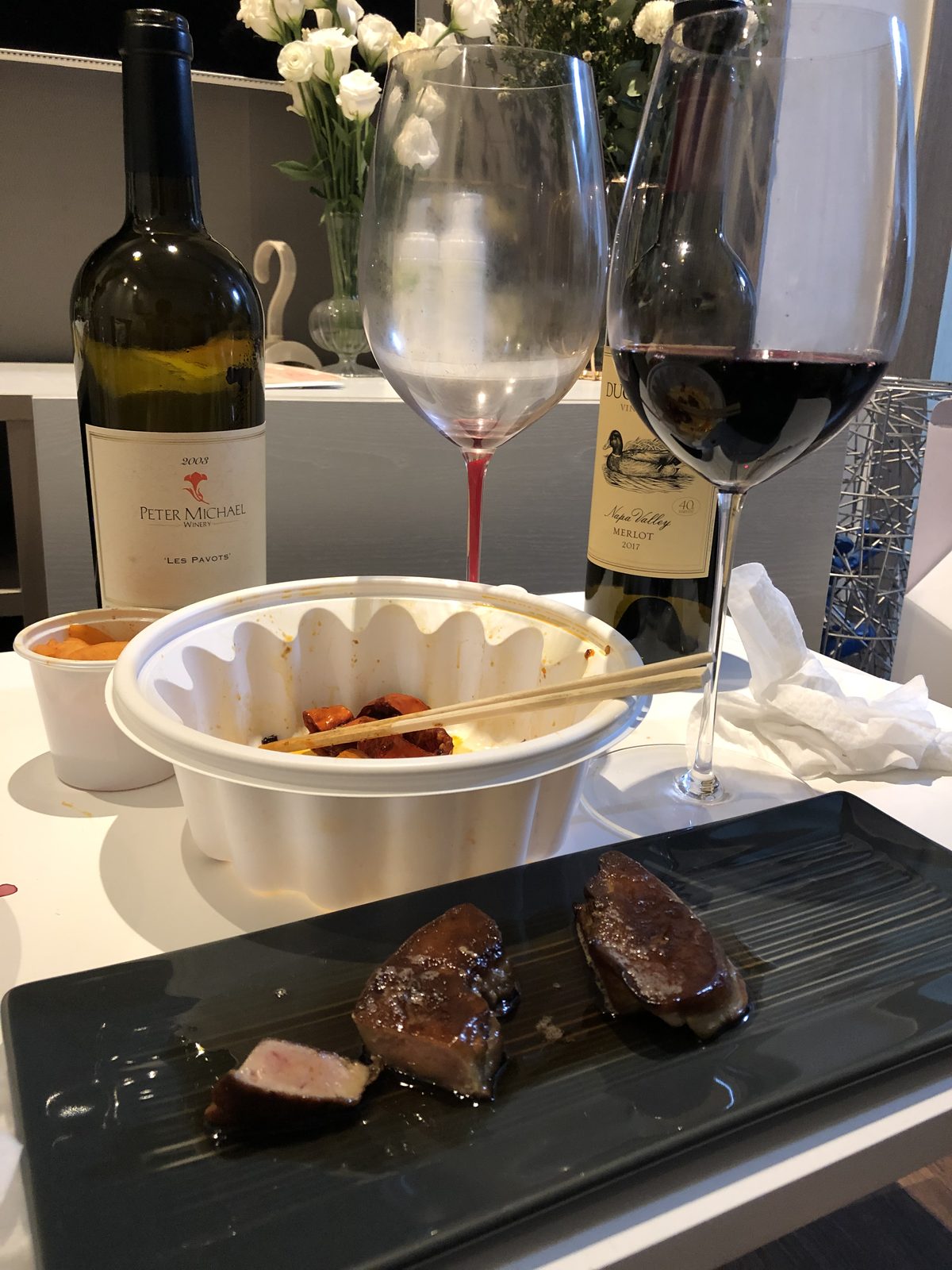
It was opened at home beside a plate of seared duck breast and the remains of takeaway Sichuan, alongside the Peter Michael Les Pavots 2003 — a bottle fourteen years its senior, poured from the same table into the same glasses. The evening ran past midnight.
Two wines that far apart in age are not really in conversation with each other; they are doing separate jobs on the same night. The young one fills the glass and keeps the dinner moving. The old one asks to be sat with. There is room on a table for both.