The Estate Vineyard, Named Out Loud
Clos du Val Palisade Vineyard Cabernet Sauvignon 1999
- Producer
- Clos du Val
- Appellation
- Stags Leap District
- Grapes
- Cabernet Sauvignon
- Tasted
- 12 November 2020
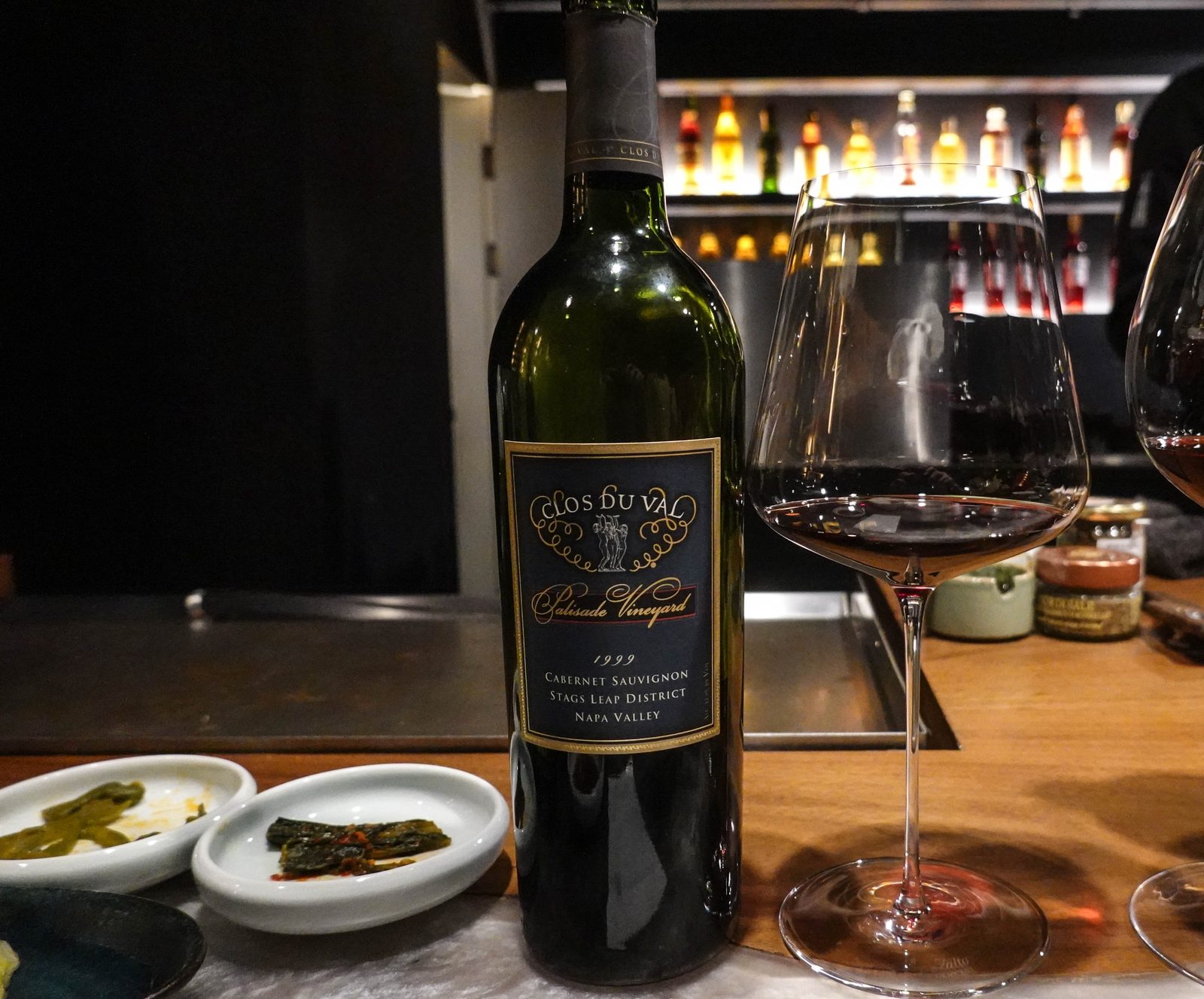
The estate’s founding story — a Frenchman sent to Napa in 1972 to find land for Cabernet, and a wine from that first harvest that lost the Paris tasting of 1976 and won the rematch ten years later — is told elsewhere in this archive, and does not need retelling. What matters here is the ground the story was made on.
Clos du Val’s home vineyard sits in the Stags Leap District, on the eastern side of the valley floor beneath the rock palisades that give the district its backdrop. It is the source of the winery’s Stags Leap Cabernet — the wine the house is judged on, in the appellation the house is identified with. Putting the vineyard’s own name on the label, as here, is less a new wine than a change of emphasis: the same ground, addressed directly.
What Stags Leap Does
The district was recognised as an AVA in 1989, and its wines have a description that has attached itself so firmly that it is difficult to write about the place without using it — the velvet glove. Cabernet from these gravelly, volcanic-influenced soils tends to arrive with tannins that are fine-grained and supple rather than assertive, aromatics that run to violets and dark cherry rather than pure cassis, and a mid-palate that fills without weight.
Set against the dustier, broader Cabernet of Rutherford, a few miles north-west across the valley, the difference is not subtle, and the two side by side make a better argument for Napa’s sub-appellations than any amount of mapping.
The Cool Year
1999 was the middle of three cool Napa vintages: a late, drawn-out flowering, a summer that never really got going, and then an unexpectedly hot final week of September that finished the Cabernet in time. The long cool stretch left acidity that a warm year would have consumed, and the late heat supplied the ripeness. The vintage is set out at more length elsewhere alongside another Napa Cabernet from the same year.
Clos du Val is a useful house to meet that vintage through. Bernard Portet built the winery’s style around restraint and moderate alcohol at a time when Napa was moving steadily in the other direction, which meant a cool season with high acid was less an obstacle for this address than a description of its intentions.
Twenty-One Years
The wine had gone fully tertiary and lost none of its uprightness. Blackcurrant had settled back into dried fruit, and in front of it were cedar, tobacco, dried herbs and the faintly sweet earthiness that old Napa Cabernet acquires and holds for a long time. The tannins were long since absorbed. What kept the wine in shape was the acid line running underneath — the same structural inheritance from a cool summer that has kept a great many 1999s alive well past the point where their neighbouring vintages went soft.
It was the oldest of the New World bottles at the counter that evening and the last poured, arriving after the Merryvale and a Viader, at the end of a lineup that had begun with Champagne from 1985 and passed through Burgundy on the way.
There is a habit of treating a house’s own vineyard as the least interesting thing about it — the reliable wine, the one that does not need explaining. Twenty-one years is a long enough interval to test the assumption, and a bottle still standing this straight makes the case that the estate’s least discussed wine was doing the work all along.