A Name the House Retired
Moët & Chandon Cuvée Dom Pérignon Œnothèque Vintage 1985
- Producer
- Dom Pérignon
- Appellation
- Champagne
- Grapes
- Chardonnay, Pinot Noir
- Tasted
- 12 November 2020
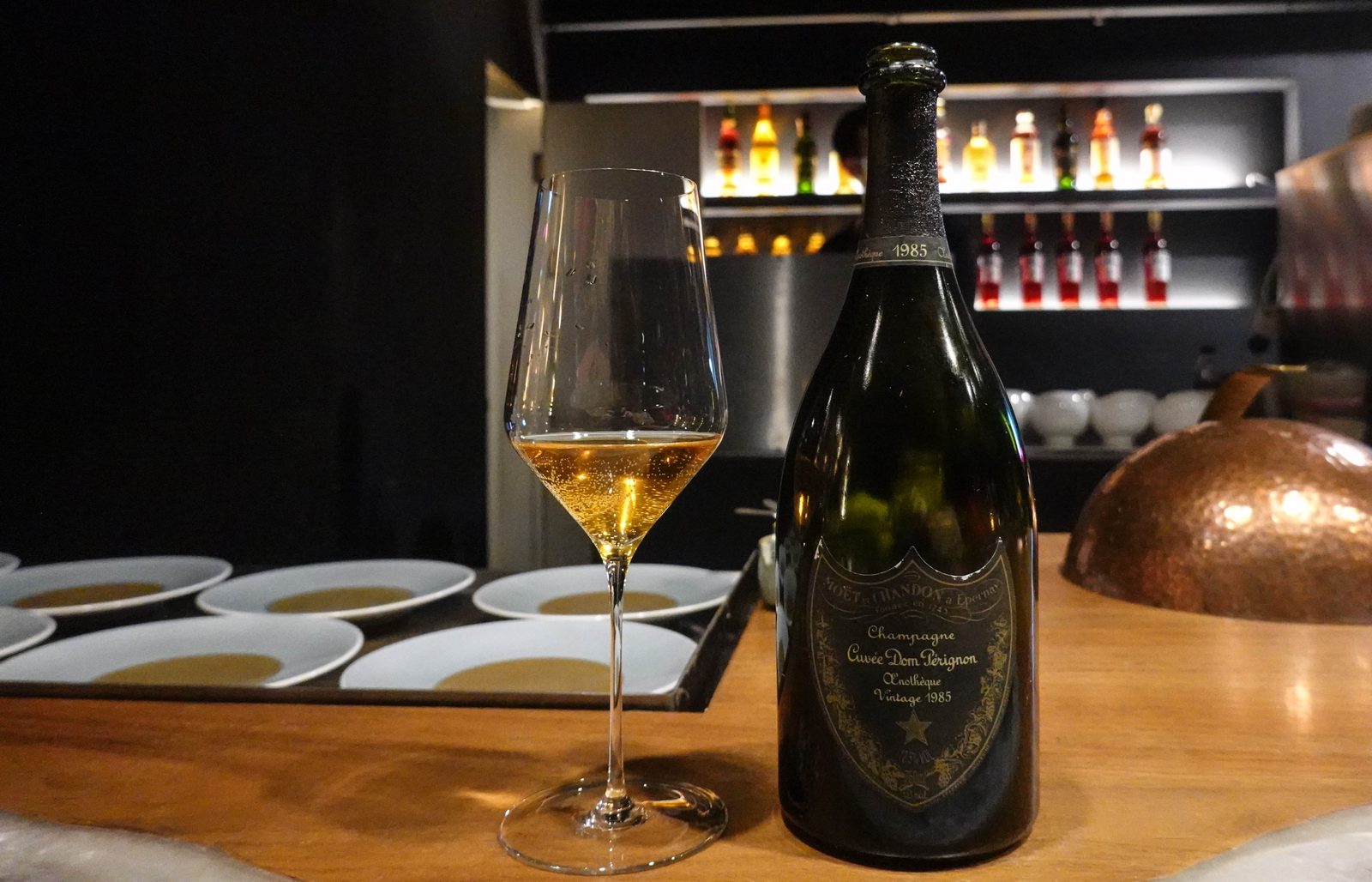
The word on the neck foil and again on the shield is Œnothèque, and it is worth pausing on, because Champagne no longer uses it. Richard Geoffroy created the programme in 2000 and launched it with two vintages — the 1973 and this one, the 1985. Fourteen years later he introduced the Plénitude framework, and within a couple of years after that the Œnothèque name was gone, replaced on new releases by the plainer P2 and P3.
So the label is a small piece of administrative history. What it describes has not changed at all.
Three Windows
The idea underneath the name is Geoffroy’s, and it is the least mystical thing about Dom Pérignon. A vintage, he argued, does not have one moment of readiness but three, arriving in sequence: the first on original release, the second somewhere between twelve and sixteen years on, the third at twenty to thirty years. Each is reached by leaving the wine on its lees until the appropriate point and disgorging then — the same base wine, aged the same way, opened at a different stage of its own life. Nothing is blended in and nothing is topped up. The variable is time under the crown cap, and after that, time in the bottle with the lees gone.
An Œnothèque bottle is therefore not a library find. It is a wine that was deliberately withheld and finished late, which is a different proposition from a case that happened to survive in someone’s cellar. The house decided when this wine would begin its second life.
The Year Itself
1985 in Champagne began about as badly as a year can. The winter and spring frosts were among the most severe the region had seen in decades and killed vines across thousands of hectares; what survived flowered slowly and reluctantly under poor weather. Then the season turned, the summer came good, and the small crop that remained ripened properly.
The wines that resulted have a particular reputation — aromatic intensity out of proportion to their weight, and a structure that held. It is the pattern of a great many severely reduced vintages: nothing left to carry but the best of what the frost spared.
Thirty-Five Years On
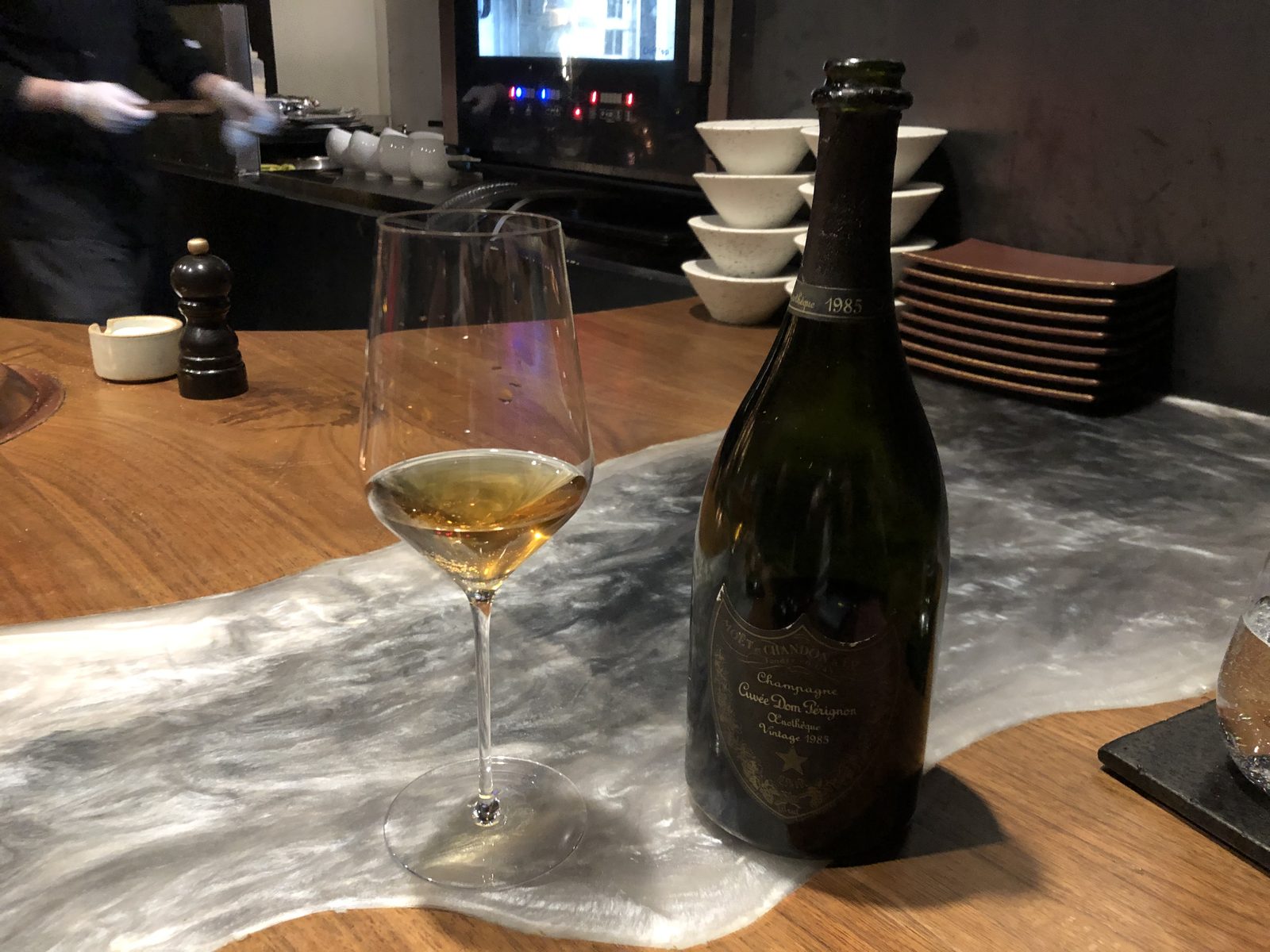
In the glass the colour had gone a long way — deep amber-gold rather than anything you would call straw — and the bead was fine and unhurried rather than vigorous. That is the expected trajectory for a Champagne of this age, and the late disgorgement does not arrest it so much as change its terms: less mousse, more texture, the wine behaving more like a still white with a memory of pressure than like a sparkling one.
What arrives is the oxidative register that mature Champagne moves into and rarely leaves — baked apple, honey, toasted brioche, a nutty edge behind. Underneath it there was still citrus and still acidity, which is the part that matters and the part that a lesser year would not have supplied. At thirty-five years the wine was not fading. It was simply somewhere else.
The Opening Bottle
It opened a long evening at a teppan counter, ahead of a Nuits-Saint-Georges premier cru, a Grands Échézeaux 2014 and a run of Napa Cabernet that carried on well past midnight. Champagne is normally the least consequential wine at a table like that — the thing poured while people are still arriving.
This one was not. Starting a dinner with a wine older than most of what follows inverts the usual shape of an evening, and everything afterwards is heard slightly differently for it. The house has since stopped printing the word, but the practice it named is the reason a bottle from a frost-ruined year could still be doing this three and a half decades later. Compare the P2 2008: different label, same argument.