A Clone Where the Vineyard Name Should Be
Merryvale Beckstoffer Vineyards Clone Six Rutherford Cabernet Sauvignon 2002
- Producer
- Merryvale Vineyards
- Appellation
- Rutherford
- Grapes
- Cabernet Sauvignon
- Tasted
- 12 November 2020
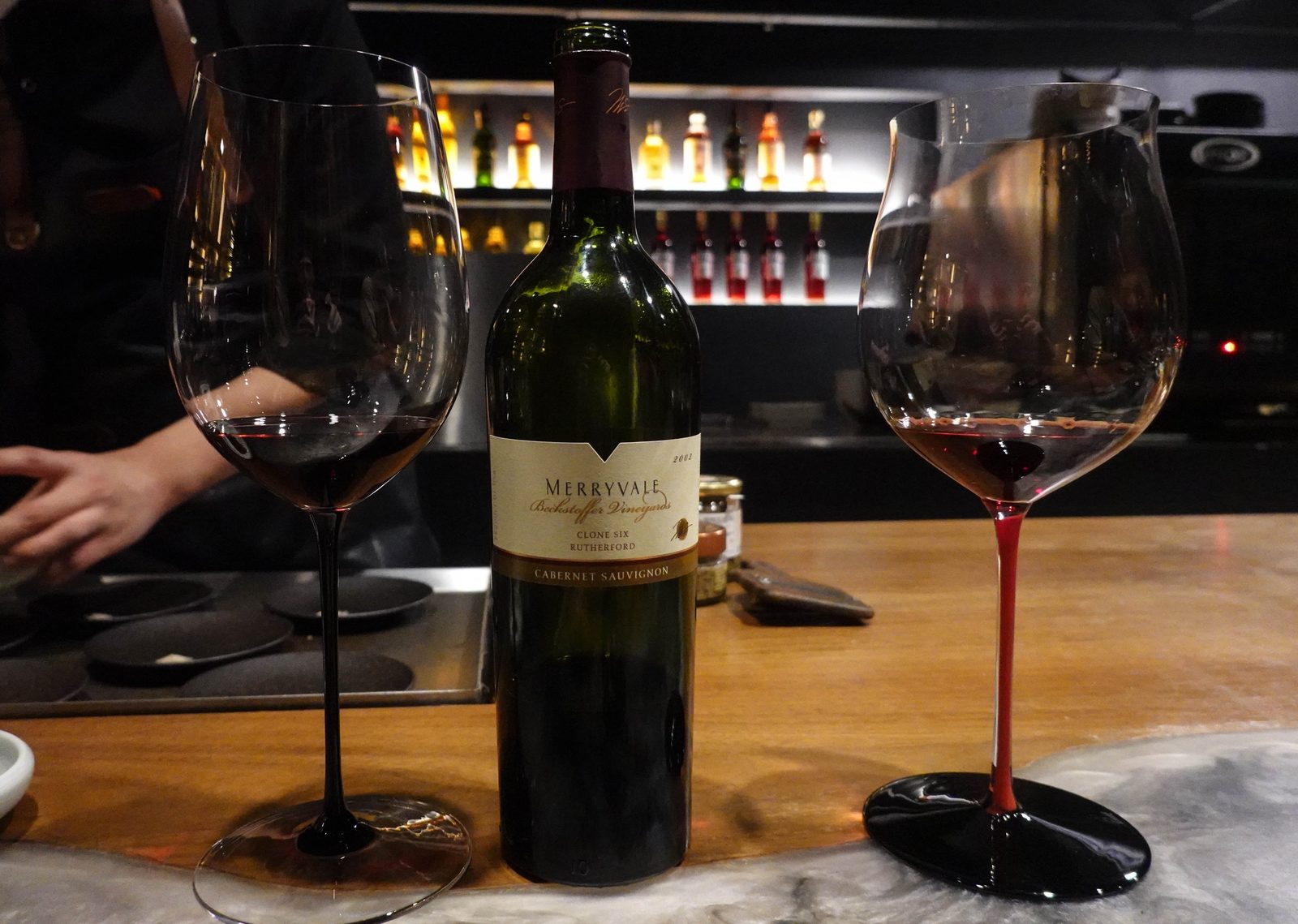
Read the label from the top: Merryvale. Beckstoffer Vineyards. Clone Six. Rutherford. Cabernet Sauvignon. Four of those five lines are conventional. The third is not — in the slot where a Napa Cabernet almost always names its vineyard, this one names a plant.
Clone 6 is one of the heritage selections of Cabernet Sauvignon in California, traced back to nineteenth-century imports from Bordeaux that arrived before phylloxera and were propagated in the state long before anyone was doing systematic clonal work. In comparative plantings it has a consistent reputation: more reserve than the modern selections, more evident structure, and longer to come round. Choosing to lead with it is a statement about what the wine is built for.
The Grower’s Name Comes First
The other unusual thing about the label is how prominent Beckstoffer Vineyards is. Andy Beckstoffer spent decades converting the standing arrangement between Napa growers and Napa wineries — under which grapes were anonymous, sold by the ton, and the winery took the credit — into something closer to its opposite. Fruit from his vineyards is sold on terms that put his name on the bottle, and buyers who want it accept that condition. The practice is now common enough to look inevitable. It was not.
What the label does not say is which vineyard. It gives the grower and it gives Rutherford, and it stops there. That is a slightly odd omission on a bottle otherwise so specific about provenance, and it leaves the clone doing the work of identification.
Merryvale’s Building
The house behind it has a longer history than the 1983 founding date implies, because the founding date belongs to the label rather than the address. The winery on Main Street in St Helena was the first winery built in the Napa Valley after Repeal — put up in 1933, running briefly as Sunnyhill and then as Sunny St Helena, and taking on Cesare Mondavi as a partner in 1937, well before either of his sons had a name of his own.
The Merryvale label started there in 1983, among a group of partners that included Bill Harlan, then some years away from founding the estate that carries his name. The Schlatter family bought in during 1991 and became sole owners in 1996. It is a lot of Napa history for a bottle that has never been especially fashionable.
2002
The vintage ran long and mild, with average rainfall and an even ripening curve, and then turned warm at the end of September in time to finish the Cabernet. That combination — extended hang time, no heat spike to rush it — produced fruit with concentration and, more usefully, tannic structure that stayed firm rather than sweet.
2002 arrived immediately after the widely praised 2001 and spent years in its shadow, which is the standard fate of a good vintage following a celebrated one. The wines were consistently described as the firmer, less fleshy of the pair. That reads as a criticism at five years old and stops reading as one at fifteen.
At eighteen years this bottle was in the good middle stretch: cassis pulled back but not gone, cedar and dried herb and Rutherford’s characteristic dusty note in front of it, tannins resolved into texture rather than grip. The structure the clone is credited for was still legible in the finish, which is a fair endorsement of the decision to put it on the label.
Third of Four
It came third in a run of Napa Cabernet at a teppan counter — after a Grands Échézeaux and before a Clos du Val from 1999, with a Viader alongside. A stretch of the evening given over entirely to one grape from one valley, which is the only reliable way to notice how different its sub-appellations actually are: this one dusty and open-shouldered from Rutherford, the next one tighter and cooler from Stags Leap.
A wine that names its clonal heritage instead of its address is making a wager that the plant matters more than the parcel. Eighteen years is long enough to see whether that was worth saying, and the answer here was that it was at least not empty.